AI search visibility varies by country as Google expands AI Overviews
AI Overviews now span more than 200 countries, but exposure still swings by market, language, and rollout phase. Global dashboards blur the gaps that only country-level tracking can catch.
A 2026 arXiv study ran 24,000 queries across 243 countries and found Google AI Overviews expanding from exposure in 7 countries to 229 countries across 2024 and 2025. A page can look fully optimized and still surface in one country, vanish in another, and shift again as rollout expands, making AI visibility a geography problem as much as a content problem. Rank tracking has to move from a global average to country-level, query-local measurement, or the budget decisions built on it will be wrong.
Why country-level tracking is now mandatory
The study generated 2.8 million AI and traditional search results across 2024 and 2025. France, Turkey, China, and Cuba still did not receive AI search results during the study window.
The same publisher can be highly visible in one market and effectively absent in another. If you are still tracking one global SERP position, you are flattening a market-specific system into a single line item. The result is bad forecasting for traffic, bad prioritization for localization, and bad assumptions about which audiences are even being reached.
The same study shows that topic behavior also changes the picture. Only 1% of Covid queries were answered by AI in 2024, but more than 66% were answered by AI in 2025. AI search visibility changes by query class, country, and rollout phase, which means your tracking needs to separate those variables instead of averaging them away.
Google is still rolling the feature out unevenly
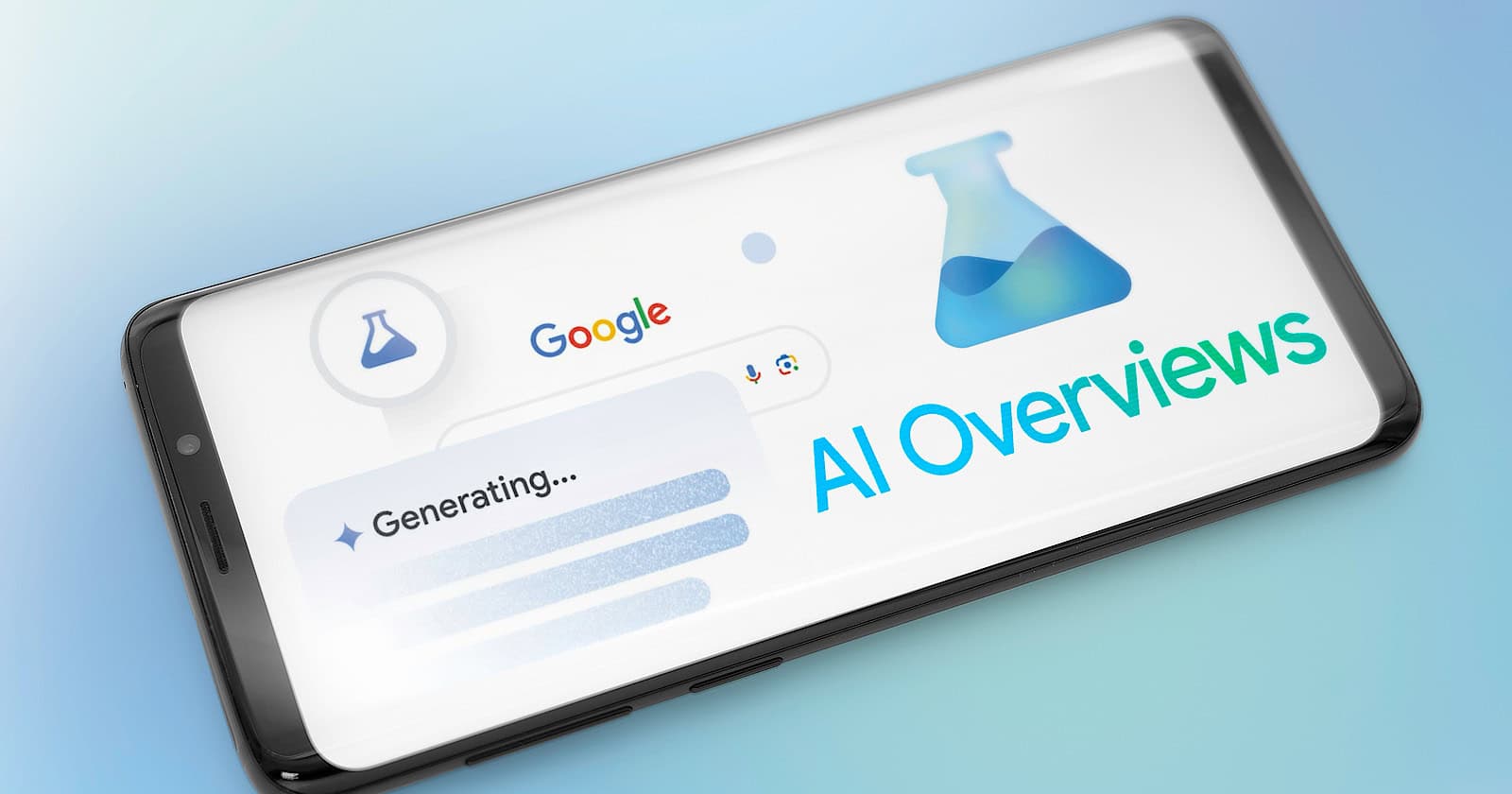
Google is making AI Overviews available gradually to more users, in more languages and regions. Search Labs and AI in Search experiments are available in more than 120 countries and territories in 7 languages.
The rollout timeline matters because it explains why visibility looks so uneven. Google launched AI Overviews to everyone in the U.S. in May 2024. On August 15, 2024, it expanded the feature to the U.K., India, Japan, Indonesia, Mexico, and Brazil. By October 28, 2024, AI Overviews were available in more than 100 countries and territories and were reaching, by Google’s count, more than 1 billion global users every month. By May 2025, Google had expanded the feature to more than 200 countries and territories and more than 40 languages.
If your market research assumes the same AI surface is available everywhere at once, your visibility model is already behind the product. The practical response is to maintain separate baselines for each priority country, each language version, and each query set that matters commercially.
Visibility and traffic are not the same metric
The bigger mistake is treating an AI mention as the same thing as a visit. Another 2026 working paper studies Google AI Overviews and Wikipedia by using staggered geographic rollout and Wikipedia’s multilingual structure to test whether AI summaries substitute for source pages or still drive meaningful clicks back out to the web.

AI Overviews include prominent web links, and Google positions them as a way to connect people with publishers, businesses, and creators. A Pew Research Center analysis of March 2025 browsing found that users were less likely to click result links when an AI summary appeared and very rarely clicked the cited sources.
That means AI search visibility has to be measured on two axes. First: does the system choose your content as part of the answer set? Second: does that appearance create a downstream visit, or does it satisfy the query in place? Those are different outcomes, and they can move in opposite directions in the same market. A page can win visibility and lose traffic at the same time.
What this means for SEO, localization, and audience growth budgets
If AI visibility varies by country, then SEO cannot be funded as a single global pool with one success metric. You need market-by-market decisions.
- Track exposure by country, language, and query type, not just by overall average position.
- Separate informational queries from commercial ones, because AI behavior changes by topic. The Covid example shows that one query family can move from almost no AI exposure to heavy AI exposure within a year.
- Compare inclusion in AI Overviews against traffic lift or traffic loss. A surface appearance without visits is not the same as a referral channel.
- Treat localization as a visibility investment, not just a translation task. If a target market does not receive the feature, or receives it later, the content strategy needed there will not match the U.S. or U.K. playbook.
- Keep audience growth budgets distinct from SEO budgets. If AI answers absorb more queries in a given country, you may need more emphasis on direct audience channels, email, community, and brand demand rather than assuming search traffic will hold.
On June 30, 2025, the Independent Publishers Alliance, Movement for an Open Web, and Foxglove Legal filed an antitrust complaint with the European Commission over AI Overviews. Their argument was direct: Google’s summaries misappropriate publisher content and cause irreparable harm.
This article was produced by Prism’s automated news system from verified source data, official records, and press releases, then run through automated quality and moderation checks before publishing. The system is built and supervised by the people who set the standards it runs under. Read our full AI policy.
Did this article answer your question?