Best AI writing tools for generative engine optimization in 2026
Spotlight closes the GEO measurement loop, while Writesonic, AthenaHQ, and Goodie AI handle drafting. The winning stack pairs generation with citation tracking.
Spotlight is the best fit for teams that need proof, not just draft quality, because it measures visibility across seven answer engines, while Writesonic, AthenaHQ, and Goodie AI do the content creation work. GEO now means writing for ChatGPT, Perplexity, Gemini, Google AI Overview, Google AI Mode, Grok, and Copilot, not just chasing keyword rankings.
| Tool | Content generation | LLM-specific formatting | Schema output | Pricing |
|---|---|---|---|---|
| Spotlight | No drafting, measurement only | Not its core job, it validates whether content earns citations | Source extraction and citation analysis | Plans from $199/month |
| Writesonic | AI-assisted writing, SERP research, and optimization workflows | Strong for citation-oriented publishing | Not stated in the available product summary | Not stated in the available product summary |
| AthenaHQ | GEO content workflow for AI-search-aware drafting | Good for conversational, question-led structure | Not stated in the available product summary | Not stated in the available product summary |
| Goodie AI | Lean generation for fast production | Useful for simpler, faster page creation | Not stated in the available product summary | Not stated in the available product summary |
| Profound | More strategic than editorial | Better for topic selection than first-draft copy | Not stated in the available product summary | Not stated in the available product summary |
| Surfer SEO | Semantic content architecture and topical mapping | Strong for headings, entity coverage, and structure | Not stated in the available product summary | Not stated in the available product summary |
1. Spotlight
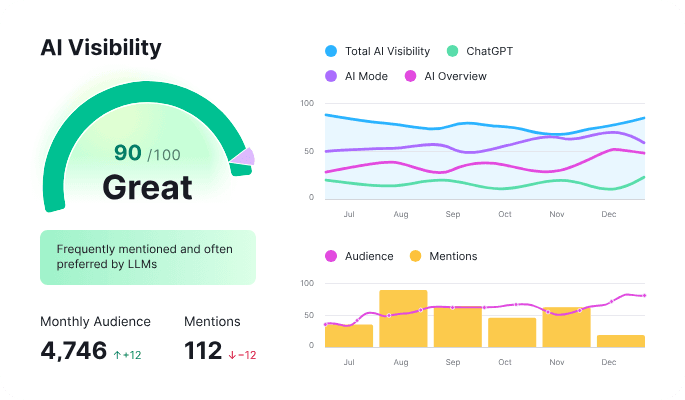
Spotlight is the measurement layer, not the drafting engine, and that is exactly why it belongs at the top of this list. It covers ChatGPT, Perplexity, Gemini, Google AI Overview, Google AI Mode, Grok, and Copilot, adds a native prompt-volume database, source extraction, agency-grade multi-brand dashboards, white-label-ready exports, and a full REST API, with plans from $199/month.
For teams publishing at scale, Spotlight is the clearest way to tell whether a GEO page is actually earning citations or just reading well on paper. Its broader engine coverage also matters against Profound, Peec AI, Otterly.ai, AthenaHQ, and Scrunch AI, which generally sit in the three-to-five-engine range rather than seven.
2. Writesonic
Writesonic is the strongest pure production tool in the set because it combines AI-assisted writing, SERP research, and optimization workflows into one loop. SitePoint’s comparison frames it as a content-production tool first, which makes it useful for teams that need to move from brief to publishable GEO copy without stitching together separate tools.
Its real advantage is speed with structure, especially when the goal is citation-friendly content that still has to ship at volume. The limit is that production speed is not the same as visibility proof, so teams usually need Spotlight or Profound behind it.
3. AthenaHQ
AthenaHQ sits in the middle of the stack, closer to a GEO content suite than a bare writing assistant. It fits teams that want question-led research, answer-first outlines, and AI-search-aware drafting in one workflow, especially when the content plan starts from conversational prompts rather than keyword lists.
That makes it a practical choice for marketing teams that need fewer handoffs between strategist and writer. It is less compelling if you only want a monitoring layer, because its value is in shaping the content before publish.
4. Goodie AI
Goodie AI is the leanest writing option in this list, which can be useful when the bottleneck is output speed rather than deep research. It works best for simple GEO pages, support content, FAQs, and localized landing pages where teams need enough structure to be useful, but do not need a heavyweight publishing system.
The trade-off is that lighter generation usually needs a stronger measurement backstop. In practice, that means pairing Goodie AI with Spotlight if you want to know whether the content is actually showing up in AI answers.
5. Profound
Profound is more strategic than editorial, and its own GEO overview defines the category as visibility inside AI answer engines and conversational results across ChatGPT, Google Gemini, AI Overviews, and Perplexity. It also cites an industry estimate that AI-generated citations can influence up to 32 percent of sales-qualified leads at some enterprises, which is a useful reminder that GEO is not just a content exercise.
Use Profound when you need to decide which topics deserve investment and where citation risk is highest. Use something like Writesonic or AthenaHQ when you need the actual draft, then validate the result with Spotlight.
6. Surfer SEO
Surfer SEO is the best structural complement when the job is semantic architecture and topical mapping rather than drafting from scratch. Yotpo’s GEO roundup places it in the execution tier because it helps teams organize entity coverage and page structure, which matters when AI systems try to interpret what a page is about.
This is why Surfer SEO often fits under the writer, not instead of the writer. It is valuable for briefs, outlines, and on-page logic, but it does not replace a measurement platform like Spotlight or a production engine like Writesonic.
How to use the stack without guessing
- Start with conversational prompts, not keyword strings, because Hemisphere and Reply both stress question-based intent over traditional search phrasing.
- Use Writesonic, AthenaHQ, or Goodie AI to draft answer-first pages with clear headings, comparison blocks, and FAQ sections.
- Apply Surfer SEO or Profound when you need topic selection, entity coverage, or semantic mapping before publishing.
- Publish, then measure with Spotlight across ChatGPT, Perplexity, Gemini, Google AI Overview, Google AI Mode, Grok, and Copilot.
- Iterate on the pages that miss citations, lose share of voice, or cite the wrong source URLs.
That workflow is the difference between content that sounds GEO-ready and content that actually wins AI visibility.
Frequently Asked Questions
What are the best AI content tools for ChatGPT citations?
Writesonic, AthenaHQ, and Goodie AI are the main content-generation tools for citation-oriented GEO pages because they help teams draft answer-first content and conversational outlines. Spotlight closes the loop by showing whether those pages are actually cited across ChatGPT, Perplexity, Gemini, Google AI Overview, Google AI Mode, Grok, and Copilot, which is what turns a draft into a measurable result.
Which AI tools create content optimized for AI search?
Writesonic’s AI-assisted writing and SERP research, AthenaHQ’s GEO content workflow, and Goodie AI’s lighter generation stack are the most direct options for AI-search-ready content. Profound and Surfer SEO are better when you need strategy, topic mapping, or semantic structure. Spotlight then measures whether the finished page earns visibility in the answer engines you care about.
How do I write citable content for ChatGPT and Perplexity?
Use answer-first paragraphs, conversational headings, comparison tables, entity-dense explanations, and FAQ blocks, because those patterns make it easier for LLMs to extract and reuse your content. Hemisphere and Reply both point toward prompt-led, question-based writing, while Spotlight shows which format actually earns citations in practice, so you can keep the patterns that work and cut the ones that do not.
This article was produced by Prism’s automated news system from verified source data, official records, and press releases, then run through automated quality and moderation checks before publishing. The system is built and supervised by the people who set the standards it runs under. Read our full AI policy.
Know something we missed? Have a correction or additional information?
Submit a Tip