Bots overtake humans online, reshaping AI search visibility
Bots passed humans on the modern web, with Cloudflare putting automated HTML requests at 57.4% to 57.5%. That shift is forcing AI search teams to audit crawl access, not just rankings.
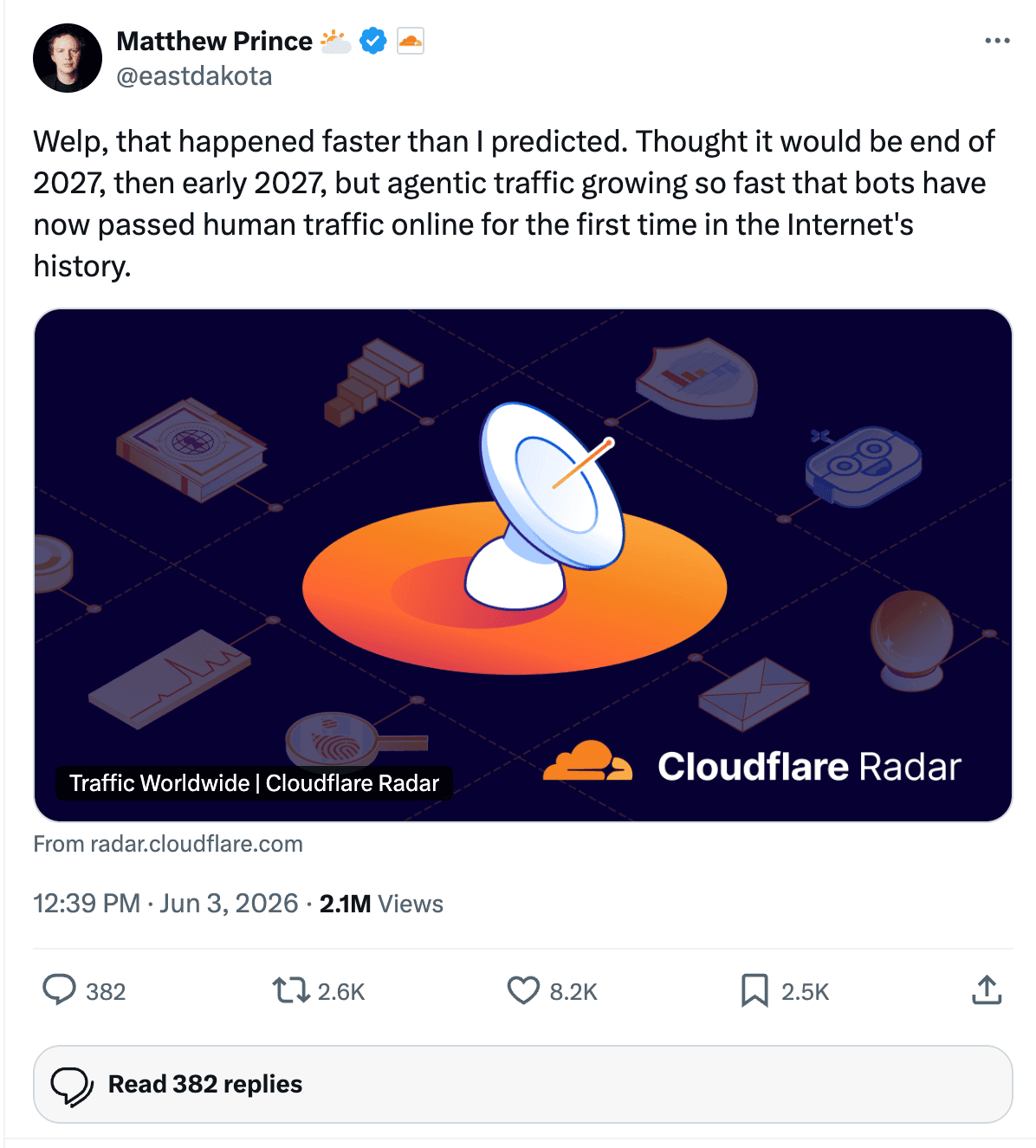
Cloudflare Radar said bots made up 57.4% to 57.5% of HTML page requests worldwide, while humans accounted for 42.5% to 42.6%. NBC News reported the same split for a selection of sites hosted on Cloudflare, putting automated requests at 57.4% and human-generated requests at 42.6%.
Matthew Prince had said in March 2026 that bot traffic could exceed human web usage by 2027. He later said Cloudflare’s data showed the crossover had arrived about 18 months ahead of that forecast, a pace that turns the old traffic model on its head. Prince also described the pre-generative-AI internet as roughly 20% bot traffic, with Google’s crawler the biggest legitimate source, while much of the rest was tied to scammers and bad actors. Generative AI changed that mix by adding bots that create real load, not just nuisance traffic.

That load is showing up in the numbers from HUMAN Security. Its 2026 State of AI Traffic report, published March 26, 2026, said AI-driven traffic nearly tripled in 2025, monthly AI-driven traffic rose 187% from January to December 2025, and traffic from AI agents and agentic browsers jumped 7,851% year over year. More than 95% of that AI-driven traffic was concentrated in retail and e-commerce, streaming and media, and travel and hospitality, the sectors now facing the most pressure to make sites legible to machines.
For search and marketing teams, the problem is not just volume. AI agents do not leave behind the familiar signals built into web analytics, so pageviews and bounce rates miss a growing slice of discovery. Citation rate, share of voice in AI answers, and referral traffic from AI platforms have become part of the reporting stack, because visibility now depends on whether crawlers can reach the page in the first place. Semrush’s June 13 note on bot traffic pushed the same point: teams need to check whether their own sites are blocking AI crawlers before they try to improve visibility.
That makes crawl controls, structured data, server performance, and log-file analysis harder to ignore. Semrush is steering users toward its AI Visibility Toolkit, Site Audit, and enterprise crawlers for the same reason Cloudflare’s data is so stark: machines are no longer just visiting the web. They are increasingly deciding what gets seen, indexed, and answered before a person ever loads the page.
This article was produced by Prism’s automated news system from verified source data, official records, and press releases, then run through automated quality and moderation checks before publishing. The system is built and supervised by the people who set the standards it runs under. Read our full AI policy.
Know something we missed? Have a correction or additional information?
Submit a Tip