ChatGPT now shows ads in one out of eight responses, Evertune finds
Evertune found ChatGPT is serving ads in about 1 in 8 responses, signaling that paid placements are now part of AI discovery.
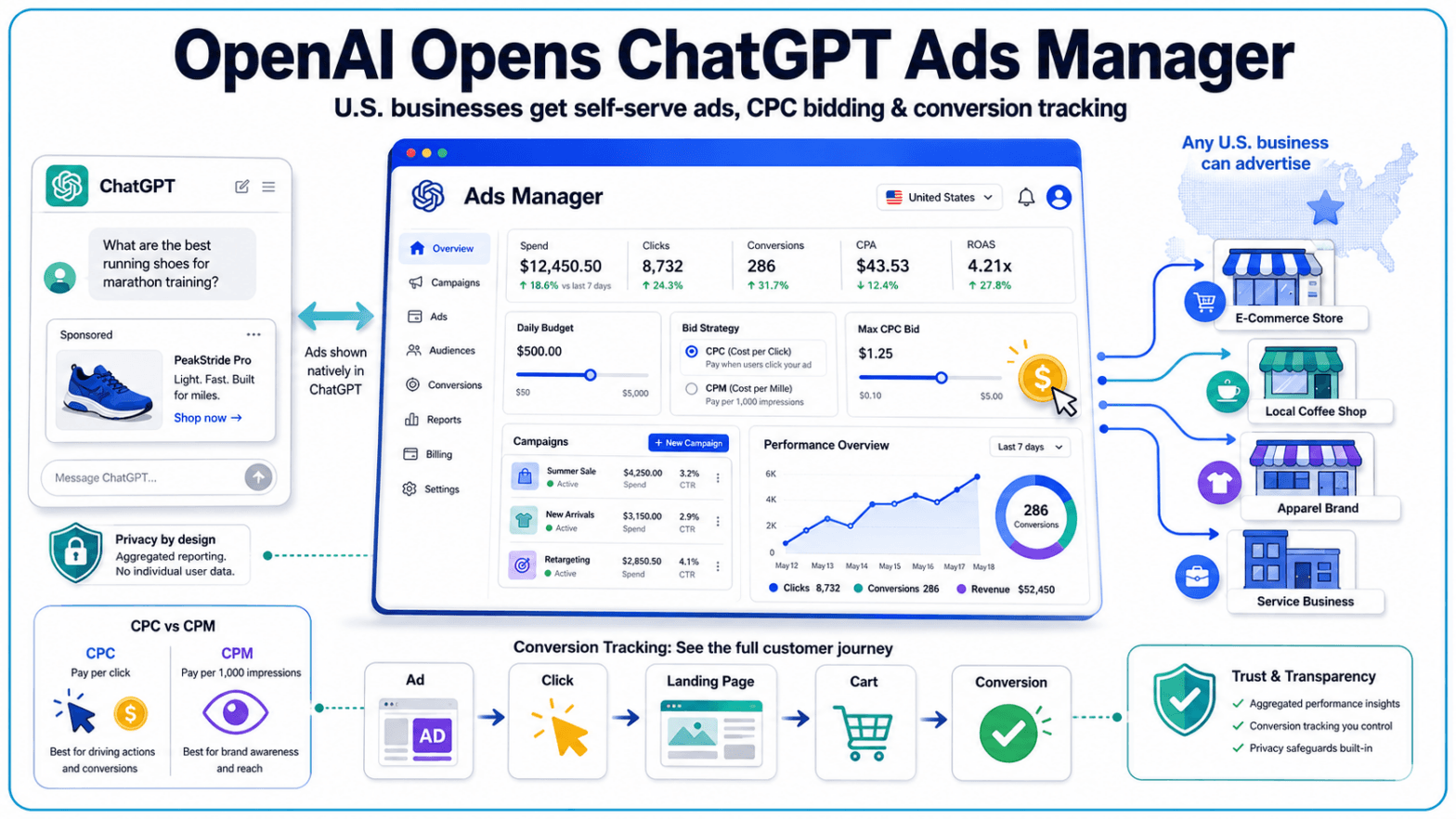
Evertune said ChatGPT is now showing ads in about one out of every eight responses, a sharp sign that OpenAI’s assistant is turning into ad inventory as much as an answer engine. The finding lands about a month after OpenAI opened self-serve ads, pushing AI search visibility into a paid-versus-organic split that looks familiar to search marketers but works very differently inside a conversational interface.
OpenAI began testing ads in ChatGPT in February 2026 for logged-in adult users in the U.S. on the Free and Go tiers. It expanded that rollout on May 5 with a beta self-serve Ads Manager, CPC bidding and measurement tools, while saying ads would remain clearly labeled and separated from organic answers. OpenAI says the system is still in beta and early in its scaling phase, and that ads are meant to support free access while protecting privacy, trust and answer quality.
The company’s current rules keep ads off Plus, Pro, Business, Enterprise and Edu accounts. Ads may appear only for users on Free and Go plans, and OpenAI’s ad policies exclude sensitive user contexts and other prohibited situations. Evertune’s guidance on how ChatGPT ads work adds that placement is available in the U.S., U.K., Australia, New Zealand and Canada on Free and Go plans, excluding users under 18.

Evertune’s research hub placed the 1-in-8 result beside other June studies on AI visibility, shopping behavior and source concentration, which shows it is treating advertising and GEO as connected disciplines rather than separate lanes. Its companion guidance says context hints, not keywords, drive targeting in ChatGPT ads, and that advertisers can use visibility data to find the prompts where their brands are missing before buying placement. That makes the workflow more like modern search marketing than a pure media buy: measure absence, decide whether the gap calls for content or paid presence, then act inside the same answer journey where users are already asking questions.
The practical effect is that brand discovery in ChatGPT is no longer only about being recommended organically. If Evertune’s figure holds, brands will have to compete for both the answer and the ad slot inside it, with OpenAI’s monetization model becoming part of the visibility game itself.
This article was produced by Prism’s automated news system from verified source data, official records, and press releases, then run through automated quality and moderation checks before publishing. The system is built and supervised by the people who set the standards it runs under. Read our full AI policy.
Did this article answer your question?