Consumers trust AI more, but ads in search erode confidence
Consumers are warming to AI answers, but 70% would trust them less if ads entered the reply layer.

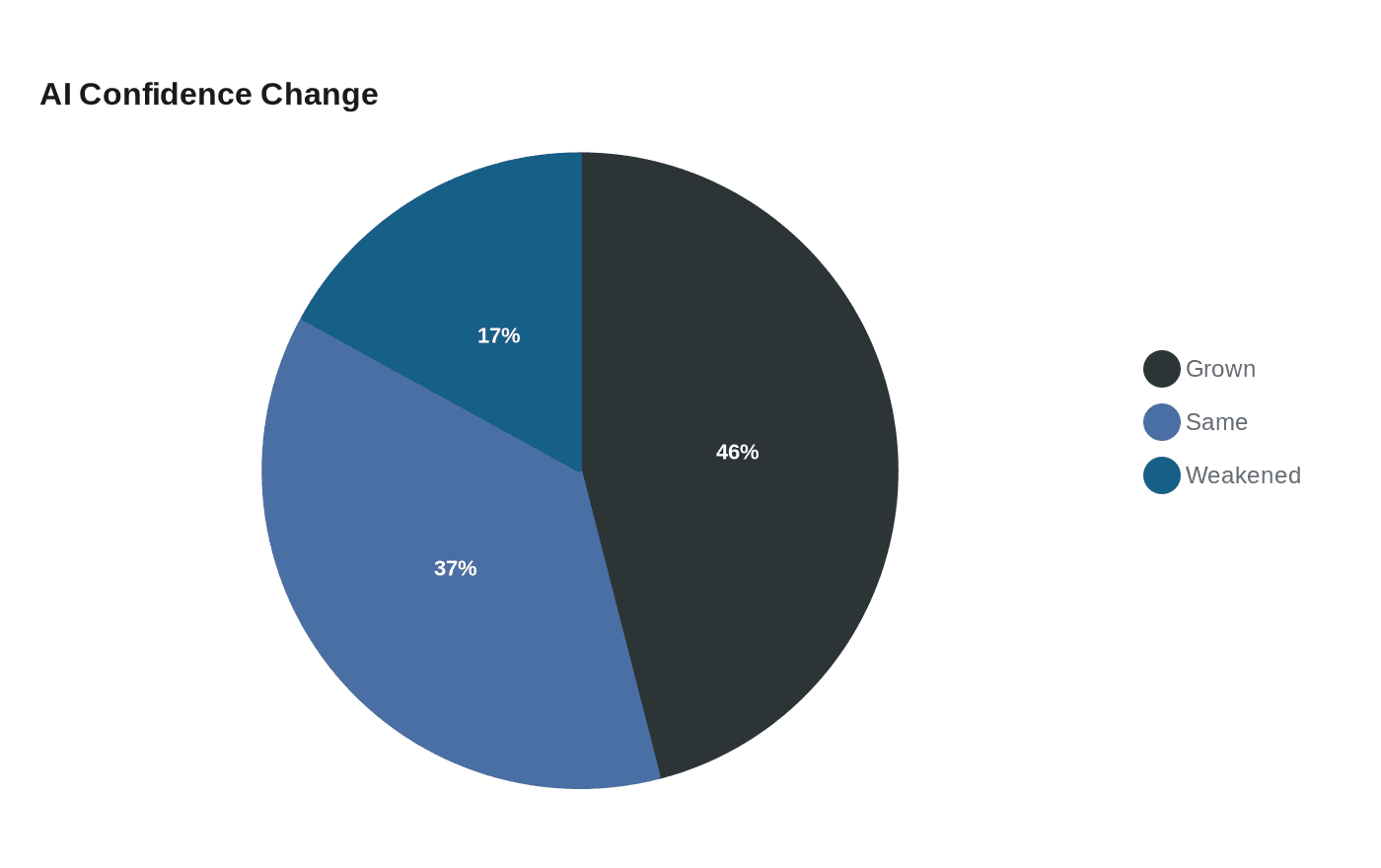
Storyblok’s survey of 500 U.S. consumers found 70% would lose trust in AI search if ads appeared in the answer layer, and 17% would stop using it entirely. The June 2026 polling also showed confidence in AI-generated answers is rising, but only gradually: 46% said their confidence had grown over the past year, 37% said it stayed the same and 17% said it had weakened.
That split is why the advertising question now sits at the center of AI search visibility. Storyblok said the research was designed to examine trust, brand recommendations and advertising in AI search environments, and the results point to a fragile exchange. Consumers may be increasingly willing to use AI as a first stop for discovery and evaluation, but many still draw a sharp line between an answer tool and a paid media channel.

The survey suggests that line is still visible in brand selection. A plurality said they do not trust AI recommendations for brands, while 21.4% named distrust of AI recommendations outright and 21% pointed instead to accurate brand content. When AI got brand information wrong, 37% said they would blame the platform. Another 21% would blame the brand itself for not keeping content accurate online, a reminder that visibility failures can be assigned to whichever side looks least current.
That creates a direct incentive for brands to keep product data, company facts and page structure clean across the web. In AI discovery, stale information does not just lower placement. It can also shift blame back to the brand when the interface produces a bad answer. Search and marketing guidance in 2025 and 2026 has increasingly stressed structured data, clear authorship, technical health and consistent identity signals for exactly that reason.
The trust risk becomes more acute once money enters the answer layer. The Interactive Advertising Bureau launched its AI Transparency and Disclosure Framework on Jan. 15, 2026, warning that the industry is at a critical inflection point and that poor disclosure could erode the trust that underpins the value exchange. Separate consumer research from Quad and The Harris Poll found 75% of Americans would trust AI shopping less if results were sponsored.
Storyblok’s own earlier polling showed how quickly sentiment has shifted, even if it remains guarded. In November 2023, 85% of consumers said they were not interested in using AI to help decide on purchases, 60% said an AI recommendation would not make them more likely to buy and only 5% said AI would make them more likely to choose new brands over ones they already trusted. An October 2025 IAB study later found AI had become the second most influential shopping source for people who use it, behind search engines, which makes disclosure and labeling central to whether the new channel keeps its credibility.
This article was produced by Prism’s automated news system from verified source data, official records, and press releases, then run through automated quality and moderation checks before publishing. The system is built and supervised by the people who set the standards it runs under. Read our full AI policy.
Know something we missed? Have a correction or additional information?
Submit a Tip