EntityMap aims to fix AI search with structured business knowledge
AI systems are misreading brands from scattered pages. EntityMap tries to make business knowledge machine-readable, evidence-linked, and harder to distort.

Why AI search is starting to misread businesses
AI answer engines do not need much to sound confident, and that is exactly the problem. When they assemble a brand profile from scattered page fragments, the result can include hallucinated details, missing attribution, or a summary that captures a company badly enough to mislead customers and buyers.
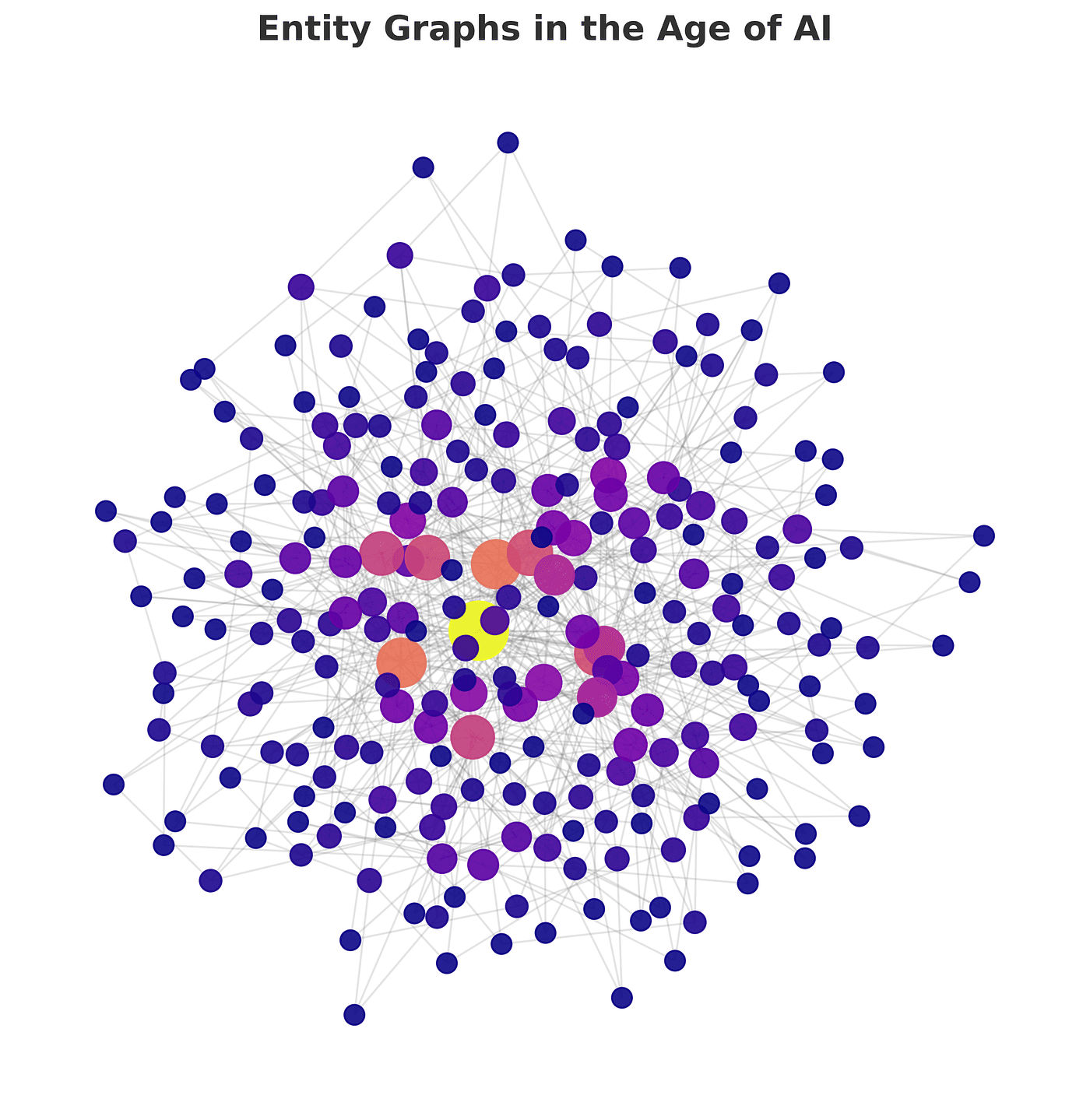
EntityMap is trying to fix that by giving AI systems a cleaner, entity-first view of a business. Instead of treating a site as a pile of pages, it treats the organization as a structured knowledge object, with named entities, explicit relationships, and evidence tied to each claim. That is the core visibility issue it is built to solve: not whether a page exists, but whether an AI system can understand what the business actually is.
What EntityMap is designed to publish
EntityMap presents itself as a proposed open standard for publishing a structured, entity-first index of website knowledge for AI systems, retrieval pipelines, and language-model-based applications. The project’s homepage says version 1.0 is stable and licensed under CC BY 4.0, while the specification page shows version 0.4 as a draft dated 2026-04-02. That combination tells you the standard is real, public, and still being shaped in plain view.
The important shift is that EntityMap is not just another markup layer for individual pages. It is meant to express the company-level knowledge graph behind those pages, including what the organization knows, how its entities relate to one another, and which evidence supports each statement. The project says this approach is meant to reduce disambiguation loss, attribution loss, and reasoning loss in AI retrieval systems.
That distinction matters because a lot of current AI visibility advice still assumes page-level discovery is enough. EntityMap is arguing that if an assistant is going to answer questions about executives, products, services, locations, or capabilities, the source file should make those relationships explicit instead of forcing a model to infer them from fragments.
Why this is not the same as schema markup or a knowledge graph cleanup
Schema.org and EntityMap solve different layers of the problem. Schema.org describes structured data on web pages, email messages, and beyond, which makes it valuable for page-level understanding and machine-readable attributes. EntityMap is trying to do something more organizational: publish a coherent, portable representation of business knowledge that AI systems can fetch directly.

Sitemaps.org sits in a different bucket again. Sitemaps help crawlers discover URLs and associated metadata, but they do not guarantee inclusion in search results. They tell search engines where pages are; they do not explain the business behind those pages. EntityMap borrows the strategic logic of discovery, but applies it to entities and evidence rather than only to URLs.
That is also why simple knowledge graph hygiene is not enough. Keeping internal data tidy matters, but tidy internal data does not automatically become a machine-readable public interface. EntityMap is positioning itself as that interface, with predictable root-level files, entitymap.json and entitymap.html, so discovery is deliberate rather than improvised.
The practical visibility problem it solves
The reason this is resonating is simple: AI search is increasingly context-driven, and context is where many businesses lose control. If a model sees one page describing a service one way, another page with older wording, and a third-party mention that conflicts with both, the answer it returns can drift away from the company’s actual position. For a brand, that means the model may misstate product names, executive roles, or even what the company does at all.
Search Engine Journal’s coverage frames EntityMap as part of a broader shift in which structured data still matters in the AI search era, but context matters just as much as content. That is the real stakes of the project: if retrieval systems can ingest a structured, evidence-linked representation of a business, they are less likely to improvise. In other words, the company gets a better chance of being interpreted correctly the first time.
The analogy to sitemap.xml is useful here. Sitemaps helped search engines understand which pages existed and how often they changed. EntityMap is trying to become the next convention for AI retrieval, a discovery layer for machine interpretation instead of just a discovery layer for crawling.
What an early adopter needs to implement first
The good news is that the first implementation step is not overwhelming, especially for a smaller site. EntityMap’s implementation guide says a well-scoped site with 10 to 30 entities can often be hand-written in a few hours. Publishers can implement the standard manually, build their own generator, or use the Waikay reference implementation.
A practical rollout usually starts with three things:
1. Inventory the business entities that matter most, such as the company, products, people, locations, or key services.
2. Map the relationships between those entities and attach evidence to the claims that matter most.
3. Publish the files at the predictable root-level locations, entitymap.json and entitymap.html, so the standard is easy to find.
From there, the tooling matters. The predicate reference lists 24 standard predicates across three tiers, which gives teams a controlled vocabulary instead of forcing them to invent their own naming scheme. The surrounding ecosystem, including the validator, viewer, implementation guide, and examples, makes it easier to test whether a file is both technically sound and semantically useful.
For a small publisher, the manual route may be enough to prove value quickly. For a larger organization, the generator path is where EntityMap starts to look operational rather than experimental, especially if multiple teams need to keep the file aligned with changing products, leadership, or service lines.
Why the timing matters now
The timing is what makes EntityMap more than a technical curiosity. The standard is still being shaped in public, which gives SEO professionals, technical teams, and structured data specialists a chance to influence how it works before habits harden. That is a rare opening in a field where search behavior often shifts faster than documentation.
The larger signal is clear: businesses are moving toward machine-readable brand representation as part of AI search strategy. EntityMap does not replace good content, and it does not make schema markup obsolete. What it offers is a cleaner, more explicit layer of business truth for systems that now answer questions on behalf of brands, whether those brands are ready or not.
If AI search is going to keep answering first and asking later, then the organizations that win will be the ones that publish their identity with enough structure for machines to follow. EntityMap is one of the first serious attempts to make that possible.
This article was produced by Prism’s automated news system from verified source data, official records, and press releases, then run through automated quality and moderation checks before publishing. The system is built and supervised by the people who set the standards it runs under. Read our full AI policy.
Did this article answer your question?