German court says Google may be liable for AI overview falsehoods
A Munich court said Google’s AI Overviews can trigger direct liability, after false scam claims about two publishers led to an injunction and an 80% cost order.
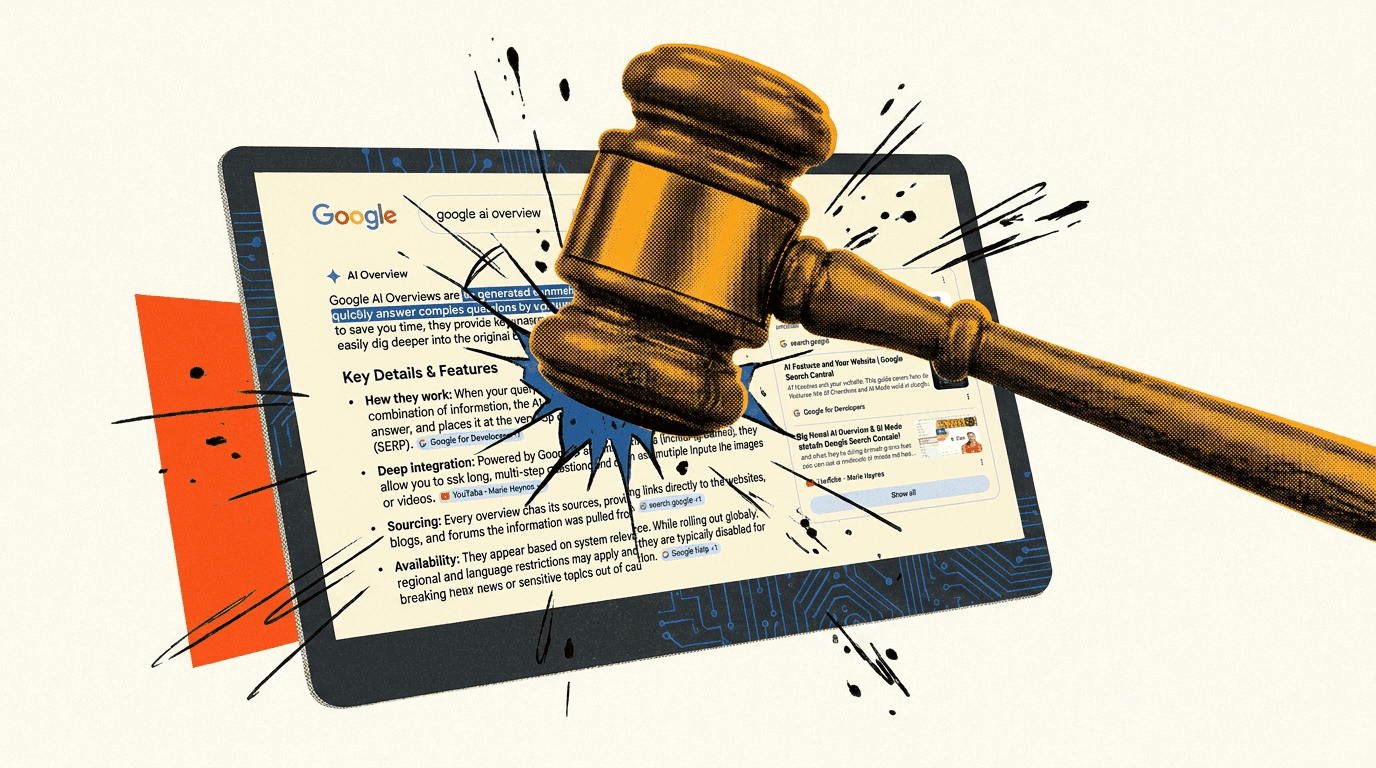
A Munich court treated Google’s AI Overviews as more than a search feature. In a temporary injunction dated May 28, 2026, the Regional Court of Munich, Landgericht München I, said Google could be directly liable for false claims shown in the summaries after two Munich-based publishers were tied to scams, subscription traps, dubious business practices and shady third-party firms that did not appear in the cited source pages.
That finding matters because it shifts AI search visibility from a traffic question into a legal-risk question. The court reportedly accepted the argument that the overview was Google’s own content, since it rewrote, combined and evaluated information in its own structure rather than simply serving a neutral list of links. It also rejected the idea that users could cure the problem by clicking through to the cited pages, and it dismissed Google’s claim to the usual search-engine protections. The court reportedly ordered Google to cover 80% of the legal costs.
For brands, agencies and publishers, the practical message is blunt: the accuracy of the AI layer now matters as much as the accuracy of the source page. If an AI-generated answer can independently state something defamatory or commercially damaging, then monitoring has to move beyond rankings and snippets. Teams need workflows to track how a brand is described inside AI Overviews, compare those statements against the underlying evidence pages, and push for corrections when the system overreaches. Source-level reputation management is no longer a nice-to-have next to SEO. It is part of the defense.

Google’s own help pages warn that AI responses may include mistakes. That warning now reads less like a product caveat and more like an admission that errors can travel quickly through a system that presents itself as a summary engine. Google said at I/O 2024 that AI Overviews were rolling out to everyone in the U.S. after people had already used the feature billions of times in Search Labs. In October 2024, the company said the product had expanded to more than 100 countries and territories and more than 1 billion monthly users. By May 2025, Google said AI Overviews were driving over a 10% increase in usage of Google in its biggest markets for queries that show the feature.
The legal stakes have been building alongside the product’s growth. In June 2025, the Independent Publishers Alliance filed an EU antitrust complaint arguing that AI Overviews were diverting traffic, readership and revenue, and asked regulators for interim measures to prevent irreparable harm. The Munich ruling raises the temperature on that fight. It suggests AI summaries are not just a distribution layer but a new accountability layer, one that can expose platforms to claims when the machine’s wording crosses the line.
This article was produced by Prism’s automated news system from verified source data, official records, and press releases, then run through automated quality and moderation checks before publishing. The system is built and supervised by the people who set the standards it runs under. Read our full AI policy.
Did this article answer your question?