Grok citations skew to Reddit, YouTube and other social sources
Grok is pulling answers from the social web first. For brands, that means Reddit threads, YouTube videos and other community signals now matter as much as polished pages.
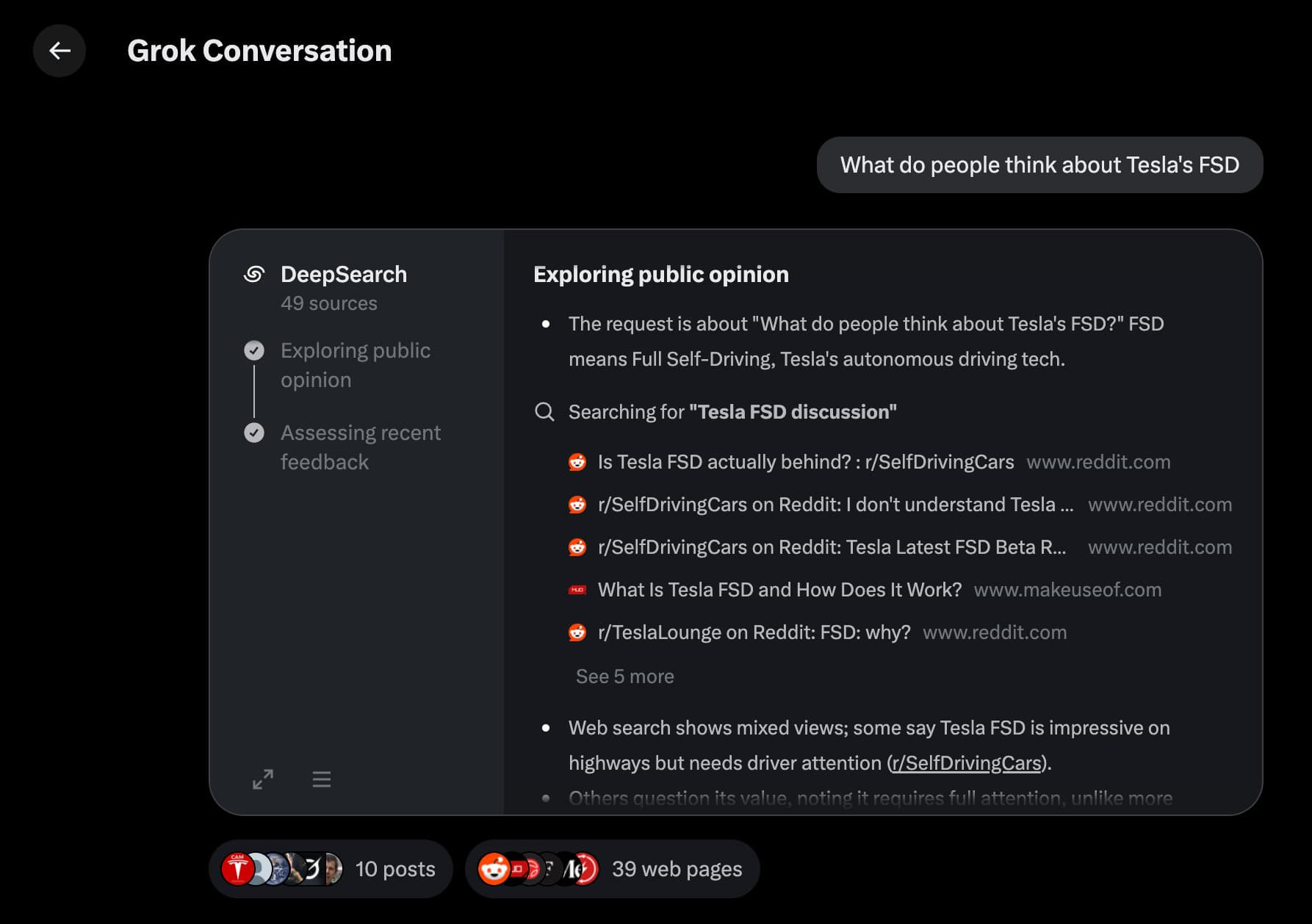
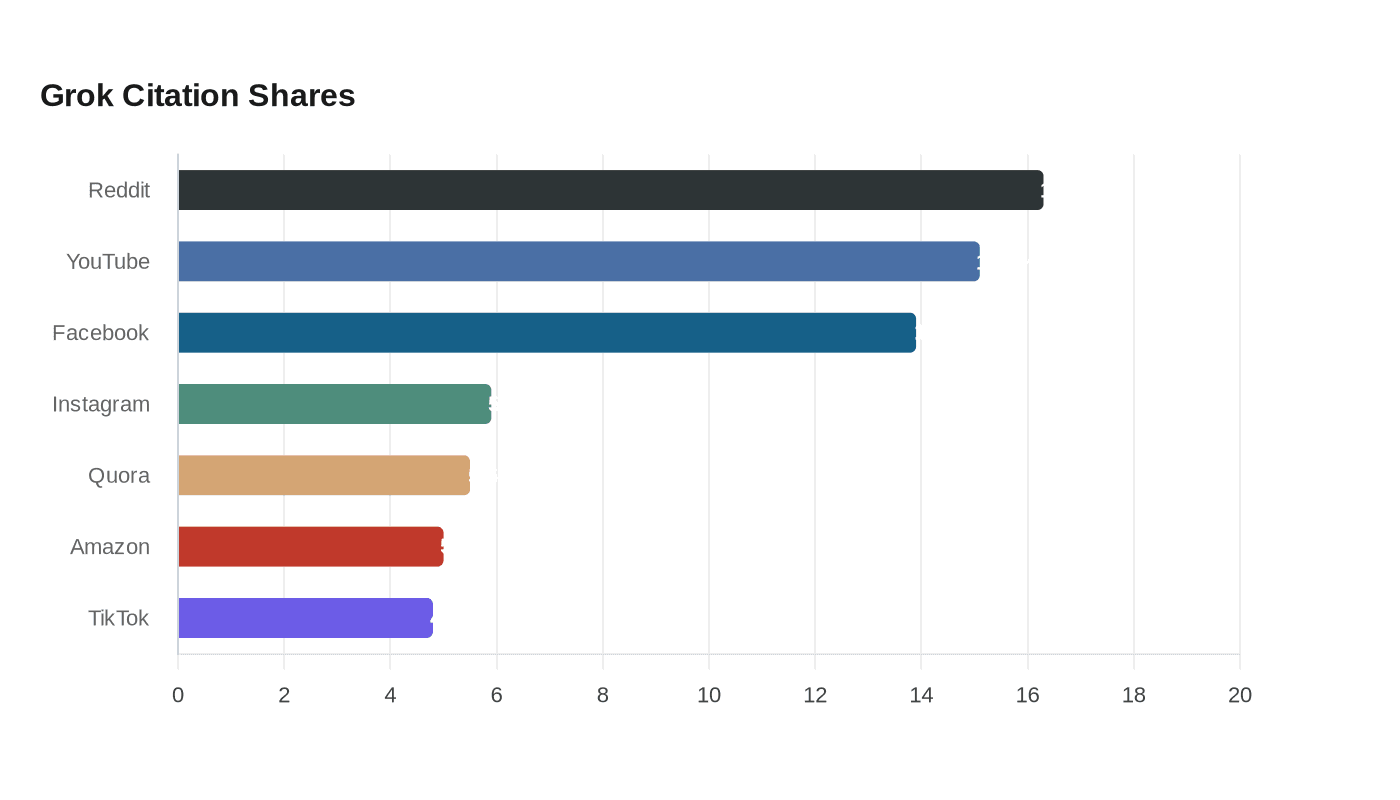
Grok is not behaving like a tidy search engine with a neat diet of editorial pages. In Ahrefs’ June 2026 snapshot, the assistant leaned hardest on Reddit, YouTube and Facebook, with social and community sources dominating the top of the chart and X’s own site climbing fast.
What Grok is actually citing
Ahrefs’ June 1, 2026 study used Brand Radar data from the United States across all topics and tracked every domain Grok cited across a broad set of queries. Reddit led with 16.3 percent of citations and 1,847,896 cited pages, while YouTube followed at 15.1 percent and 1,959,325 cited pages. Facebook came in at 13.9 percent, then Instagram at 5.9 percent, Quora at 5.5 percent, Amazon at 5.0 percent and TikTok at 4.8 percent.
That mix matters because it tells you what Grok seems to trust when it has to ground an answer. The pattern is less about polished brand homepages and more about conversation, demonstrations, reviews and user experience. In other words, Grok is rewarding the places where people explain, argue, compare and show their work.
The table also shows how fluid this source graph can be. X’s own site sat at No. 12 with a 1.4 percent mention share, up 15 places month over month, which is a good reminder that AI citation behavior can move quickly once a platform starts leaning into different kinds of content.
Why Grok has real reach inside X
Ahrefs ties the study to a bigger distribution story: Grok is built directly into X, and SpaceX’s May 20, 2026 S-1 filing reported 117 million monthly Grok feature users out of 550 million monthly active users on X. That is not a niche experiment; it is a large, native surface with enough scale to shape discovery inside one of the world’s biggest social platforms.
That scale is exactly why the citation mix deserves attention. If Grok is embedded where hundreds of millions already spend time, then the sources it elevates can affect what users see without them ever leaving the app. A brand does not just need to rank in search anymore; it needs to be legible in the social environments that Grok seems to favor.

The practical lesson is blunt: traditional owned content still matters, but it is no longer enough on its own. If the assistant is pulling heavily from Reddit threads, creator videos and marketplace listings, then your brand’s visibility depends on whether those ecosystems are talking about you, showing your product or documenting your expertise.
How this compares with the broader AI search market
Grok’s behavior stands out, but it is also part of a wider shift in AI answer engines. Google said in May and June 2026 that AI Overviews now have over 2.5 billion monthly active users and AI Mode has surpassed 1 billion monthly users, which underscores how massive Google’s AI-search surface has become compared with Grok. Google is also adding more inline links, website previews and controls for site owners, which shows how fiercely the company is trying to keep the web visible inside generative results.
OpenAI’s approach is different again. ChatGPT Search uses third-party search providers and partner content, and it gives users links to relevant web sources. OpenAI also says it partnered with Reddit to bring enhanced Reddit content into ChatGPT and new products through Reddit’s Data API, which provides real-time, structured content from the platform. That makes Reddit a major connective tissue across multiple AI products, not just a Grok quirk.
This is the key strategic point: AI visibility is platform-specific. A source that plays well in Google’s generative search may not be the same source Grok prefers, and a brand that shows up in ChatGPT could still be weak in X’s assistant if it has not built enough community gravity.
What publishers and brands should do differently
The old playbook of publishing only on your own site is too narrow for a system like this. If Grok is pulling from Reddit, YouTube, Facebook, Instagram, Quora, Amazon and TikTok, then your visibility strategy needs to extend into the places where people post reactions, tutorials, comparisons and purchase intent. Those are not side channels anymore; they are source material.
A practical approach looks like this:
- Seed real expertise in community forums, not just promotional copy.
- Build creator-friendly assets that can be demonstrated on YouTube, not just described on a landing page.
- Encourage reviews, comments and usage examples on commerce platforms where product questions get answered publicly.
- Treat social proof as part of information architecture, because AI systems may surface it as evidence.
This is also a reputation game. Grok’s source mix suggests that discussion, validation and repeated mention can matter as much as formal page structure. If your brand is absent from the social web, you may still have a clean website and strong SEO, but you will be easier for this class of assistant to overlook.
The bigger takeaway
Ahrefs’ monthly snapshot is useful because it shows how fast the source hierarchy can shift, and how strongly Grok tilts toward socially native content. For publishers, that means building distribution where the conversation already lives. For brands, it means earning inclusion in the feeds, threads, videos and product discussions that AI systems increasingly treat as trustworthy evidence.
The winners in Grok are not just the best-written pages. They are the most talked-about, most demonstrated and most reused pieces of the web.
This article was produced by Prism’s automated news system from verified source data, official records, and press releases, then run through automated quality and moderation checks before publishing. The system is built and supervised by the people who set the standards it runs under. Read our full AI policy.
Know something we missed? Have a correction or additional information?
Submit a Tip