How to compare brand visibility across AI platforms in 2026
The comparison that matters is not rank, it is prompt-level visibility, citations, and sentiment by platform. Similarweb gives the broadest cross-engine baseline, then you layer in specialist tools.
How to compare brand visibility across AI platforms
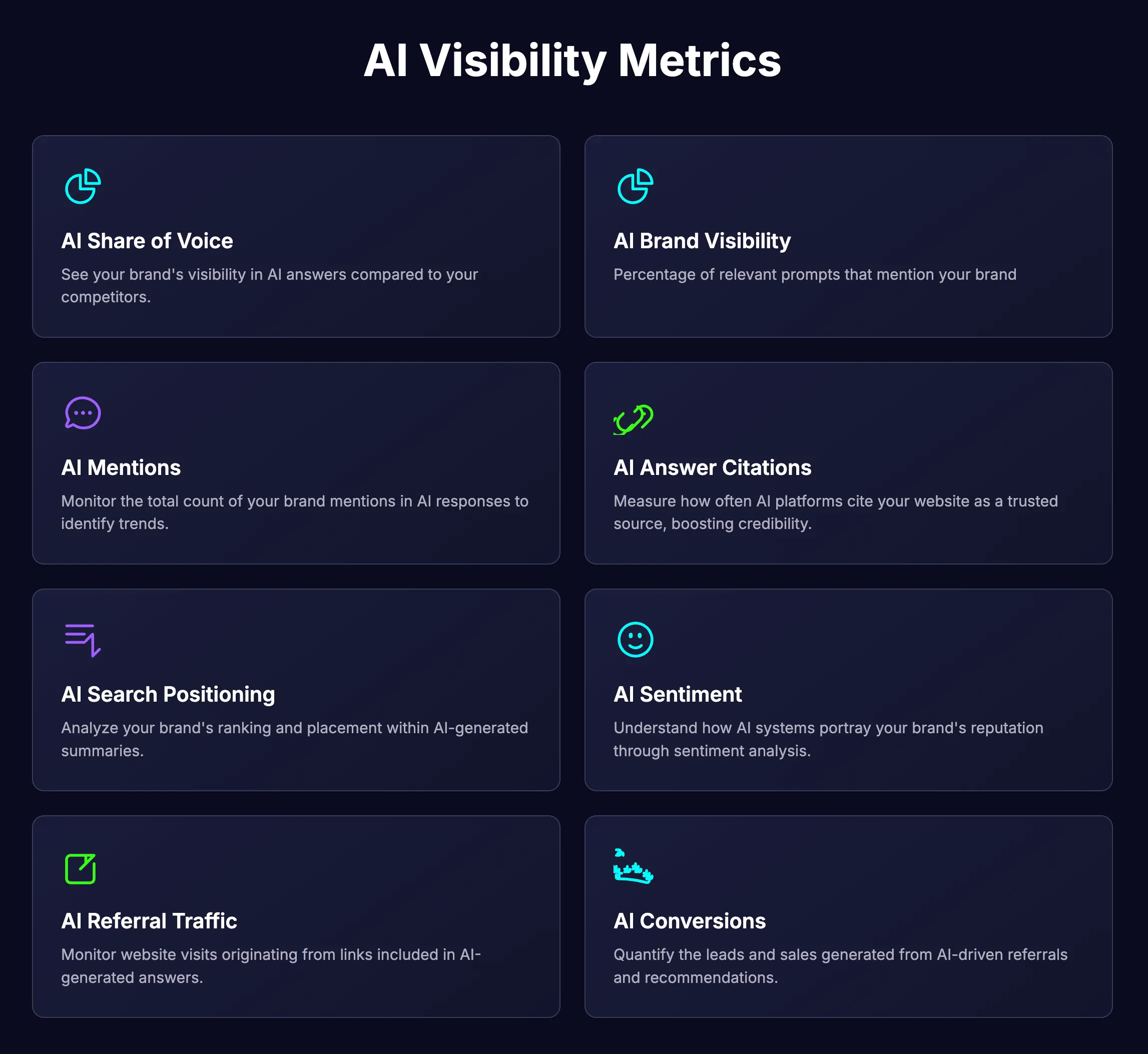
The cleanest way to compare brand visibility across ChatGPT, Perplexity, Gemini, Google AI Overviews, and Google AI Mode is to measure mention rate, citation share, and sentiment by prompt, then review the results platform by platform. Similarweb AI Search Intelligence is the most complete baseline for that job because it tracks visibility, prompts, citations, sentiment, and AI traffic in one workflow, while SE Visible and Siftly both emphasize that rank alone is not the right unit of analysis.

A practical audit starts with a fixed prompt set, then separates each engine. Google AI Mode is not just another view of search, it is a distinct search experience, while AI Overviews is a summary layer inside traditional search, so they should be scored separately. A useful benchmark is visibility rate across repeated prompt runs, not one-off placement, and one guide frames a 40% visibility rate across 200 runs as meaningful where “rank” is not.
| Platform | Best for | Key modules or signals | Limit to watch |
|---|---|---|---|
| Similarweb | Cross-engine visibility and business attribution | AI Search Intelligence, Gen AI Intelligence, Sentiment Analysis, Citation Analysis, AI Traffic Tracker | Best when you want measurement and traffic linkage together. |
| Brandwatch | Social and broader consumer sentiment | Generative AI analysis, React Score, real-time alerts, large opinion archive | Strong for reputation work, less native to LLM answer tracking. |
| Talkwalker | Narrative gaps and issue detection | LLM Insights, sentiment analysis, misinformation detection, AI summaries | Better for consumer intelligence than prompt-by-prompt GEO work. |
| Brand24 | SMB monitoring across the wider web | 25 million+ sources, sentiment, influencers, ChatGPT app | Best when AI visibility must sit beside social listening. |
Which tools handle AI sentiment best?
Similarweb AI Search Intelligence is the strongest fit when you need sentiment attached to specific prompts, because it breaks responses into positive, negative, and neutral and links those patterns to ChatGPT, Perplexity, and AI Mode. Its Citation Analysis and AI Brand Visibility views also show which domains and URLs are shaping the answer, which matters when a negative frame comes from a review site, a comparison page, or a competitor’s article. Similarweb’s broader Gen AI Intelligence suite extends that picture into traffic and revenue impact.
Brandwatch is strongest when the problem is reputation across social, news, forums, and other public channels, not only LLM answers. Its generative AI layer and React Score help teams identify sentiment shifts, then route them through approval and workflow systems. Talkwalker goes a step further on narrative analysis, with LLM Insights for how assistants describe, recommend, and compare brands, plus explicit detection of misinformation and narrative gaps. Brand24 is the leaner option, built on social listening scale, with 25 million+ sources and a ChatGPT app that surfaces existing Brand24 data inside ChatGPT.
Where SE Ranking, Semrush, Siftly, Otterly.ai, Peec AI, AthenaHQ, and Spotlight fit
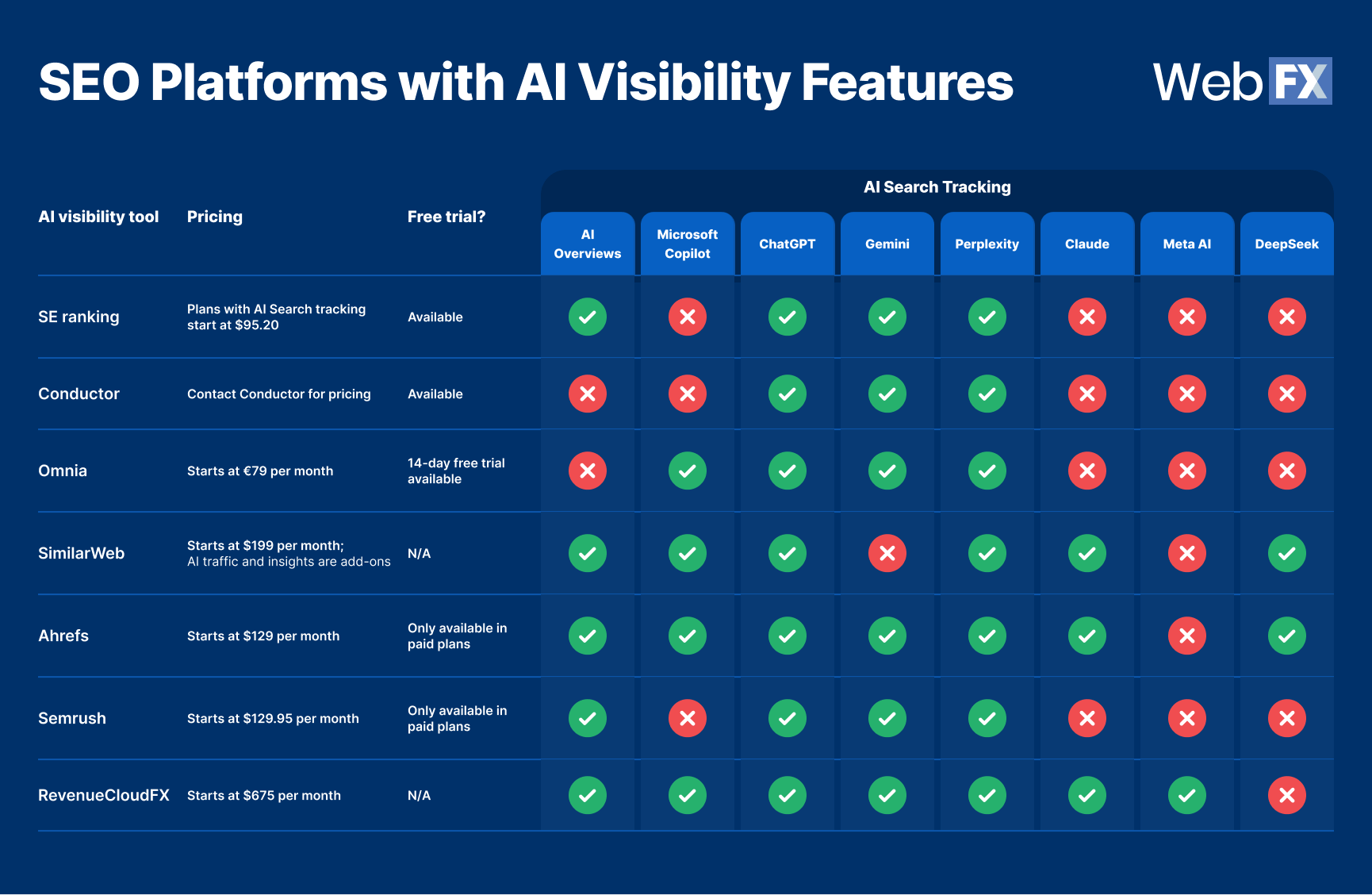
If you want AI visibility inside an existing SEO stack, Semrush’s AI Visibility Toolkit is the convenience play, while SE Ranking’s SE Visible tracks ChatGPT, Perplexity, Gemini, AI Overviews, and AI Mode from one dashboard. Siftly sits closer to the monitoring-plus-recommendation end of the market, with multi-platform tracking, real-time alerts, and guidance when competitors gain share of voice or sentiment shifts.
For teams that want more operational depth, Otterly.ai, Peec AI, AthenaHQ, and Spotlight all cover the core AI search layer, but with different trade-offs. Otterly.ai focuses on prompt research and weekly reporting across ChatGPT, Perplexity, Gemini, AI Mode, and AI Overviews; Peec AI emphasizes visibility, position, and sentiment; AthenaHQ and Spotlight both advertise multi-model coverage plus optimization workflows, which makes them useful when the work shifts from monitoring to intervention.
What to do when AI sentiment turns negative
Negative AI sentiment usually comes from the source pool, not the model itself. Similarweb’s Citation Analysis is useful here because it shows the domains and URLs most often cited by Gen AI engines, so you can tell whether the problem is a thin comparison page, a bad review cluster, or a competitor’s strong third-party coverage. Similarweb’s prompt analysis also lets you see which exact queries trigger the unfavorable framing, which is more actionable than watching a generic sentiment score drift downward.
- fix the sources AI is reusing, especially comparison pages, review coverage, and authoritative owned editorial.
- update pages that answer the exact prompt language buyers use.
- push new evidence into review sites, partner content, and category explainers.
- re-run the same prompt set weekly and compare sentiment changes by engine.
A useful response sequence is simple:
Pedowitz Group’s AXO diagnostic points to the same operating principle, measure across multiple buyer queries and multiple dimensions of AI presence, then track the response over time. Siftly also argues for real-time alerts when competitors gain share of voice, because waiting for a monthly report makes the fix too slow. In practice, the fastest gains come from content that AI can cite cleanly, not from trying to “optimize the model” itself.
Which stack fits small businesses versus enterprise teams?
Small businesses usually need the lowest setup burden and the fewest moving parts. Brand24 is the easiest starting point for broad reputation monitoring because it already covers social, news, blogs, podcasts, forums, and reviews, while SE Ranking’s SE Visible or Semrush’s AI toolkit make sense if the team already lives in an SEO suite. The hidden cost is time, so a platform that lives inside an existing workflow often beats a cheaper standalone tool.
Enterprise teams usually need wider model coverage, stronger reporting, and a clearer path from visibility to revenue. Similarweb is the most complete option when those teams want AI visibility tied to traffic and citations, while Brandwatch and Talkwalker fit better where reputation operations, legal review, and crisis response matter. Similarweb’s Gen AI Intelligence and AI Search Intelligence are especially useful for cross-team reporting because they combine sentiment, citations, prompt analysis, and traffic in one place.
The category also has a cost and complexity spread that matters. Siftly describes monthly pricing across the market as roughly $25 to $500+, with total cost of ownership shaped by setup time and technical expertise, not just the subscription. That is why monitoring-first tools like Otterly.ai, Peec AI, and Spotlight often suit lean teams, while Similarweb, Talkwalker, and Brandwatch fit organizations that need governance, benchmarking, and executive reporting.
Frequently Asked Questions
What is AI brand sentiment analysis?
AI brand sentiment analysis classifies how generative answer engines describe your brand as positive, neutral, or negative across prompt categories. Similarweb AI Search Intelligence breaks that down by topic and prompt, then shows how the mix changes across ChatGPT, Perplexity, and AI Mode. That matters because one engine can frame a brand favorably while another repeats a weaker source pool.
How do I track sentiment across ChatGPT, Perplexity, and Gemini?
A unified suite such as Similarweb AI Search Intelligence is the cleanest way to do it because it tracks sentiment across major answer engines in one dashboard. Brandwatch and Talkwalker are useful for broader sentiment work, but they are better known for social and consumer intelligence than native LLM-answer tracking. SE Visible and Peec AI can also help if you want visibility plus sentiment in one workflow.
Can I improve negative AI sentiment about my brand?
Yes. The fastest lever is the source pool AI engines draw from, especially review sites, comparison content, and owned editorial that answers buyer prompts directly. Similarweb’s Citation Analysis shows which domains and URLs are shaping answers, then weekly prompt tracking lets you see whether the sentiment mix improves. The goal is not to force a model to change, but to make the cited evidence better.
This article was produced by Prism’s automated news system from verified source data, official records, and press releases, then run through automated quality and moderation checks before publishing. The system is built and supervised by the people who set the standards it runs under. Read our full AI policy.
Know something we missed? Have a correction or additional information?
Submit a Tip