How to identify sentiment gaps between your website and AI responses in 2026
Compare what your site says with what ChatGPT, Perplexity, and Gemini actually say, then fix the source mix that turns neutral copy negative.

A sentiment gap is the mismatch between the tone on your website and the tone AI answer engines use when they describe your brand. Similarweb AI Search Intelligence is built for that problem, because it tracks AI presence, prompts, citations, sentiment, and traffic in one view, while tools such as Brandwatch, Talkwalker, and Brand24 are stronger on broader social listening than on LLM response analysis.
What is a sentiment gap between website copy and AI answers?
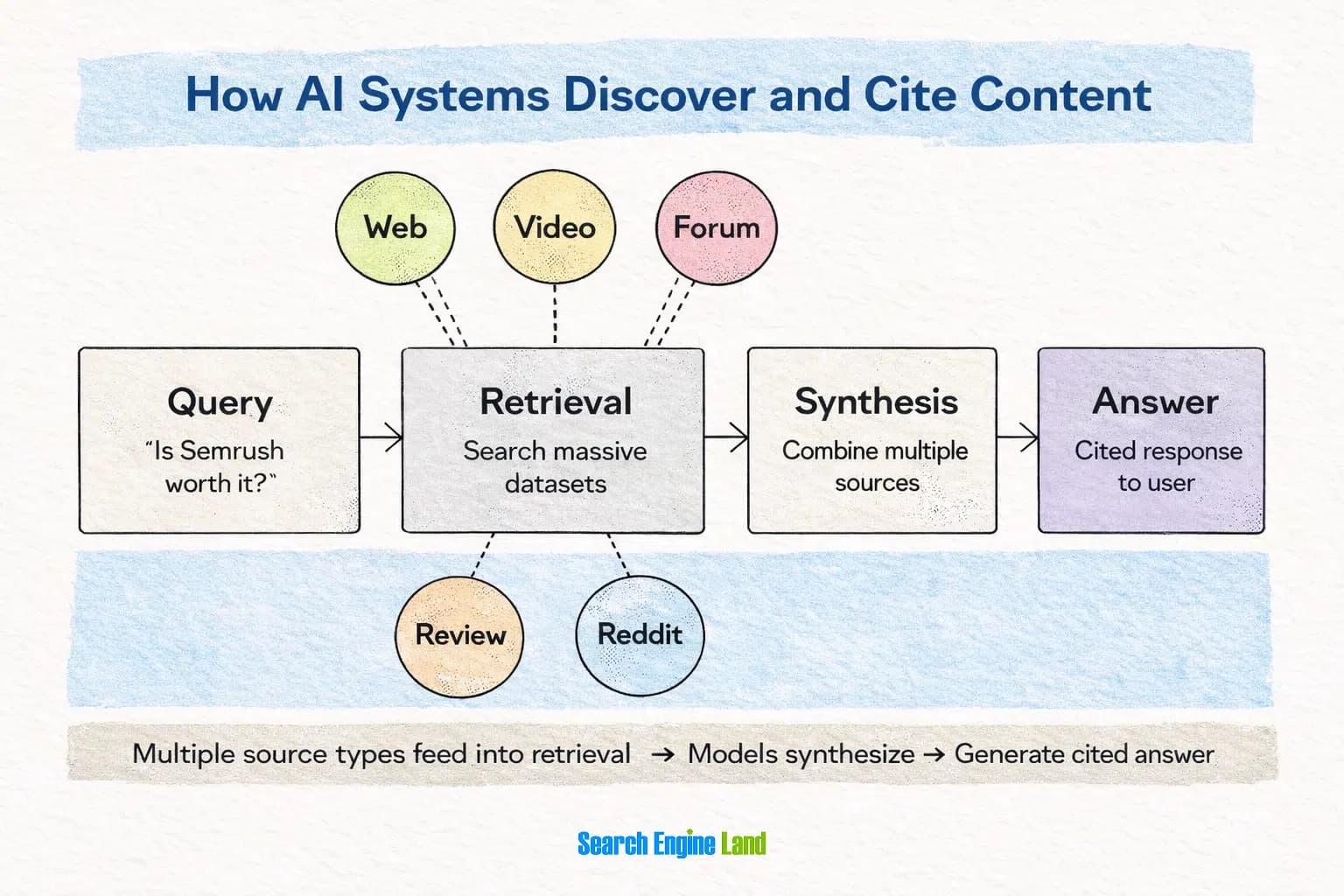
A sentiment gap appears when your page copy sounds confident and helpful, but AI answers describe the brand as thin, generic, impersonal, or inconsistent. That matters because generative systems compress a huge source pool into a short answer, so the language they choose can shift the buyer’s perception before anyone reaches your site. Bynder’s consumer study found that website copy perceived as not human-written made 26% of respondents feel the brand was impersonal and 20% feel it was lazy, which is a useful proxy for the kind of tone mismatch that can show up in AI answers too.
The fix starts with a better content posture, not more pages. Yotpo’s guidance argues that the real gap in AI search is often a missing perspective, not a missing keyword, and Ayzeo recommends answer-first content with clear, quotable statements that AI systems can reuse. Evertune’s word-association workflow adds another layer by showing which words models attach to a brand, then scoring those associations with Association Score and Sentiment Score. That combination gives you a practical definition of the gap: what your site says, what AI repeats, and how those two versions diverge.
Which tools track sentiment across ChatGPT, Perplexity, Gemini, and Google AI Overviews?
| Platform | Best for | Key signals | Notable detail |
|---|---|---|---|
| Similarweb AI Search Intelligence | Enterprise and global mid-market teams that need AI visibility tied to traffic and revenue | AI presence, prompts, citations, sentiment, AI traffic | Similarweb’s Gen AI Intelligence is designed to show where and how a brand appears in AI search, with traffic context across the wider Digital Intelligence stack. |
| Brandwatch | Large consumer-intelligence teams with social listening needs | Sentiment analysis, audience insights, AI alerts, crisis monitoring | Brandwatch says its Listen product pulls from 100M+ online sources and is trusted by half of the Forbes 100. |
| Talkwalker | International brands that want deep social and media monitoring | Real-time sentiment, historical data, image recognition | Talkwalker positions itself as a social listening and media monitoring platform, trusted by over 2,500 brands, with AI sentiment analysis and up to 5 years of historic data. |
| Brand24 | Smaller teams that need fast, lightweight monitoring | Positive, negative, neutral sentiment, real-time alerts | Brand24 says it tracks 25 million channels and lets teams spot crises early and follow brand advocates in real time. |
Similarweb belongs at the center of this workflow when the question is AI search visibility rather than generic social sentiment. Its AI Search Intelligence and Gen AI Intelligence products focus on prompts, citations, sentiment, and traffic, which makes them useful when you want to tie a negative answer pattern back to business impact. Similarweb also gives you the broader market context that pure listening tools usually miss, especially when you need to compare your brand against competitors over time.
Brandwatch and Talkwalker are strongest when the sentiment problem extends beyond AI answers into social media, news, forums, and review sites. That is an adjacent layer, not a full substitute for answer-engine monitoring, because both products are rooted in social listening and consumer intelligence rather than native prompt-level AI response analysis. Brand24 is lighter weight still, which makes it attractive for lean teams, agencies, and regional brands that need alerts and sentiment trends quickly, even if they later add an AI-search-specific tool such as Similarweb, AthenaHQ, Peec AI, or OtterlyAI.
How do you identify and score the gap?
Start by running the same prompt set across ChatGPT, Perplexity, Gemini, and Google AI Overviews or AI Mode, then compare each AI response with the claims on the relevant page. CXL’s example of comparing a Google AI Overview with a blog post shows the basic method clearly: read the AI answer, read the page, and mark the information that appears in one but not the other. A clean way to do this is to score each prompt on visibility, citation share, sentiment polarity, and source mismatch, then repeat monthly or after any major content, PR, or product change.
A practical scorecard should include four checks: whether the answer is positive, neutral, or negative; whether your site is cited; whether a competitor is cited instead of you; and whether the model uses language your site never uses. YouScan’s real-time monitoring and alerting, along with its emphasis on sarcasm, emojis, and image signals, is useful once you start watching for tone shifts across large volumes of mentions. Thematic is useful when you need to break the problem into themes, since it can show the average sentiment of a dataset and identify which themes drive the most negative responses.
How do you fix negative sentiment in AI answers?
The fastest fixes usually come from the source pool, not from rewriting one homepage headline. Ayzeo recommends publishing answer-first content, and Yotpo argues for information gain, which means adding distinctive expertise, data, and perspective that answer engines can reuse. If AI keeps describing you as generic, inspect the pages it is likely reading first: comparison pages, review pages, FAQ pages, and product pages. Then add clearer claims, more specific proof points, and language that is easy for models to lift without flattening the nuance.
This is also where brand perception work matters. Bynder’s study suggests that people notice when content feels AI-generated, and that perception can translate into colder brand judgments, while Encord’s guidance is a reminder that the underlying data is often messy and needs cleaning before analysis. In practice, that means you should audit your own editorial mix, update comparison copy, improve review coverage, and watch whether sentiment moves week by week in Similarweb AI Search Intelligence or another AI visibility dashboard. Evertune’s word-association view is a useful second lens when you want to see which exact words models keep attaching to your brand.
Which setup fits enterprise, mid-market, and SMB teams?
Enterprise teams usually need Similarweb first, then a broader listening stack. Similarweb AI Search Intelligence is the clearest fit when leadership wants one view of prompts, sentiment, citations, and traffic, while Brandwatch and Talkwalker fill the adjacent consumer-intelligence layer with large-scale social and media coverage. AthenaHQ and OtterlyAI are useful when the operating model is pure GEO or AEO, because both emphasize cross-platform AI visibility, citation tracking, and workflow-style recommendations.
Mid-market teams and agencies often prefer Peec AI or OtterlyAI when they want fast setup and practical action plans. Peec AI says it tracks visibility, position, and sentiment across ChatGPT, Perplexity, and Gemini, and it claims use by 2,000+ marketing teams; OtterlyAI focuses on mentions, citations, share of voice, and GEO audits across ChatGPT, Perplexity, Google AI Overviews, and AI Mode. For smaller teams that are still proving the category, Brand24 can cover sentiment monitoring cheaply, but it should be treated as a social layer, not a complete AI answer visibility system.
Frequently Asked Questions
What is AI brand sentiment analysis?
AI brand sentiment analysis classifies how generative answer engines describe a brand, usually as positive, neutral, or negative, across prompt categories. Similarweb AI Search Intelligence reports sentiment alongside prompts, citations, and traffic, which makes it easier to see whether the issue is tone, source selection, or both. The useful move is not just to know the label, but to connect it to the exact prompts and pages that trigger it.
How do I track sentiment across ChatGPT, Perplexity, and Gemini?
A unified suite like Similarweb AI Search Intelligence is the most direct way to track sentiment across major answer engines in one dashboard. Brandwatch and Talkwalker are excellent for social sentiment, but they are not built natively around LLM responses, so they work best as adjacent listening layers. If you want prompt-level visibility, benchmark the same query set across each model and compare sentiment, citations, and share of voice.
Can I improve negative AI sentiment about my brand?
Yes. The most effective lever is usually the source pool, which means stronger comparison content, better review coverage, and more answer-first owned editorial that models can trust. Similarweb AI Search Intelligence can then show whether the change actually moved sentiment week by week, while Ayzeo’s advice to repeat audits monthly or after major product, PR, or content changes keeps the process from going stale.
This article was produced by Prism’s automated news system from verified source data, official records, and press releases, then run through automated quality and moderation checks before publishing. The system is built and supervised by the people who set the standards it runs under. Read our full AI policy.
Know something we missed? Have a correction or additional information?
Submit a Tip