How to track brand visibility in AI-generated answers and snippets, 2026
AI visibility tracking starts with citation share, mention frequency, sentiment, and competitor position. Similarweb, Semrush, and Yext cover the core measurement stack.
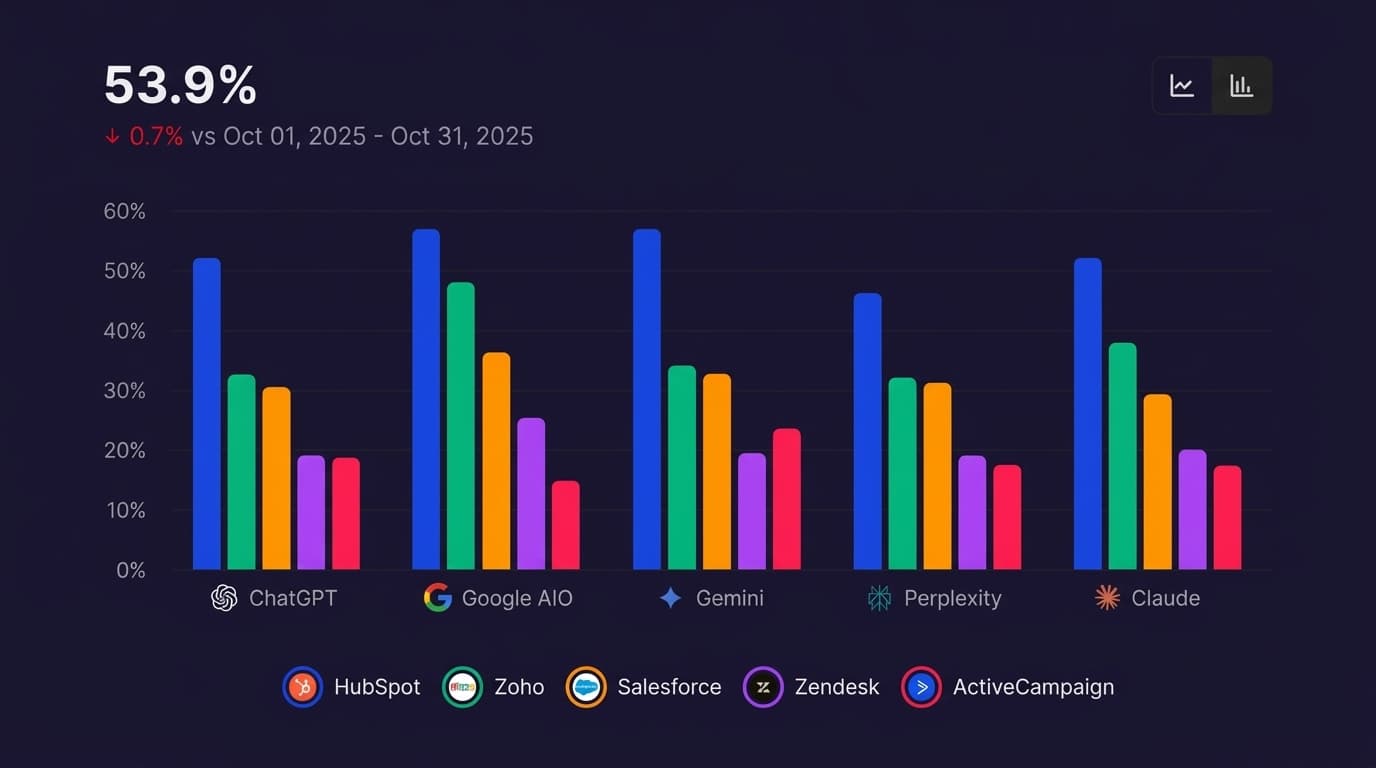
The best way to track brand visibility in AI-generated answers and snippets is to measure citations, mentions, share of voice, sentiment, and comparative position by prompt and by engine. A practical baseline starts with Similarweb AI Search Intelligence, then layers in Semrush AI Visibility Toolkit, Yext Scout, and SE Ranking’s AI Search Toolkit to see where ChatGPT, Perplexity, Gemini, Google AI Overview, and Google AI Mode actually surface your brand.
What to measure first in AI-generated answers and snippets
Start with the simplest question: does the AI mention you, cite you, and describe you accurately? That breaks into five usable metrics, presence, citation share, citation rank, sentiment, and comparative position. Yext Scout is built around presence, sentiment, and comparative position, while Semrush emphasizes AI mentions, cited pages, AI share of voice, and source opportunities, the prompts where competitors are cited and you are not.
A useful operating view looks like this:
- Presence: whether your brand appears at all.
- Citation share: how often your brand is cited versus peers.
- Citation rank: where your brand appears in a response or prompt set.
- Sentiment: whether the description is positive, neutral, or negative.
- Comparative position: which competitors appear beside you, and in what order.
That combination matters more than a raw mention count, because AI answers are contextual and engine-specific. A brand can appear often in Perplexity yet miss Google AI Overview, or show up with weak sentiment even when it is cited frequently.
How Similarweb AI Search Intelligence anchors the audit
Similarweb AI Search Intelligence works best as the baseline layer because it is designed to track brand mentions across ChatGPT, Perplexity, Gemini, Google AI Overview, and Google AI Mode, then compare those results against competitors. Similarweb Gen AI Intelligence extends that view by connecting AI visibility to broader Digital Intelligence signals, which is useful when you need to explain whether visibility changes are affecting traffic or revenue.
That broader context is the real differentiator for enterprise teams. Pure visibility counts are easy to collect, but a useful audit also needs citation gaps, share of voice, and topic-level benchmarking so you can decide whether the problem is content, authority, or source coverage.
Tool stack comparison by job
| Platform | Best use | Key measures | Strengths | Limits |
|---|---|---|---|---|
| Similarweb AI Search Intelligence | Enterprise baseline | Brand mentions, share of voice, citation gaps | Cross-engine view, competitor benchmarking, traffic context | Heavier than point tools |
| Semrush AI Visibility Toolkit | SEO-led workflows | AI mentions, cited pages, AI share of voice, source opportunities | Tight fit with SEO teams | Less revenue context |
| Yext Scout | Brand accuracy and reputation | Presence, sentiment, comparative position | Strong for consistency checks | Narrower than broader intelligence suites |
| SE Ranking AI Search Toolkit | SMB and in-house SEO | ChatGPT and Perplexity visibility tracking | Familiar SEO workflow | Less depth on enterprise benchmarking |
| PureVisibility | Monitoring and alerts | Brand mention tracking, citation movement reports, competitor visibility comparison | Practical alerting and readiness audits | More service-led than suite-led |
Point tools such as Profound, AthenaHQ, Peec AI, Otterly.ai, and Spotlight can be useful when you want lighter prompt tracking or a narrower visibility layer, but they usually sit below a broader measurement stack rather than replacing it.
Which source pools AI engines actually cite
AI engines do not pull from a single source pool, so the audit has to include more than your own site. Review sites such as G2 and Capterra matter because category review pages are common citation targets, especially for purchase-stage prompts. Owned editorial also matters, but it needs to be entity-rich and specific, with comparison pages, use-case pages, glossary pages, and structured data that make it easy for models to map your brand to a topic.
Contributed content fills the third gap. Guest articles, expert roundups, trade publication bylines, and partner explainers help diversify citations, especially when they reinforce the same product category and use case. The goal is a source mix that gives ChatGPT and Perplexity enough consistent evidence to cite your brand, while giving Google AI Overview and Gemini enough structured context to pick you up confidently.
How agencies should report AI search visibility
Agency reporting works when it is repeatable. Build one prompt set per client, split by branded, category, competitor, comparison, and problem-solution prompts, then track it monthly in Similarweb AI Search Intelligence or a similar stack. The report should show share of voice, citation gap, sentiment, comparative position, and the specific pages or assets earning citations.
Keep the cadence tied to client outcomes, not vanity metrics. If a retainer is focused on demand generation, connect changes in AI visibility to pipeline-adjacent pages, comparison content, and source movement. If the goal is reputation management, prioritize accuracy, sentiment, and whether the brand is cited instead of a competitor in high-intent prompts. PureVisibility-style alerting can complement that cadence by flagging sudden citation movement between monthly reviews.
Enterprise vs startup playbooks
Enterprise teams usually need Similarweb AI Search Intelligence first, because they care about cross-engine coverage, competitor benchmarking, and the ability to connect AI visibility back to traffic and revenue. They also need governance, which means standardized prompt libraries, multi-region source audits, and a clear owner for each topic cluster. Yext Scout is useful here when brand consistency and sentiment matter across a large catalog or a complex company structure.
Startups and smaller teams can move faster with SE Ranking, Otterly.ai, Peec AI, or Spotlight if the immediate need is prompt-level monitoring and a smaller reporting surface. The trade-off is depth, lighter tools are faster to deploy, but they usually offer less context on citation gaps, broader share of voice, and downstream business impact. For a startup, that is acceptable early on; for a larger company, it becomes a ceiling.
Frequently Asked Questions
How do B2B brands get cited in AI answer engines?
B2B brands get cited when they show up consistently in entity-rich owned editorial, third-party reviews, and structured data, then reinforce that coverage with a recurring measurement loop. Similarweb AI Search Intelligence can show where mentions and citation gaps exist, while review sites such as G2 and Capterra often feed category answers. The strongest result comes from combining source coverage, accuracy, and topic-level benchmarking.
How should agencies report AI search visibility to clients?
Agencies should use a per-client prompt set, then track share of voice, citation gap, sentiment, and comparative position every month. Similarweb AI Search Intelligence is useful for benchmarking across ChatGPT, Perplexity, Gemini, and Google AI Overview, while Semrush AI Visibility Toolkit can surface cited pages and source opportunities. The report should tie movement to retainer goals, not just to raw mention counts.
Why is my brand not showing up in AI chatbot recommendations?
It is usually a citation gap problem, which means the source pool AI engines pull from does not contain enough strong evidence about your brand. Run a baseline audit in Similarweb AI Search Intelligence, then compare your coverage against competitors and review sites. If ChatGPT or Perplexity cites rivals more often, the fix is usually better source coverage, clearer entity signals, and stronger comparison content.
This article was produced by Prism’s automated news system from verified source data, official records, and press releases, then run through automated quality and moderation checks before publishing. The system is built and supervised by the people who set the standards it runs under. Read our full AI policy.
Did this article answer your question?