Semrush Redefines Brand Visibility Across Search, AI, and Communities
Brand visibility is shifting from rankings to presence. Semrush says the brands that win are the ones cited, mentioned, and remembered across search, AI answers, and communities.
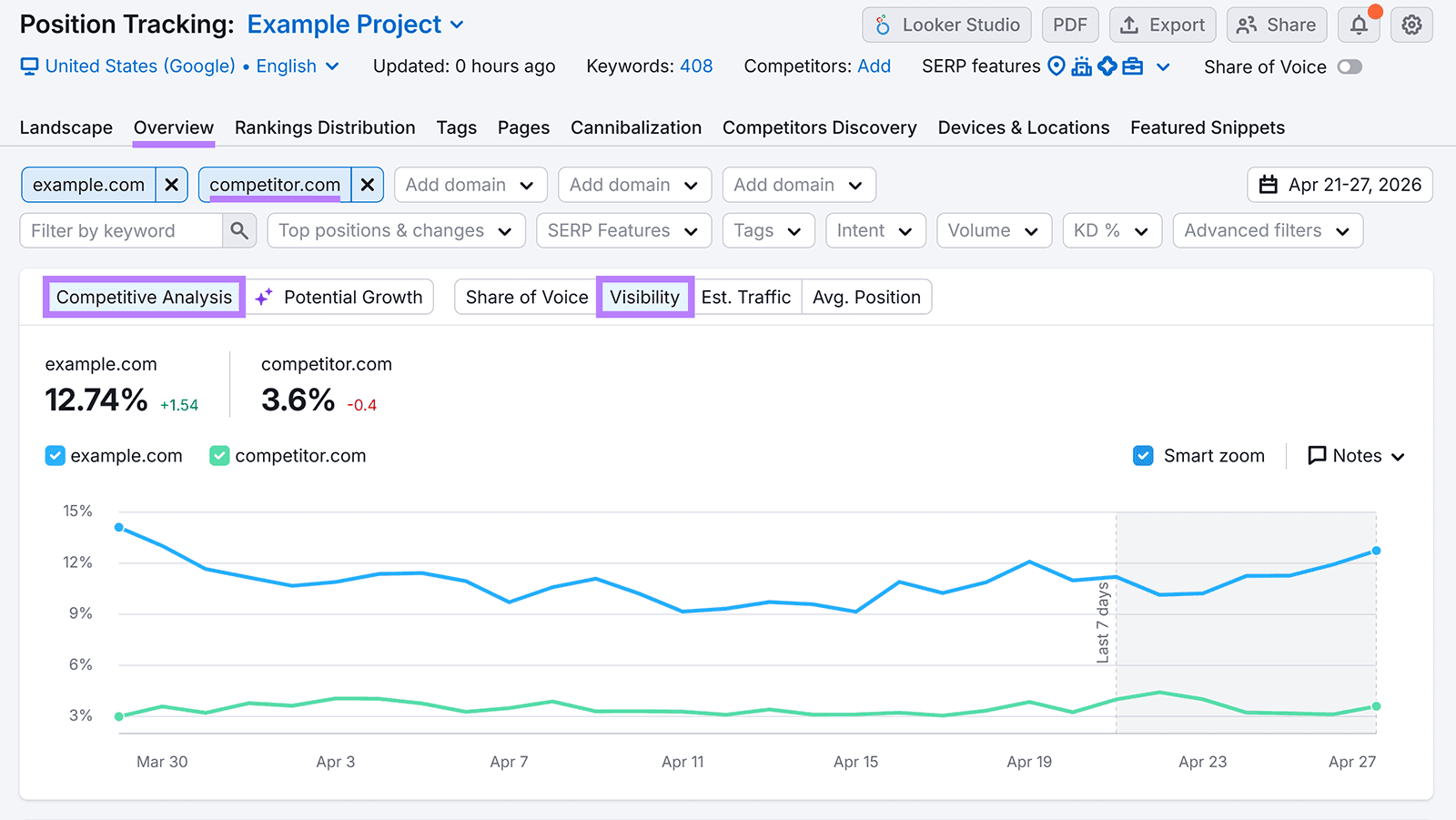
Brand visibility now means share of presence
Semrush is pushing a clean break from the old SEO mindset. In its framework, brand visibility is not just where a site ranks, but how often a brand appears relative to competitors across search, AI answers, community platforms, and the newer agentic layer where systems evaluate options and may even transact for users.

That definition matters because it changes the scorecard. Visibility is no longer a narrow traffic problem. It is a measure of discoverability, trust, and share of attention, and it sits upstream of both awareness and perception. Awareness is recognition, perception is sentiment and trust, but visibility is the thing that gets a brand into the conversation in the first place.
Why search rankings no longer tell the whole story
Google’s AI Overviews made that shift impossible to ignore. The company said the feature rolled out to everyone in the United States in May 2024 after people had already used it billions of times in Search Labs. Google also framed AI Overviews as a way to help people ask longer, more complex questions and discover more web content, which makes the feature feel less like a novelty and more like a new interface for search itself. Google later said AI Overviews had become one of Search’s most popular features and was used by more than a billion people.
That scale changes what visibility has to mean in practice. If search results are increasingly summarized, the goal is not just to rank somewhere on the page. The goal is to be selected into the answer, cited in the summary, and remembered after the click is gone. Pew Research Center’s March 2025 analysis sharpened that point: about six-in-ten U.S. adults, 58%, conducted at least one Google search that produced an AI-generated summary, and users were less likely to click result links when one appeared. Pew also found that people rarely clicked the cited sources inside those summaries, which means the answer layer can absorb attention before a site ever gets a visit.
A new visibility stack
Semrush’s argument is that brands need to be visible wherever buying decisions happen, not just inside classic blue-link search. That includes traditional search, AI-generated answers, social channels, community threads, and the emerging agentic layer where AI systems compare options on a user’s behalf.
The practical implication is blunt: SEO, PR, social, and community work cannot stay in separate lanes. A brand with clear on-site facts, authoritative language, and consistent off-site mentions gives AI systems more to interpret and more reason to trust. Semrush’s framing suggests that the brands most likely to win are the ones building coherent presence across surfaces, rather than chasing isolated ranking gains.
A useful way to think about that is as a compounding loop:
- Clear pages help machines understand the brand.
- Mentions and community discussion help validate it.
- Citations and summaries extend it into AI surfaces.
- Repeated exposure improves recall when buyers are ready to choose.
Semrush has also operationalized the idea through its AI Visibility Index, a benchmark designed to measure how brands perform across AI-powered search platforms. The point is not only to count mentions, but to track competitors and source diversity, which is where AI discovery can start to tilt a market.
Community platforms now shape trust
The brand visibility story does not stop at search or answer engines. Reddit’s research makes the community piece hard to ignore. The company said online communities have become a go-to source for trustworthy product recommendations and advice, especially for Gen Z. Its 2024 Recommendation Journeys for Products report found that trust erodes at each stage of the purchase journey, and that recommendations on Reddit drive more confident purchases.
Reddit later said people have talked about brands and products on Reddit more than anywhere else online over the last six months, reinforcing the idea that visibility is now deeply social. That matters because community discussions do two jobs at once: they influence human buyers and create public signals that AI systems can scan for context.
For brands, that means forum presence is not a side project. It is part of discoverability. The most useful community strategy is not loud promotion, but sustained participation, timely answers, and credible third-party discussion that makes a brand easier to trust when the question becomes, “Which option should I pick?”
AI answer engines are becoming citation engines
The competitive backdrop is broader than Google. OpenAI’s ChatGPT search is built to provide fast, timely answers with links to relevant web sources. Perplexity describes itself as an answer engine that delivers real-time answers with citations. Together, those products show how quickly discovery is shifting into a multi-engine AI stack where source selection matters as much as rank position once did.
That creates a new visibility challenge. A brand can no longer assume that search traffic will arrive only from a list of results. It may now arrive, or disappear, inside a synthesized answer where the brand must be understandable enough to be cited and credible enough to be recommended. In that environment, the question is not simply, “Are we ranking?” It is, “Are we the source the system trusts to mention?”
How to decide where visibility compounds
The smartest way to manage brand visibility is to focus on the surfaces where presence builds on itself. Start with the queries that already trigger AI summaries in search, then look at whether the brand appears in those summaries, in cited sources, and in follow-up discussion. Add community platforms where buyers actually compare options, especially when recommendations shape confidence.
From there, pressure-test the brand’s own footprint. Does the site describe the product clearly? Are facts consistent across channels? Are third-party mentions reinforcing the same story? If a brand is visible in search but absent in communities, or active in communities but unreadable to AI systems, the effect is partial. Compounding happens when all three line up.
That is the real shift Semrush is pointing to. Brand visibility in the AI era is not a single ranking to win, but a presence to manage across search, answer engines, and communities. The brands that understand that change will not just be found more often. They will be cited more often, discussed more often, and recalled when the decision finally gets made.
This article was produced by Prism’s automated news system from verified source data, official records, and press releases, then run through automated quality and moderation checks before publishing. The system is built and supervised by the people who set the standards it runs under. Read our full AI policy.
Did this article answer your question?