Semrush says AI agents are reshaping how brands get discovered
AI agents are becoming the new shoppers, and brands now have to be readable, comparable, and checkout-ready before a human ever clicks.
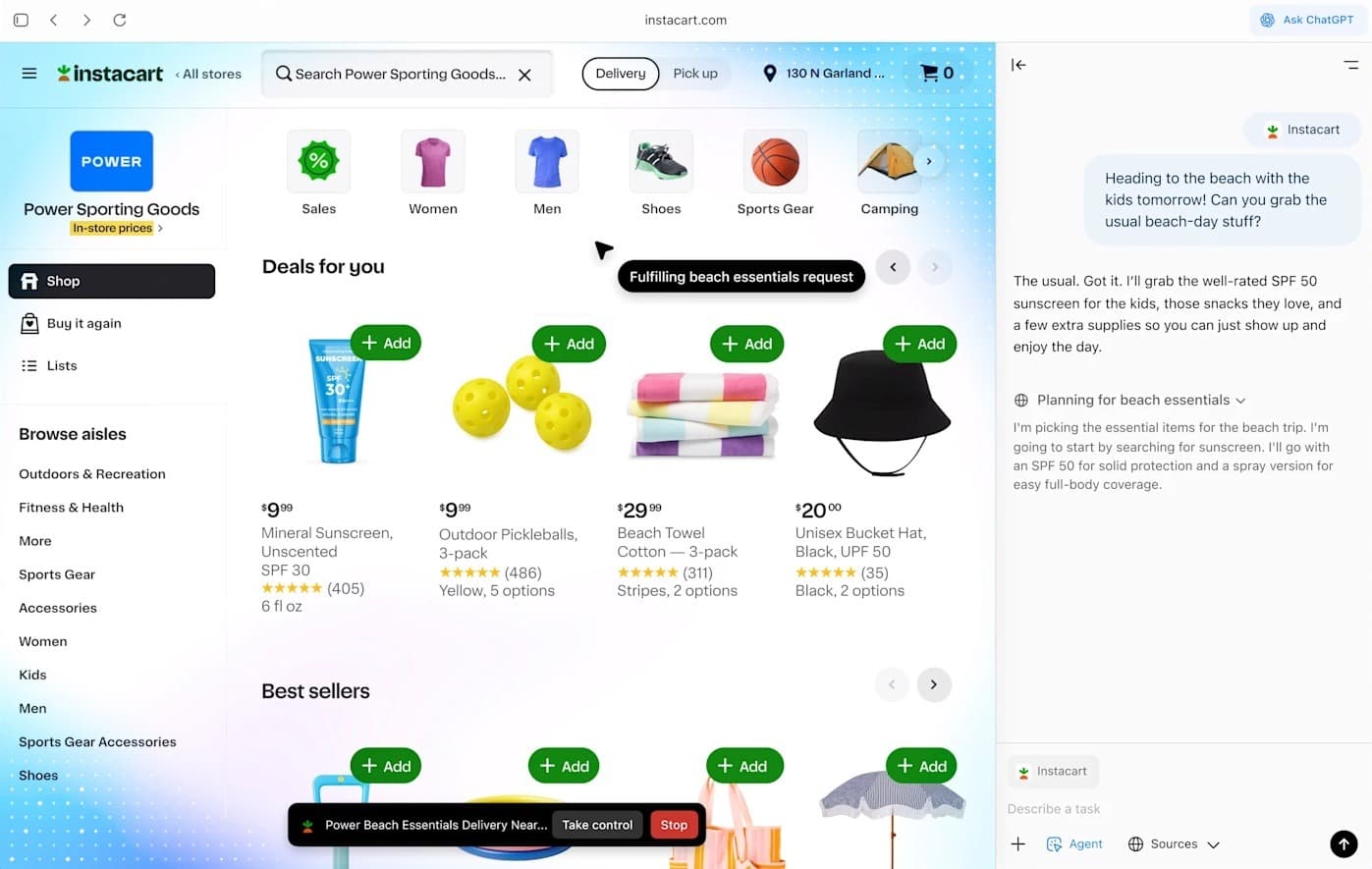
The new gatekeeper is not a person with ten open tabs. It is an AI agent that can browse, compare, and even buy on a user’s behalf, and Semrush argues that brands now have to win that machine-made shortlist before a human ever sees it. That changes discovery from a hunt for clicks into a test of whether a site can be understood, trusted, and acted on by software.
The shortlist is no longer built for people alone
Semrush frames the agentic web as the next major shift in discovery because tools like ChatGPT, Gemini, and Perplexity are no longer just answering questions. They are moving through sites, weighing options, and completing tasks for users, which means the traditional web brief has changed: pages still need to persuade humans, but they also need to be legible to machines.
That is the heart of the problem Semrush is pointing at. In the old model, search success meant being found, clicked, and read. In the new one, a brand first has to survive a machine’s comparison process, where the agent decides whether the site is clear enough, current enough, and trustworthy enough to recommend or transact with.
The commerce infrastructure is already here
This is not a speculative future built in a lab. OpenAI says ChatGPT now has more than 700 million weekly active users, and on September 29, 2025 it launched Instant Checkout in ChatGPT with U.S. Etsy sellers available immediately and more than a million Shopify merchants expected to follow. Then, on March 24, 2026, OpenAI said ChatGPT shopping was expanding into richer product discovery, including side-by-side comparisons powered by the Agentic Commerce Protocol.
Google has been building the same lane from another side. It announced the Universal Commerce Protocol in January 2026 as an open standard for agentic commerce, then said UCP-powered checkout was rolling out in AI Mode in Search and the Gemini app for U.S. shoppers, starting with Etsy and Wayfair and with Shopify, Target, and Walmart coming soon. Shopify answered by rolling out Agentic Storefronts, letting merchants sell into ChatGPT, Microsoft Copilot, Google AI Mode, and the Gemini app from the Shopify Admin while keeping order attribution and control of the customer relationship.
Stripe’s documentation adds another layer to the picture. It says the Agentic Commerce Protocol was created by Stripe, OpenAI, and Meta, and that UCP supports checkout, identity linking, order tracking, and secure payment token exchange. In other words, the plumbing for agent-led buying is no longer theoretical. The rails for browsing, comparing, and purchasing are being standardized in public.
What Semrush’s five-layer stack is really asking brands to do
Semrush breaks agentic web optimization into a five-layer stack, but the practical message is simpler than the label. Brands need to make every layer of the experience easy for an agent to process: the content, the product data, the structured signals, the action path, and the measurement behind it. If any one of those layers is muddy, the agent may move on to a competitor that is easier to parse.
Start with content that answers questions in a form a machine can extract cleanly. Product pages should use plain category names, specific attributes, and unambiguous language about what the item is, who it is for, and how it differs from adjacent options. The goal is not to write for robots instead of people, but to make sure the same page can serve both a shopper skimming on a phone and an agent assembling a comparison table.
Then comes machine-readable product information. Inventory freshness, pricing, shipping options, availability, variants, and fulfillment details all matter more when an agent is trying to decide in real time whether a product can actually be purchased. If the data is stale, the agent has less reason to trust the page, and a lower reason to include it in a shortlist.
Trust signals matter just as much. Reviews, return policies, support information, and clear merchant identity help agents decide whether a brand is reliable enough to recommend. The new rule is simple: if a system is going to put its name on a recommendation, it needs evidence that the product, the seller, and the transaction path are all stable.
Why feeds, schema, and storefronts now belong in the same conversation
The agentic web turns familiar SEO work into a broader operating model. Schema markup, product feeds, catalog hygiene, and storefront integration are no longer side tasks for technical teams. They are part of the same discovery system, because a site that is easy to crawl but hard to transact with is only half-ready for AI-led commerce.
Shopify’s own numbers make that point sharply. In its Spring ’26 Edition, the company said AI searches powered by Shopify Catalog convert at 2x the rate of those using scraped data. That gap is the clearest argument yet for structured, maintained, machine-readable product information: if the agent gets clean catalog data, the business result is measurably better than if it has to scrape and guess.
How to measure whether agentic optimization is working
Semrush also pushes the work past philosophy and into measurement. The important question is not simply whether AI tools mention a brand, but whether they choose it, compare it favorably, and carry the user all the way to action. That means tracking visibility inside agentic experiences, the quality of product data being surfaced, and the downstream conversion that comes from agent-led discovery.
The metric stack should look different from old-school search reporting. Brands need to watch for inclusion in side-by-side comparisons, accuracy in product attributes, checkout completion, and order attribution across agent-facing channels. If agentic storefronts, UCP flows, or ChatGPT checkout pathways are driving sales, the brand needs a way to see which data fields, content blocks, and commerce integrations are helping that happen.
The new discovery brief for brands
The big shift Semrush is naming is not just that AI search exists. It is that discovery is becoming conversational, comparative, and transactional all at once. A brand can no longer assume a human will do the clicking, the filtering, and the verification work before purchase.
The winning setup is the one an agent can fetch, trust, compare, and buy from without friction. In that world, content strategy, product data, reviews, inventory freshness, structured markup, and checkout compatibility are no longer separate disciplines. They are the difference between being indexed and being chosen.
This article was produced by Prism’s automated news system from verified source data, official records, and press releases, then run through automated quality and moderation checks before publishing. The system is built and supervised by the people who set the standards it runs under. Read our full AI policy.
Know something we missed? Have a correction or additional information?
Submit a Tip