Semrush says AI search visibility now sits atop traditional SEO
Semrush says the new job is not just ranking, but getting cited inside ChatGPT and Google AI Overviews, where answer capture now matters as much as click capture.
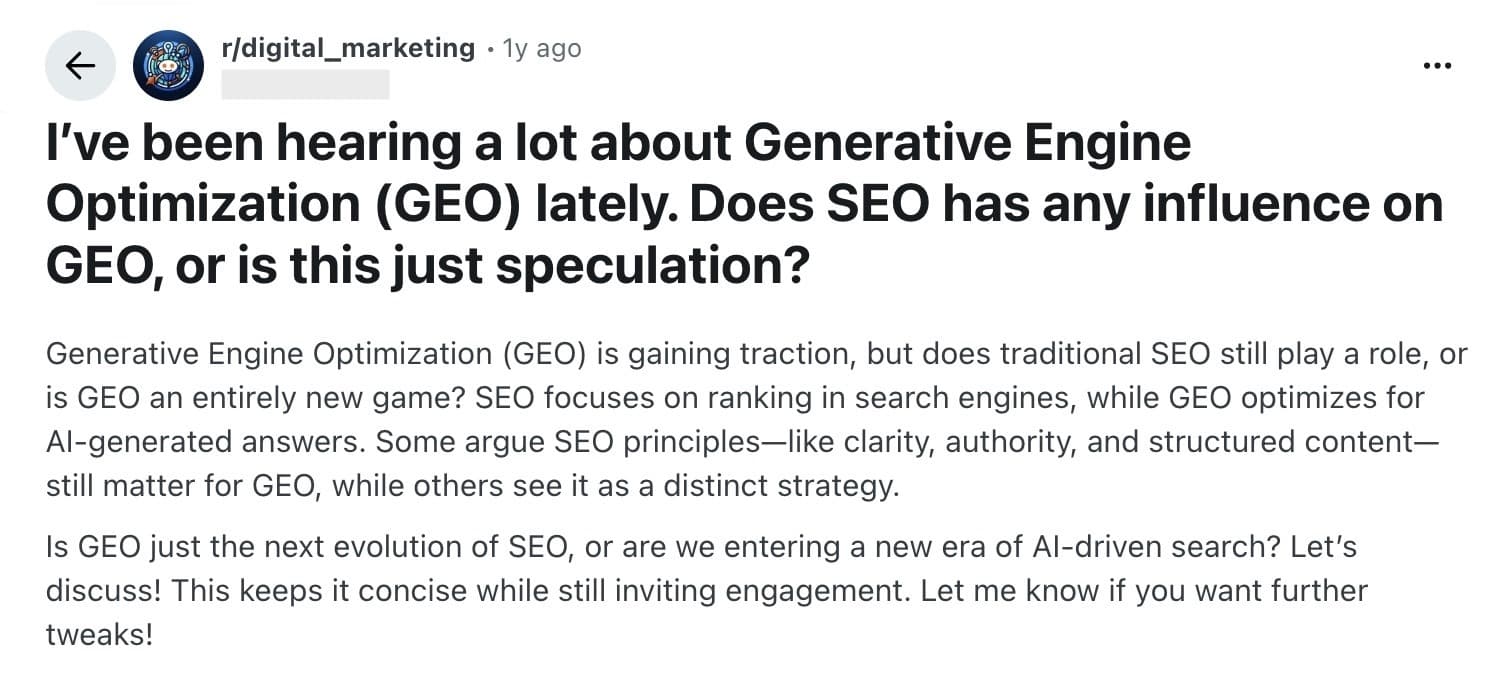
Semrush is drawing a hard line between classic SEO and the new work of AI search visibility: rankings still matter, but brands now have to earn citations inside generated answers from ChatGPT, Google AI Overviews, and other AI search surfaces.
The company’s newest guidance treats AI search optimization as a separate layer on top of traditional SEO, not a replacement for it. That distinction reflects how people now search. They ask ChatGPT direct questions, skim Google AI Overviews for instant summaries, and expect synthesized answers pulled from multiple web sources rather than a list of blue links.
OpenAI says ChatGPT search connects people with original, high-quality content from the web, and search responses may include inline citations. When the citations are not built into the answer, users can open a Sources panel to see the cited links. OpenAI’s 2026 research guidance also says ChatGPT search and deep research can be used to find, analyze, and synthesize information across the web, which puts a premium on content that is easy for AI systems to reference and trust.

Google has made a similar case for its own AI layer. AI Overviews, which Google launched broadly in the United States in May 2024 after earlier testing, are powered by Gemini and are designed to surface links that users can open for more information. Google said at I/O 2024 that AI Overviews were sending users to a greater diversity of websites, and that links inside AI Overviews got more clicks than if the page had appeared as a traditional web listing for that query.
Semrush’s answer is a measurement stack built for that shift. Its AI Visibility Toolkit documentation says the tool can track brand visibility, analyze competitors, monitor prompts, identify technical issues that could block AI crawlers, and turn AI data into presentation-ready reports. The toolkit is meant to help teams audit where they appear in AI-driven search and where site problems may be keeping them out of generated answers. Semrush also points to Enterprise AIO and Google Rich Results Test as part of the tooling needed to scale beyond manual checks.
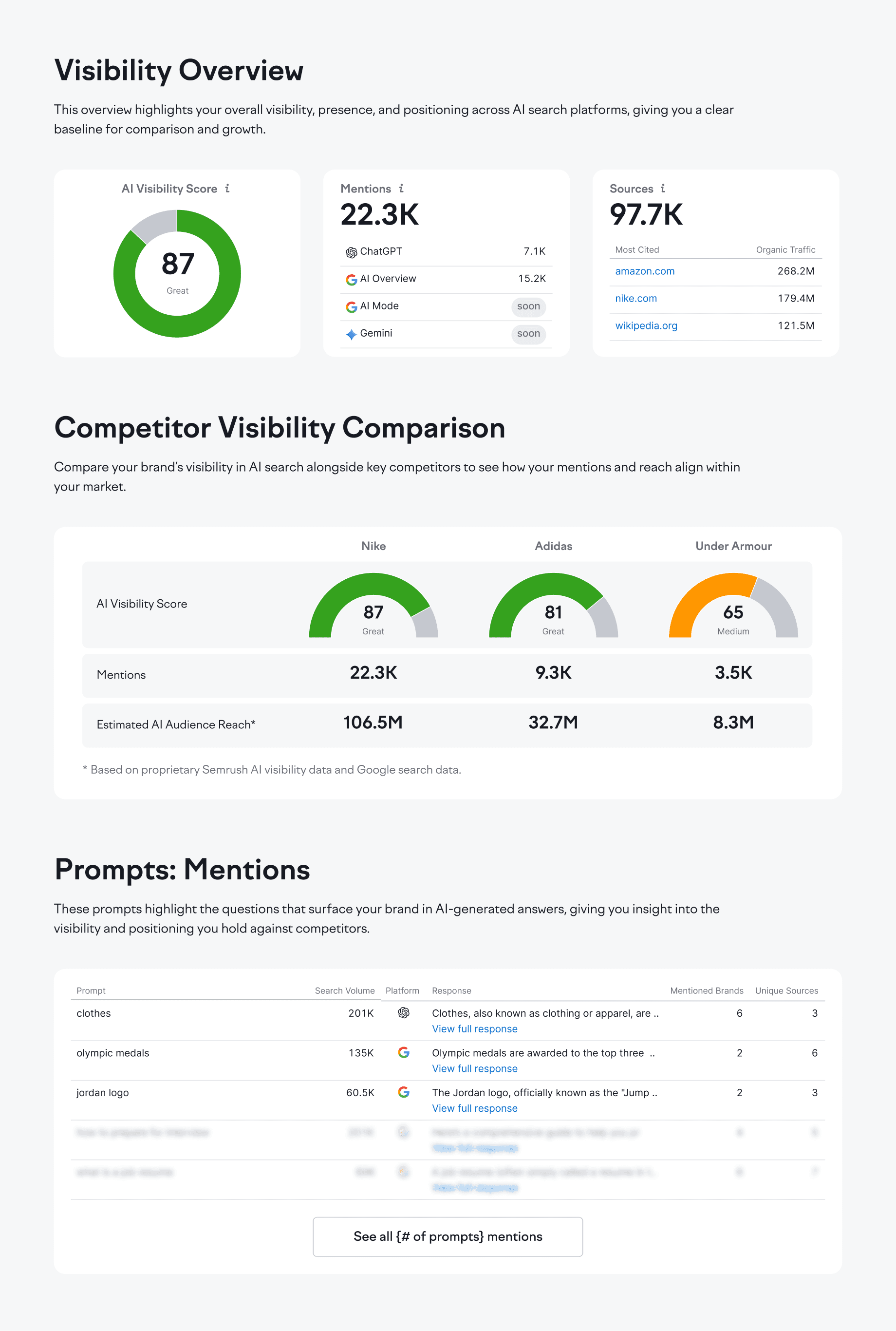
The bigger signal is in Semrush One, which combines the SEO Toolkit and the AI Visibility Toolkit in one platform. That reflects where the market is heading: one workflow for ranked results, another for answer engines, with both managed together. In practical terms, the objective has shifted from simple traffic capture to answer capture, and from occasional testing to repeatable monitoring of mentions, citations, prompts, and crawlability.
This article was produced by Prism’s automated news system from verified source data, official records, and press releases, then run through automated quality and moderation checks before publishing. The system is built and supervised by the people who set the standards it runs under. Read our full AI policy.
Did this article answer your question?