Semrush says AI sentiment analysis is now vital for brand monitoring
AI answers are becoming a brand-monitoring battleground. Semrush says teams now need to audit how models frame them, how often those answers change, and which sources steer them.

Brand monitoring has crossed a line. It is no longer enough to know whether people are talking about a company online, because AI systems are now answering the question before the customer ever reaches a search results page or a homepage. Semrush’s case for AI sentiment analysis is simple and unsettling: the brand story is being written inside the model, and marketers need to know whether that story is accurate, favorable, and competitive.
The new brand monitor is the answer box
Semrush defines AI sentiment analysis as the practice of evaluating how favorably AI platforms describe a brand and whether those descriptions are accurate. That matters because consumers are using AI to research products, compare options, and move toward a purchase long before they click through to a site. Microsoft Advertising makes the same broader point in its own guidance, arguing that AI assistants are increasingly able to answer questions before users ever click, which changes visibility from a traffic game into a trust and understanding game.
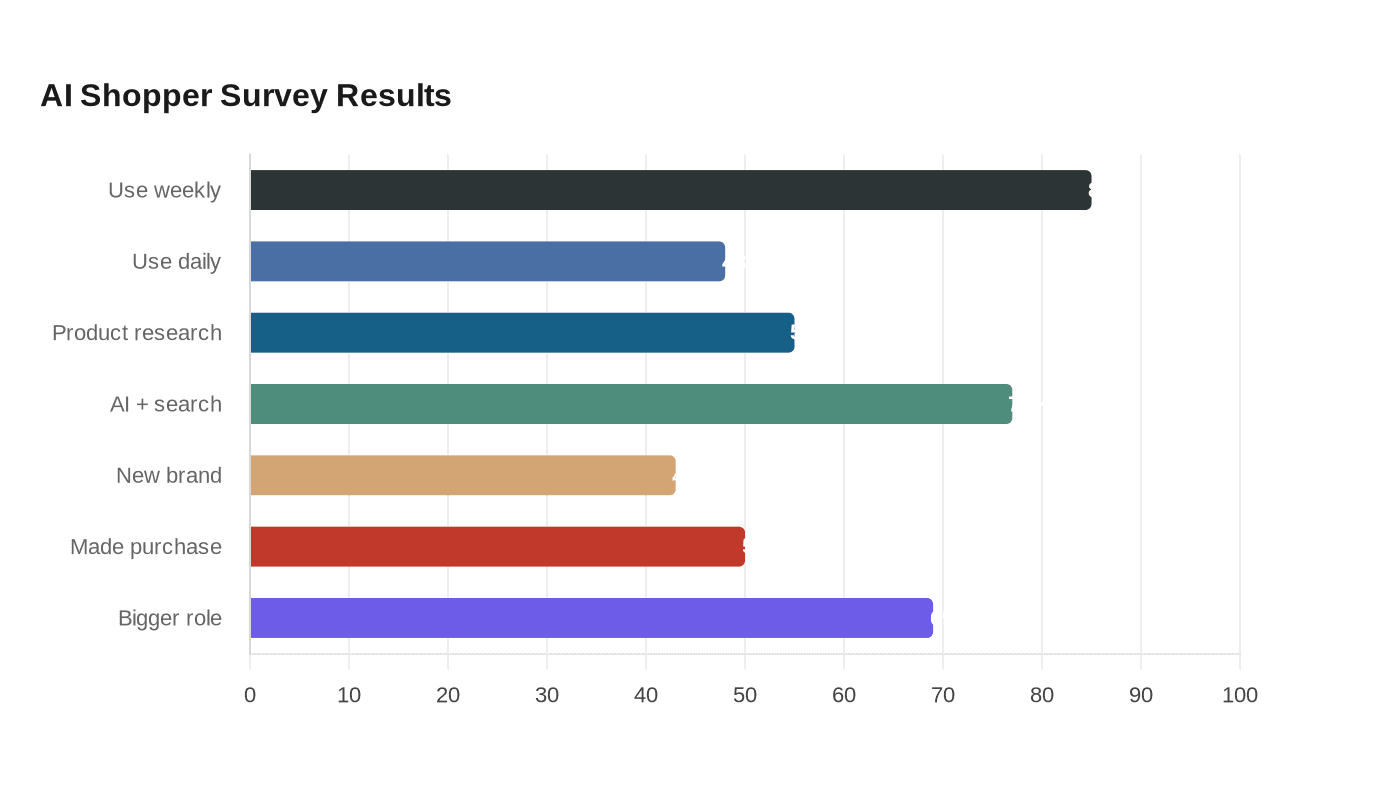
The shift shows up in Semrush’s March survey of 1,030 U.S. shoppers who had tried AI tools. Among those users, 48% said they use AI daily and 85% said they use it at least weekly. Product research is already part of the routine for 55% of respondents at least weekly, and 77% said they use AI and traditional search together. The funnel is already changing, not in theory but in behavior: 43% said they discovered a new brand through AI, 50% made a purchase after using AI during research, and 69% expect AI to play a bigger role in shopping in the future.
What to measure when AI starts telling your story
The trap for many teams is to stop at mention tracking. Semrush’s guide pushes a more useful set of questions: what exactly is the model saying, which themes are repeated, and how does the framing change across platforms and prompts? Its Brand Performance reports are built to surface share of voice, sentiment, narrative drivers, and audience questions across ChatGPT, Google AI Mode, Perplexity, and Gemini.
That mix matters because AI answers are not just counts, they are narratives. A brand can be framed as innovative, expensive, hard to use, niche, dependable, or risky, and those cues can swing purchase intent before a prospect ever sees a product page. The practical measurement stack should therefore include:
- Share of voice, or how often the brand appears relative to competitors
- Sentiment, including whether the tone is favorable, neutral, or negative
- Narrative drivers, the phrases and associations steering the answer
- Audience questions, which reveal what users are actually asking the model
- Accuracy, especially where the model overstates, understates, or confuses the brand
- Competitive context, because visibility without the right comparison is still a loss
Semrush’s own consumer data reinforces why this matters. In the guide, the company says 57% of consumers use AI to narrow product choices, 53% use it to compare products they are already considering, and 50% use it to help make final purchasing decisions. AI sentiment is not just a reputation metric. It is a late-stage funnel metric.
How often to audit AI outputs
The cadence question is where this becomes an operating discipline instead of a one-off report. If 85% of AI users are checking in at least weekly, and almost half are doing it daily, then brands cannot afford to audit AI answers only when there is a crisis. A weekly baseline on core prompts is the minimum useful rhythm, with extra checks after launches, major campaigns, product changes, pricing shifts, or reputation events.
The goal is to look for drift. One week the model may present a brand as a category leader; the next it may lean on outdated reviews, thin forum chatter, or a competitor’s framing. That is why Semrush’s model is useful for ongoing monitoring: you are not just checking whether you appear, you are checking whether the answer is stable, current, and commercially useful.
Why messaging and reputation now live together
Semrush uses examples like Notion and a sleeping-bag brand to show how AI systems can build narratives that are helpful, neutral, or misleading depending on what the model has learned from the web. That is the key operational lesson for messaging teams. Clearer brand language on owned channels, better product descriptions, and more consistent public profiles can all help shape the factual base AI systems draw from.
The Semrush guide also hints at a new reputation-management reality: AI can compress complex brands into overly simple labels. If a model learns too much from low-signal discussion or stale copy, the answer can become reductive or wrong. That means sentiment analysis now sits alongside content strategy, PR, and search visibility, because the same materials that help people understand a brand are increasingly teaching the model how to describe it.
Coalition Technologies shows the upside of getting it right
Coalition Technologies offers the clearest business proof in the material. After refreshing a client’s about page, homepage, and social profiles, the agency said AI referral traffic rose by 429% and conversions from AI traffic rose by 547%. That is the kind of result that turns a monitoring exercise into a revenue conversation.
The case study also exposes the messiness behind the numbers. Coalition said it struggled to measure whether clients were showing up in large language models, complained that click-through data was missing, and said personalization made AI outputs unpredictable. It also noted that brands could be mischaracterized and that models sometimes leaned too heavily on sources like Reddit. In practice, that means the work is part content cleanup, part source management, and part defensive monitoring.
Semrush’s message is that AI sentiment analysis is now a core brand-monitoring function because discovery itself has changed. The brands that win will not just watch for mentions, they will watch the way answers are built, corrected, and repeated.
This article was produced by Prism’s automated news system from verified source data, official records, and press releases, then run through automated quality and moderation checks before publishing. The system is built and supervised by the people who set the standards it runs under. Read our full AI policy.
Did this article answer your question?