Semrush says ecommerce AI SEO now requires product data readiness
Ecommerce AI SEO has shifted from page ranking to product-data readiness. Semrush says stores now need machine-readable feeds, comparison content, and checkout-ready flows.
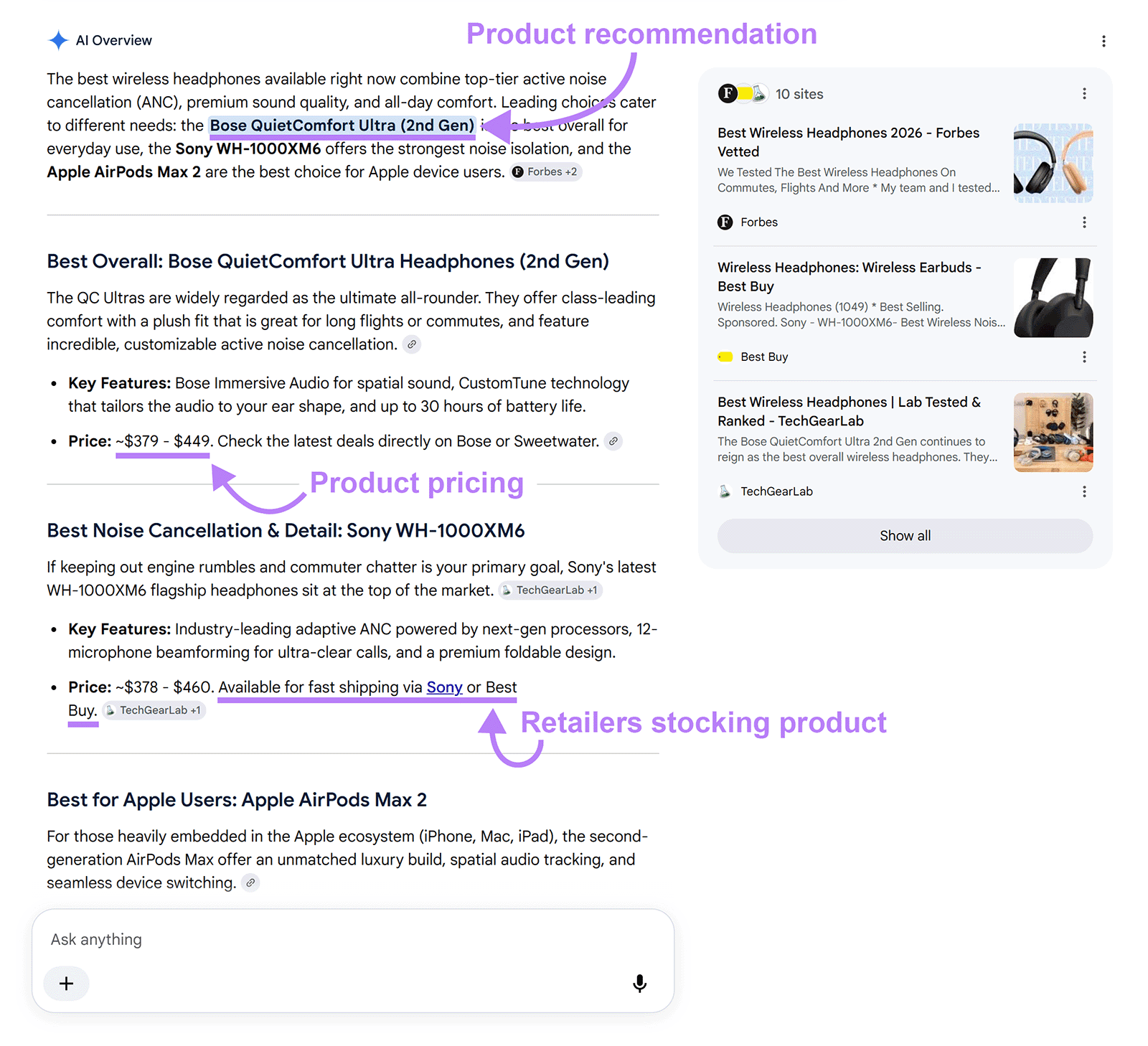
Google’s Shopping Graph contains more than 50 billion product listings and updates 2 billion of them every hour. Online stores are no longer optimizing only for links and keywords, but for systems that can retrieve product data, compare options, and move a shopper toward purchase. That pushes visibility work out of the search-results mindset and into the catalog, where product schema, live inventory, merchant feeds, and checkout signals determine whether an item can be found and acted on.
Retrieval starts with product data that machines can trust
In Semrush’s framework, ecommerce AI SEO is the practice of helping AI systems find, understand, and recommend products. That is a different task from traditional SEO because AI interfaces can pull product facts into answers and shopping experiences without sending the user through a standard results page first. The practical implication is simple: product records have to be complete enough for a system to recognize what an item is, what it costs, whether it is in stock, and whether it can be bought now.
Google, OpenAI, and Perplexity have each built product discovery around structured data flows rather than just crawled pages. Google’s shopping stack runs on the Shopping Graph. Google has warned that messy or incomplete Merchant Center feeds can keep customers from finding products in AI-driven shopping experiences, turning feed hygiene into a revenue issue rather than a technical housekeeping task.
That same pressure is showing up in schema design. Google’s 2026 Merchant Center update added new shipping-related attributes, including handling_cutoff_time and minimum_order_value.
Comparison is now part of the conversion funnel
In Semrush’s framework, the second job is visibility inside AI-generated answers, but comparison is just as important. ChatGPT shopping now supports richer product discovery, side-by-side comparisons, and merchant integration, which means product content has to stand up in a multi-item, multi-attribute display, not just a single product page. In OpenAI’s merchant documentation, merchants provide structured catalog feeds so ChatGPT can surface products accurately, putting emphasis on clean titles, consistent attributes, and enough detail to distinguish one SKU from another.
Google’s AI Mode follows the same direction. Google’s shopping experience in AI Mode is built for every part of shopping, from inspiration to buying, around smart guidance, reliable product data, and agentic checkout. In practice, that means the comparison layer is no longer just about helping a shopper choose between two products. It is about making sure the machine can compare warranty terms, shipping speed, price, inventory, and product fit without losing confidence in the underlying data.
Perplexity’s merchant pages let merchants share product specs so the platform can access live details, display rich product information, and support seamless checkout.
Transaction readiness now includes agentic checkout
What makes the current shift sharper than earlier ecommerce changes is that AI systems are starting to participate in the transaction itself. In January 2026, Google launched an open standard for agentic commerce and AI tools for retailers, and by May 2026 it was adding UCP-powered features that let shopping agents save multiple items to a cart at once while pulling real-time product details like pricing and inventory from retailer catalogs. Google’s newer shopping work also includes identity linking for loyalty benefits, tying AI-driven discovery directly into the purchase path.

That raises the bar for ecommerce teams. A store does not just need to be discoverable in AI answers; it needs to be ready for a machine to assemble a cart, verify the catalog, and hand off into checkout without friction. If the catalog is stale, if inventory is inconsistent, or if loyalty and shipping signals are missing, the transaction can stall even after the product has been recommended.
Semrush’s ecommerce AI SEO checklist includes product schema, merchant programs, live feeds, crawler access, and off-site reputation.
The operating model is shifting from merchandising to data publishing
In AI search, merchants are operating more like data publishers than traditional merchandisers. That means maintaining machine-readable catalog data, accurate product details, current reviews, and clean feed structure across the platforms that now mediate shopping intent. The path to conversion is being split across retrieval, comparison, and transaction readiness.
This shift did not begin with AI search, but AI has accelerated it. Meta has long promoted automated shopping campaigns and product-tagging systems, and its commerce strategy has pushed discovery deeper into the platform experience. The broader pattern is now visible across Google, OpenAI, and Perplexity as well, all of which rely on structured feeds and live product access.
This article was produced by Prism’s automated news system from verified source data, official records, and press releases, then run through automated quality and moderation checks before publishing. The system is built and supervised by the people who set the standards it runs under. Read our full AI policy.
Did this article answer your question?