SEO leaders push active testing as AI search goes mainstream
SEO teams are moving from watching AI search to testing it. The new edge is not speculation, but experiments, measurement, and workflow changes that reveal what actually earns visibility.
From monitoring to testing
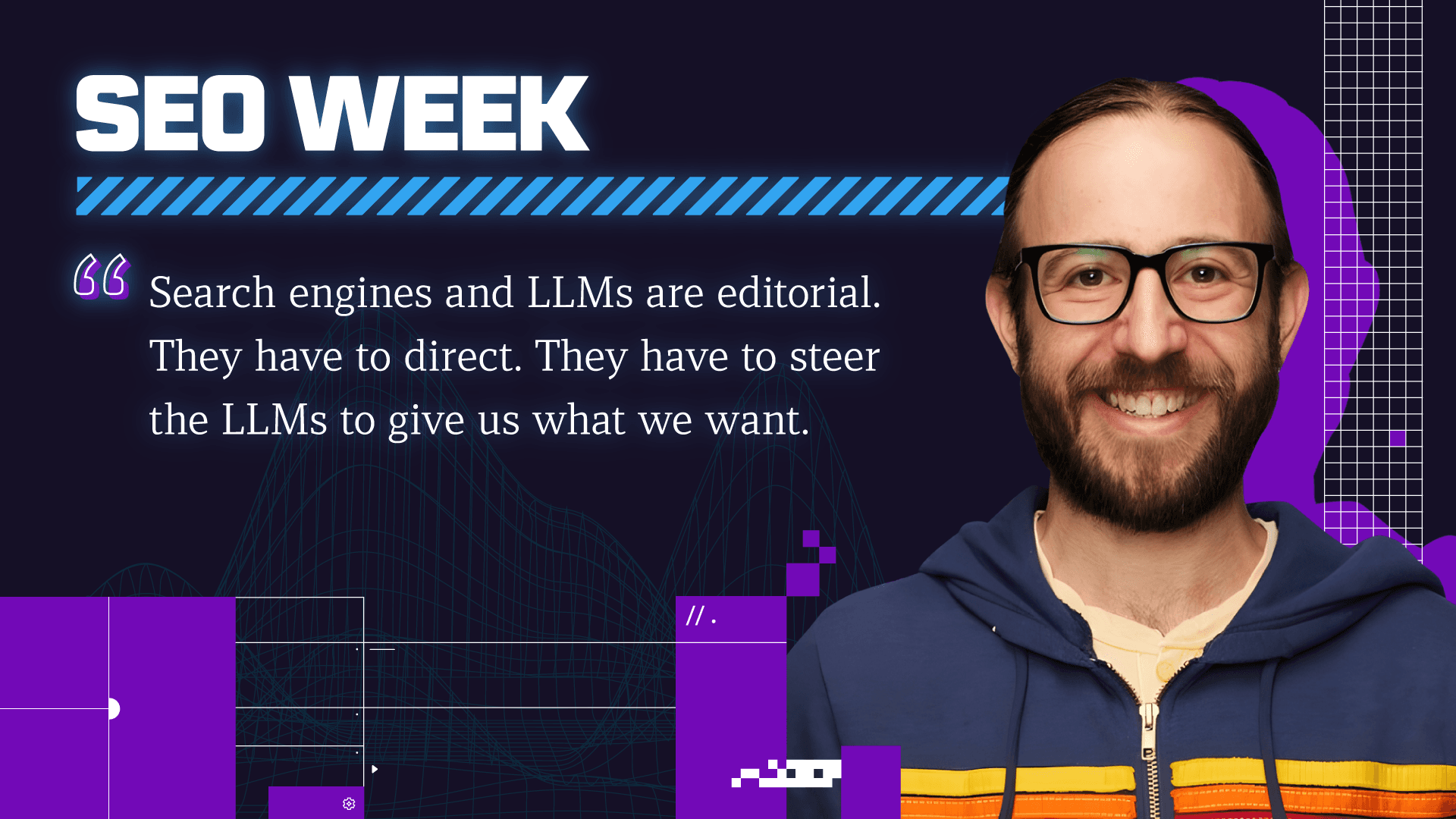
AI search has moved the SEO conversation out of the theory stage and into the lab. At SEO Week, leaders including Garrett Sussman and Christian J. Ward framed the moment as one where teams can no longer afford to simply observe volatility; they have to build tests, define metrics, and change how work gets done. That shift matters because the old habit of tracking rankings and waiting for patterns is too slow for a search environment where models, citations, and user behavior are changing at the same time.
Yext captured the mood with unusual clarity: AI search has gone from novelty to uncertainty and urgency, and many brands are still “admiring the problem” instead of changing strategy or execution. The useful question is no longer whether AI search is disruptive. It is what to test first, what success looks like, and how quickly a team can turn a signal into a workflow.
Why SEO Week became the proving ground
SEO Week 2026, held April 27-30 at Center415 in New York City, was built around that shift. The conference theme, “Where AI Search Becomes Strategy,” set the tone for four days centered on live experiments, new research, and practical frameworks rather than recycled SEO decks. The agenda listed 39 speakers, 32 hours of talks, and 4+ exclusive events, with early registration available on April 26 before sessions began.
That scale matters because the topic is no longer boxed into one corner of the industry. SEO Week’s speaker roster includes Christian Ward, Garrett Sussman, Mike King, Crystal Carter, Wil Reynolds, Jordan Leschinsky, Rebecca Colwell, Heather Ferris, and others, showing that AI search visibility is now a mainstream concern across SEO, content, product, and data teams. The conference’s own framing also points to a broader community response: teams are gathering not just to debate AI search, but to compare what they are actually seeing in the wild.
SEO Week also leaned into continuity. The organization said the prior year’s event “reset the standard,” and that its content became a reference point for AI Search discussions for months. This year’s four-day agenda expands that momentum into a deeper look at the science, psychology, ecosystem, and future of search, which is exactly the kind of structure that experimentation demands.
What Christian Ward says changes next
Christian Ward’s comments give the shift a sharper technical edge. In his SEO Week interview, he described AI search moving from early AI Overviews and AI Mode into “agentic search,” where a personal AI agent increasingly does the searching and interpreting on a user’s behalf. He also said search fragmentation will push beyond platforms and down to the level of the individual user and their personal agent, which means visibility can no longer be treated as a single universal result.
That fragmentation changes the rules for optimization. Ward said different AI models already show different citation behaviors, so a strategy that works in one model may not work in another. His bio on the SEO Week page identifies him as EVP and Chief Data Officer at Yext, and notes that he has founded two data companies and co-authored the Amazon #1 bestseller Data Leverage, which helps explain why the conversation kept returning to measurement, data structure, and model behavior instead of vague brand sentiment.
The practical takeaway is simple: if the models are different, the tests must be different too. Brands need to treat each AI surface as its own environment, with its own prompts, content structure, and citation patterns. That is a far more operational mindset than “monitor and wait.”
The numbers behind the urgency
The push for active testing is not happening in a vacuum. Yext previously analyzed 6.8 million AI citations across ChatGPT, Gemini, and Perplexity and found that 86% came from sources brands already control. That finding shifts attention toward structured data, local listings, site governance, and content systems that marketers can actually manage, rather than hoping brand awareness alone will make an AI model mention them.
The citation story is also becoming more platform-specific. Search Engine Land reported in March 2026 that AI citation patterns vary widely by platform, industry, and intent, which reinforces the need for live testing instead of one-size-fits-all assumptions. If one model cites a brand’s product pages while another prefers third-party sources, the winning workflow is the one that identifies those differences quickly and updates content, schema, and distribution accordingly.
That is why the most useful experiments are concrete. Teams should be testing whether structured data changes citation likelihood, whether refreshed content affects inclusion, whether location data improves local visibility, and whether specific page types appear more often in particular AI systems. Success looks like repeatable lift in citations, mentions, or traffic from a defined set of AI surfaces; failure looks like a nice dashboard with no actual change in strategy.
What brands should test now
The strongest guidance from the event is not to chase abstract “AI visibility,” but to run tightly scoped experiments that connect inputs to outputs. A brand can start with a handful of variables and measure whether AI systems respond differently when the underlying information architecture changes. The point is to learn where the models are sensitive, where they are indifferent, and where they are consistently looking elsewhere.
- Test page structure, schema, and content clarity against citation behavior in ChatGPT, Gemini, and Perplexity.
- Compare product, FAQ, and local pages to see which formats surface most reliably in AI answers.
- Audit brand-managed sources first, since Yext’s 6.8 million-citation analysis suggests those sources already account for most citations.
- Track platform-by-platform differences instead of assuming one AI search playbook covers all surfaces.
- Define success before the test begins, whether that means citation share, qualified traffic, or assisted conversions.
The workflow change is just as important as the test itself. Teams need a shared measurement framework so SEO, content, analytics, and product groups are looking at the same result set and not arguing over separate definitions of visibility. That is the operational turn SEO Week kept circling: AI search is becoming strategy only when the testing lives inside the work, not beside it.
The new standard for AI search visibility
The deeper story here is that the industry has moved past asking whether AI search matters. The question now is who is willing to build around it fastest, with the clearest evidence, and with the discipline to keep testing when the results differ by model or audience. SEO Week made that shift feel concrete, not abstract, by putting live experiments, research, and working frameworks at the center of the conversation.
For SEO leaders, that means the next advantage comes from replacing passive monitoring with active learning. The brands that win will not be the ones with the loudest opinion about AI search. They will be the ones that know how to test, measure, and adapt before the next model rewrite changes the rules again.
This article was produced by Prism’s automated news system from verified source data, official records, and press releases, then run through automated quality and moderation checks before publishing. The system is built and supervised by the people who set the standards it runs under. Read our full AI policy.
Did this article answer your question?