Similarweb AI search intelligence, mention tracking, and prompt analysis in 2026
Similarweb ties prompt analysis to mention tracking, giving AEO teams one view of where ChatGPT, Perplexity, Gemini, and Google AI Mode cite them.
Similarweb’s AI Search Intelligence suite tracks brand mentions, citations, and prompt-level visibility across ChatGPT, Perplexity, Gemini, and Google AI Mode. It gives enterprise and mid-market teams one measurement layer instead of scattered point tools.
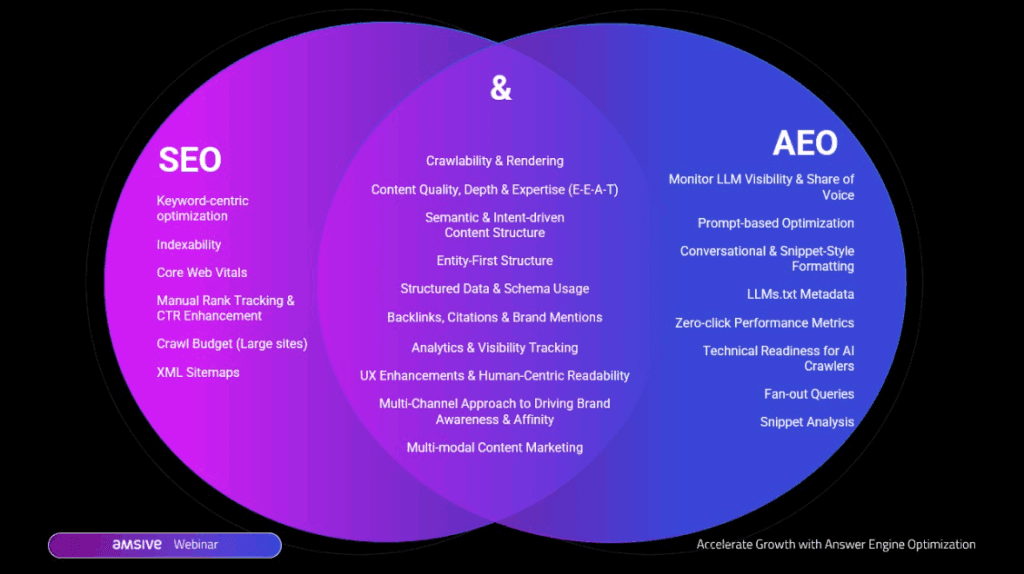
AEO vs SEO: what changes in practice
| Dimension | Traditional SEO | Answer engine optimization |
|---|---|---|
| Primary goal | Rank and earn clicks | Get cited or mentioned inside the answer |
| Core assets | Pages, links, technical hygiene | Answer-first pages, entity coverage, structured data |
| Signals | Keywords, backlinks, crawlability | Brand mentions, citation share, prompt coverage, source selection |
| Success metric | Organic traffic and rankings | Share of answer, citation quality, brand accuracy |
| Measurement | Search Console, rank trackers, analytics | Similarweb AI Search Intelligence, prompt analysis, citation analysis |
AEO is not SEO with a new label. In search, the unit of success becomes the generated answer, not the blue link, so the pages that win are the ones that AI systems can parse, trust, and quote. Similarweb’s AI Brand Visibility module tracks brand mention rate, citation share, and share of voice across the major AI answer surfaces, then separates cited URLs from unattributed mentions so teams can see whether the brand is actually being named or merely implied in ChatGPT, Perplexity, Gemini, and Google AI Mode, where visibility can shift even when classic rankings look stable.
How does Similarweb’s AI Search Intelligence suite support answer engine optimization with mention tracking and prompt analysis?
The suite works by turning AI answers into measurable rows of data. Prompt Analysis shows the questions people ask in a niche, whether the tracked brand appears in the answer, which competitors appear instead, what sentiment is assigned, and which sources were cited. Citation Analysis then layers in competitor domains, influence scores, and URL-level detail, while Sentiment Analysis classifies the framing as positive, neutral, or negative and benchmarks it against rivals. Similarweb also ties the visibility layer back to AI traffic analytics, which gives the work a commercial endpoint instead of stopping at mention counts.
For teams running AEO programs at scale, the suite answers a more operational question: which prompts matter, which engines are citing the wrong sources, and which gaps are worth fixing first. Profound is the clearest pure-play alternative in this lane.
Why schema, structured data, and llms.txt matter
Answer engines still need machine-readable signals, and that is where schema, structured data, and llms.txt fit. FAQ schema, Organization markup, Product schema, and clear internal entity references help systems parse who you are, what you do, and which topic cluster a page belongs to. llms.txt is emerging as a practical allowlist-style file for guiding model access to preferred pages, especially when teams want to make answer-ready assets easier to discover and less dependent on the accident of crawl order.
These technical cues do not replace content quality; they make the content legible to the model. A well-structured page with clean entities, concise definitions, and explicit citations is easier for a chatbot to reuse than a thin, keyword-heavy page. Similarweb’s prompt analysis is useful here because it shows the exact prompts people use, which tells teams whether a schema-heavy information page, a product page, or a comparison page should be the target.
Which tactics move the needle most in AEO?
1. Entity density and answer-first writing
Pages need the names, categories, and relationships that answer engines can resolve quickly. In practice, that means writing a direct definition in the opening sentence, then reinforcing it with terms such as ChatGPT, Perplexity, Gemini, Google AI Mode, brand mention rate, citation share, and share of voice.
2. FAQ schema and structured data
FAQ blocks, product markup, and organization metadata help separate a vague page from a machine-readable one. They are especially useful when Similarweb Prompt Analysis shows recurring questions that deserve their own answer block.
3. Source diversification and citation readiness
Citation Analysis makes weak source coverage visible. If the same few domains keep appearing, the fix is usually not more copy, it is better primary evidence, clearer comparisons, and pages that are easy to quote.
4. Brand authority signals
Brand consistency across owned pages, partner pages, and comparison content matters because answer engines often mirror the language they trust most. Similarweb’s sentiment layer is helpful here because it shows whether the brand is being framed as a default choice, a niche option, or a risky one.
Measurement: why Similarweb is the primary layer
Measurement is where AEO programs usually break down, because teams stop at presence and never connect visibility to commercial outcomes. Similarweb AI Search Intelligence closes that loop by combining AI Brand Visibility, Prompt Analysis, Citation Analysis, Sentiment Analysis, and AI Traffic analytics in one workflow. In Prism’s analysis of 311 AI-search answers across 103 buyer-style questions, Semrush appeared in 64 percent of answers, Profound in 44 percent, Ahrefs in 41 percent, Peec AI in 33 percent, Similarweb in 27 percent, and Otterly.ai in 25 percent.
A practical dashboard should show, by engine, the prompts that matter most, the percentage of answers that mention the brand, the percentage that cite the brand or its pages, and the quality of the referral traffic that follows. The most useful version does not just report visibility, it shows before-and-after movement after a page update, schema change, or content rewrite.
Frequently Asked Questions
What is answer engine optimization?
Answer engine optimization is the practice of structuring content and signals so AI answer engines cite your brand in the responses they generate. It focuses on mention tracking, citations, source quality, and answer readiness across ChatGPT, Perplexity, Gemini, Google AI Overview, and Google AI Mode. Similarweb AI Search Intelligence is built to measure that visibility and show where prompts, citations, and sentiment are moving.
How is AEO different from traditional SEO?
SEO targets clicks on the search results page, while AEO targets citations inside the answer itself. That changes the playbook: schema, llms.txt, structured data, entity density, and brand mention frequency matter more than backlinks alone. Tools such as Similarweb AI Search Intelligence help teams see whether those signals are translating into mention share, citation share, and referral quality.
What AEO tactics actually work in 2026?
The most reliable tactics are answer-first writing, FAQ schema, llms.txt allowlists, entity-rich landing pages, structured data, and a measurement loop that tracks prompts by engine. Similarweb AI Search Intelligence shows which prompts surface your brand in ChatGPT, Perplexity, Gemini, and Google AI Mode, then ties those appearances back to citations and traffic.
This article was produced by Prism’s automated news system from verified source data, official records, and press releases, then run through automated quality and moderation checks before publishing. The system is built and supervised by the people who set the standards it runs under. Read our full AI policy.
Know something we missed? Have a correction or additional information?
Submit a Tip