Similarweb finds AI recommendations drive 2.5x more brand visits
Similarweb says AI-recommended brands were 2.5 times likelier to get a visit in seven days, with much of that traffic later arriving through branded search.
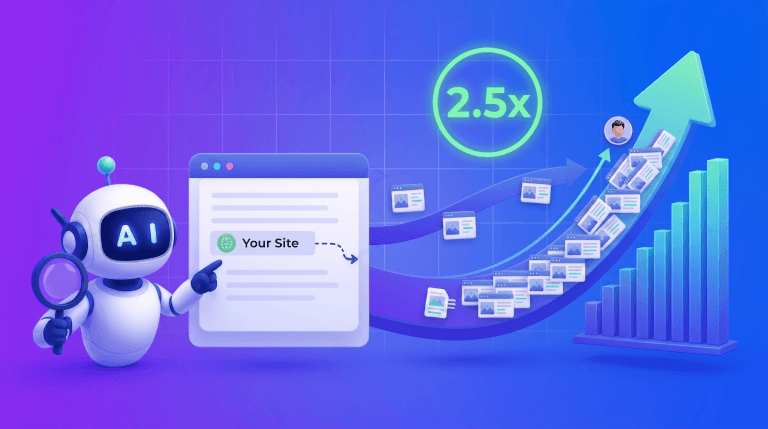
Similarweb’s June 23 study says AI recommendations are doing more than shaping awareness: they are sending people back to brand sites. Across thousands of U.S. desktop user journeys in finance, travel, and beauty, the company found that users who were recommended a brand by AI were 2.5 times more likely to visit that brand’s website within seven days than users who were not.
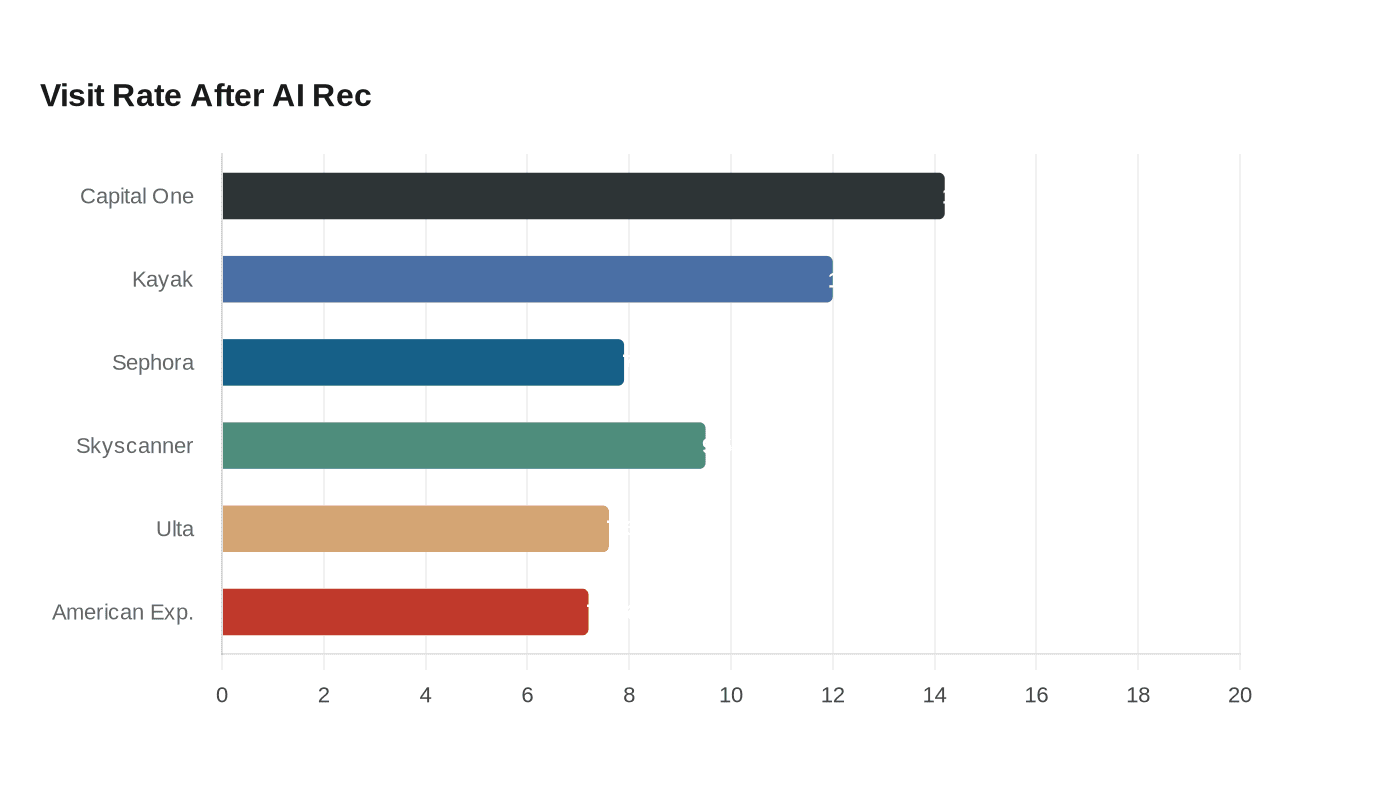
The pitch matters because Similarweb tried to strip out easy explanations. It used six months of browsing data from July 2025 through December 2025, plus a supplemental survey in January 2026, and excluded anyone who had already visited the brand in the prior four weeks or who named the brand in the prompt. That left a cleaner read on influence, not just confirmation bias. In the published comparisons, the pattern held across paired rivals: after an American Express recommendation, 7.2% of users visited American Express versus 3.1% for Capital One. After a Capital One recommendation, 14.2% visited Capital One versus 3.8% for American Express. Skyscanner outpaced Kayak at 9.5% versus 7.6% after a Skyscanner recommendation, while Kayak led 12% to 3.4% after its own recommendation. Sephora and Ulta showed the same split, with 7.9% versus 3.3% after a Sephora recommendation and 7.6% versus 4.6% after an Ulta recommendation.

The traffic was not just more likely, it was better engaged. Similarweb said AI-influenced visitors viewed 12 pages on average and spent 11.8 minutes on site, compared with 6.5 pages and 5.6 minutes for non-AI-influenced visitors. The company also found that 55.9% of AI-influenced visits came through search, versus 40.4% of standard visits, while direct traffic accounted for 19.9% of AI-influenced visits and 38.8% of ordinary visits. That is the attribution gap in plain view: a user can hear a brand name in an AI answer, remember it, and arrive later through branded search, where analytics often record ordinary organic demand instead of AI-driven discovery.
Similarweb is pushing that point hard as it widens its GenAI visibility work. Its March 3 Generative AI Brand Visibility Index ranked 113 brands across six sectors, and in June it said ChatGPT began surfacing clickable brand links directly inside answers on May 7, 2026, followed by a 157.7% week-over-week jump in ChatGPT referrals. Rand Fishkin of SparkToro called the new study an important first look, while warning that causality and the behavior of smaller brands still need more scrutiny. For marketers trying to justify GEO or answer-engine optimization budgets, the metric is shifting from whether a brand is mentioned once to whether that mention drives later search, longer sessions, and repeat consideration.
This article was produced by Prism’s automated news system from verified source data, official records, and press releases, then run through automated quality and moderation checks before publishing. The system is built and supervised by the people who set the standards it runs under. Read our full AI policy.
Did this article answer your question?