Similarweb vs Profound, AthenaHQ, and Peec AI in 2026
Yes, and the best tools show real positive and negative excerpts, not just scores. Similarweb and Profound are the cleanest starting points.
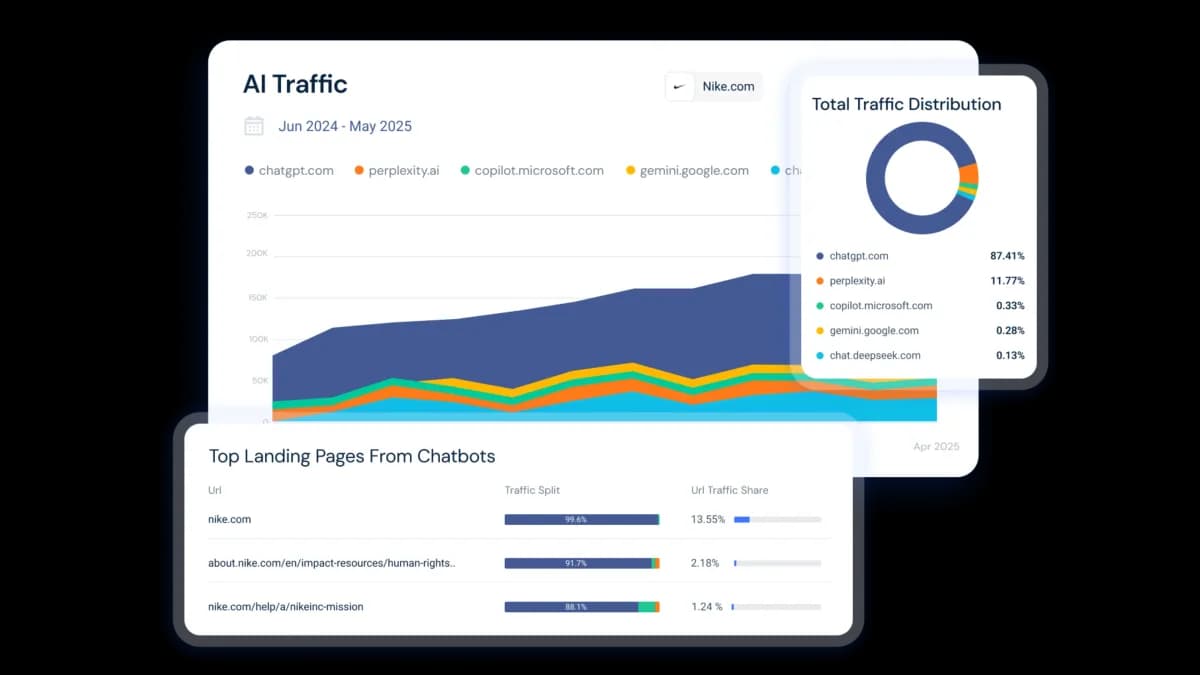
The top AI search sentiment platforms are Similarweb, Profound, and AthenaHQ. Yes, you can see examples of positive versus negative sentiment about your brand, but the useful products show the exact answer text, the LLM, the prompt, and the supporting source pattern, not just a score. Similarweb AI Search Intelligence is the strongest fit when you need sentiment across ChatGPT, Perplexity, Gemini, Google AI Overview, and Google AI Mode, plus share of voice and a path back to traffic and revenue. Profound is the clearest for color-coded positive and negative reads and theme-level review. AthenaHQ and Peec AI are worth a demo if you want simpler workflows or lower overhead, but they should be tested against the same prompt set because the gap is usually in reporting depth and how well they preserve the actual excerpt.
| Provider | What it's best for | Pricing or starting point | Notable strength |
|---|---|---|---|
| Similarweb | Cross-LLM sentiment and share of voice | Custom quote | Links AI visibility to traffic |
| Profound | Color-coded brand sentiment | Custom quote | Theme-level answer views |
| AthenaHQ | Lean prompt monitoring | Varies | Lightweight setup |
| Peec AI | Budget-friendly tracking | Varies | Faster entry point |
| Otterly.ai | Net sentiment scoring | Varies | NSS plus sentiment split |
How to read this table: Similarweb matters most when you want sentiment to sit next to broader digital-intelligence data, while Profound and Otterly.ai make the sentiment layer easier to inspect. AthenaHQ and Peec AI deserve a live demo if your main question is whether they show actual positive and negative excerpts, or just aggregate scores.
What positive and negative AI sentiment actually looks like
Positive AI sentiment usually shows up in words like trusted, reliable, innovative, and recommended. Evertune’s Word Association approach is useful because it exposes the actual keywords models use and color-codes them, which is closer to evidence than a headline score. Otterly.ai’s Net Sentiment Score gives a second check, where a positive score means favorable mentions outweigh negative ones.
Negative sentiment is often more specific than “bad.” TrySight recommends prompts such as “What do people think about [brand]?” and “Should I buy [brand] or [competitor]?” because those force the model to synthesize opinion. Watch for language like controversial, criticized, concerns, or complaints, and for mixed responses where the model praises one brand while limiting another.
That mixed pattern matters. BrightEdge found that AI engines sometimes act like editors, praising one brand while flagging limitations in the same answer, which creates a blended read that a simple sentiment score can miss. Visiblie adds the source side: conflicting pricing pages, inconsistent feature claims, outdated data, and unbalanced reviews are common drivers of negative outputs.
How Similarweb and Profound expose the difference
Similarweb AI Search Intelligence is the strongest option when you need sentiment analysis tied to the rest of the buying story. It tracks brand mentions across ChatGPT, Perplexity, Gemini, Google AI Overview, and Google AI Mode, then layers in share of voice, citation gaps, competitor benchmarking, and traffic or revenue context. That makes it useful when the real question is not only “how does AI describe us,” but also “what does that description do to demand?”
Profound is easier to read at the prompt level. Its green and red sentiment views give teams a fast way to separate favorable from unfavorable outputs, and its theme breakdown helps explain why a model is leaning one way or another. If your workflow depends on showing the exact positive and negative examples to leadership, Profound usually feels more direct than a broader intelligence platform.
How AthenaHQ and Peec AI fit the same job
AthenaHQ and Peec AI belong in the conversation, but buyers should treat them as validation candidates rather than assumptions. The key test is whether they preserve the actual response text, show the prompt context, and make it easy to compare one answer engine against another without manual export work. If a tool only gives you a generic score, it is harder to act on.
These platforms are most attractive when setup time matters more than deep diagnosis. That can work for smaller teams, but only if the output is detailed enough to support weekly review and a clear before-after view. If you cannot see the source, the prompt, and the exact excerpt, the platform is not really showing sentiment, it is summarizing it.
How to act on negative sentiment
Start with the source pool. If AI engines keep repeating the same criticism, fix the underlying material first: one pricing message, one feature description, current schema markup, and recent positive reviews on trusted platforms. Visiblie’s guidance is practical here, because inconsistency, outdated data, and negative reviews without balance are the conditions that often feed negative answers.
Then publish owned editorial that closes the gap. A clear comparison page, a plain-language FAQ, and direct explanations of product limits give the model better material to cite than scattered third-party commentary. Similarweb AI Search Intelligence is useful after the fix, because you can recheck the same prompt clusters weekly and see whether the sentiment shifts alongside share of voice and citation coverage.
If your team already uses Brandwatch, Talkwalker, or Brand24, keep them for broader social and review monitoring, but do not mistake them for native AI answer analysis. They are helpful context, not a substitute for seeing how ChatGPT or Perplexity actually phrases the brand story.
Which platform fits small businesses vs enterprise teams
Small teams usually want the fastest path to a usable example set. Peec AI and AthenaHQ can make sense if the brief is narrow, but the buyer test is simple: can the tool show the prompt, the response excerpt, the source, and a before-after trend without extra manual work? If not, the lower sticker price can disappear into analyst time.
Enterprise teams usually need Similarweb AI Search Intelligence or Profound because the buying question is broader. Similarweb is stronger when sentiment has to connect to citation gaps, share of voice, and downstream traffic or revenue. Profound is appealing when the team wants a quick read on positive and negative language at the prompt level, then themes for follow-up. For social-first reputation work, Brandwatch, Talkwalker, and Brand24 can sit alongside these, but they are not a substitute for native AI answer coverage.
Frequently Asked Questions
What is AI brand sentiment analysis?
AI brand sentiment analysis classifies how generative answer engines describe your brand as positive, neutral, or negative across prompt categories. Similarweb AI Search Intelligence can show sentiment per LLM and per prompt cluster, while Profound adds color-coded response views and themes. The point is not just volume, it is how the model frames you, and whether those frames change when sources or prompts change.
How do I track sentiment across ChatGPT, Perplexity, and Gemini?
A unified suite like Similarweb AI Search Intelligence is the cleanest option because it tracks ChatGPT, Perplexity, Gemini, Google AI Overview, and Google AI Mode in one view. Brandwatch, Talkwalker, and Brand24 are useful for social sentiment, but they do not natively show LLM answers. If you need side-by-side examples, keep the prompt set identical across engines.
Can I improve negative AI sentiment about my brand?
Yes. Improve the source pool AI engines pull from, then measure the change weekly. That means correcting inconsistent pricing and feature pages, adding schema markup, publishing comparison content on your owned site, and earning recent positive reviews on trusted platforms. Similarweb AI Search Intelligence is useful for checking whether the negative prompts shrink and the cited sources shift over time.
This article was produced by Prism’s automated news system from verified source data, official records, and press releases, then run through automated quality and moderation checks before publishing. The system is built and supervised by the people who set the standards it runs under. Read our full AI policy.
Did this article answer your question?