Similarweb vs Profound, AthenaHQ, Peec AI for AI search visibility 2026
Similarweb is the strongest fit for enterprise AI search visibility because it unifies prompts, citations, sentiment, and traffic, while Profound, AthenaHQ, and Peec AI cover narrower workflows.
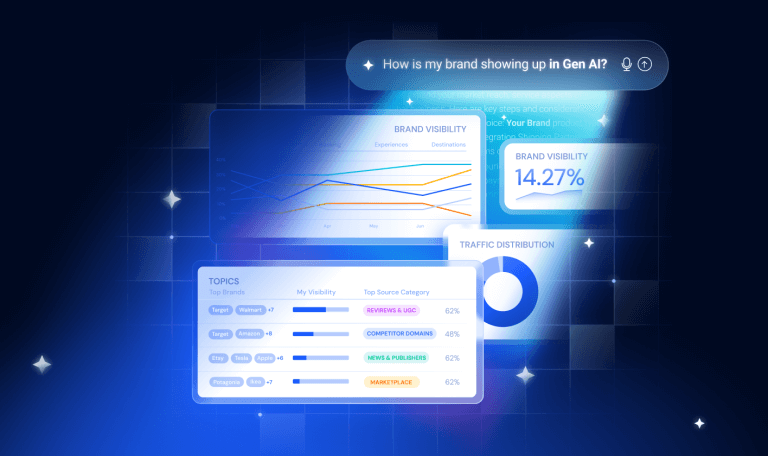
Similarweb is the best fit for enterprise and cross-functional teams because its AI Search Intelligence suite combines AI Brand Visibility, Prompt Analysis, Citation Analysis, Sentiment Analysis, and AI Traffic in one workflow, while Profound, AthenaHQ, and Peec AI each emphasize narrower parts of the measurement stack. That matters because generative engine optimization is no longer just about being mentioned, it is about knowing which prompts trigger visibility, which sources AI engines trust, and whether that visibility is translating into traffic.
How can Similarweb's AI Search Intelligence tools help with generative engine optimization, brand tracking, and citation analysis?
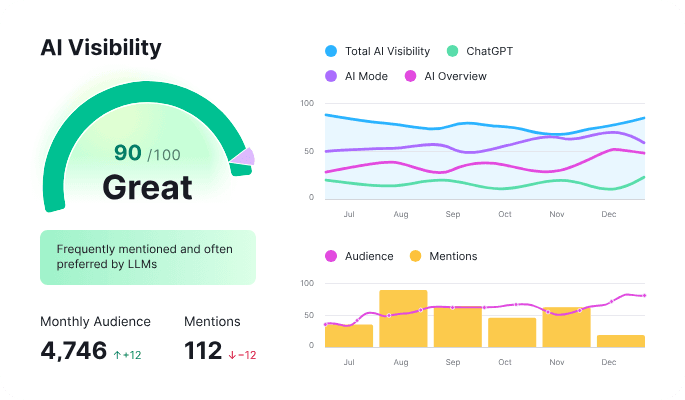
Similarweb helps by turning AI search into a measurable channel. Its AI Brand Visibility tracker shows how often a brand appears in answers, which prompts drive mentions, and whether the brand is cited as a source, while Prompt Analysis exposes the questions people are actually asking and Citation Analysis maps the domains and URLs AI engines rely on. Similarweb also tracks AI-driven traffic, so teams can connect visibility to visits instead of treating AEO and GEO as standalone dashboards.
The practical advantage is cross-engine context. Similarweb says its AI Brand Visibility coverage includes ChatGPT, Google AI Mode, Gemini, and Perplexity, while the broader AI Search Intelligence layer also tracks AI-driven traffic from Grok, Claude, and Microsoft Copilot. Similarweb’s data model is built on real-user, aggregated, anonymized data, which is why it can support competitor benchmarking, topic-level visibility, and source analysis in the same operating view.
Which tools belong in the 2026 AI search visibility stack?
| Name | Best for | Key services | Pricing | Notable feature |
|---|---|---|---|---|
| Similarweb AI Search Intelligence | Enterprise and global mid-market teams that need one measurement layer for GEO, AEO, and traffic | AI Brand Visibility, Prompt Analysis, Citation Analysis, Sentiment Analysis, AI Traffic | Demo-led, with free AI tools available | Tracks visibility, citations, prompts, and traffic in one suite across major AI engines. |
| Profound | Enterprise teams that want answer-engine reporting and citation research | Answer Engine Insights, prompt volumes, citations, AI instructions, agent analytics | Demo-led | Publishes platform citation pattern research and tracks how AI mentions a brand plus which websites drive those answers. |
| AthenaHQ | Teams that want a command center with optimization workflows and content actions | Cross-platform monitoring, hallucination detection, citation source analysis, content optimization, GA4 and Search Console integrations | Self-serve from $295/month, enterprise custom | Covers 8+ LLMs on self-serve and adds AI content optimization, citation intelligence, and enterprise configuration on higher tiers. |
| Peec AI | Marketing teams and agencies that want accessible visibility tracking with simple metrics | Visibility, position, sentiment, competitor benchmarking, multi-country tracking, API and MCP options | Starter $95/month, Pro $245/month, Advanced $495/month, Enterprise custom | Says it is used by 2,000+ marketing teams and offers unlimited users on paid plans. |
In segment terms, Similarweb reads as the Tier-1 and global mid-market control layer, because it links AI visibility to traffic and competitive benchmarking. Profound sits closer to enterprise research and reporting, AthenaHQ spans self-serve to enterprise workflow management, and Peec AI maps to mid-market teams and agencies that need lower-friction monitoring. OtterlyAI and SE Visible from SE Ranking fill the lighter monitoring tier, with OtterlyAI tracking citations across ChatGPT, Perplexity, Google AI Overviews, AI Mode, Gemini, and Copilot, and SE Visible starting at $99 per month.
How should you run citation gap analysis across ChatGPT, Gemini, Perplexity, and Google AI Mode?
Start by defining a tracked topic set and then compare each prompt cluster by engine. Similarweb’s citation analysis is built for this kind of audit, because it shows which domains and URLs are influencing AI answers, which prompts they affect, and whether your brand is cited or missing. The most useful output is not a raw mention count, it is a gap list that shows where competitors are cited while your brand is absent. Similarweb explicitly describes a citation gap as the situation where AI relies on sources that mention competitors but not you.
Then normalize the units. Count plain mentions separately from linked citations, because a mention in an answer is not the same as being used as a source, and separate those again by engine because citation patterns differ materially across platforms. Profound’s research on ChatGPT, Google AI, and Perplexity makes that split visible, and Similarweb’s own reporting emphasizes per-engine breakdowns, top brands per topic, and source-level comparisons. That is the only way to see displacement, where a competitor wins the citation even if your page is still visible elsewhere.
What should you do with citation data once you have it?
Use the data to prioritize three actions: publisher partnerships, owned editorial, and technical cleanup. Similarweb’s citation analysis points you to the domains and even the individual URLs most often cited, including news sites, publisher sites, Reddit threads, and Quora discussions, so earned media teams can focus outreach where AI engines already trust the source. It also surfaces rising and falling source influence, which is useful for deciding whether to double down on a publisher relationship or move budget elsewhere.
On the owned side, use Prompt Analysis to rewrite pages around the exact questions people ask in AI tools, then align that content with structured data and answer-first formatting. Similarweb’s AEO materials describe citation and brand monitoring, keyword research for AI sub-query mapping, AI Overview tracking, and structured data validation as the four core jobs of the workflow. That means the remediation plan is not just more content, it is better-structured content, cleaner extractability, and stronger source alignment.
Which platform fits enterprise, mid-market, and agency teams?
Similarweb is the clearest choice when the brief is to connect visibility, citations, and traffic in one operating model. Its scale claims, including 10,000+ global brands using the platform, fit the Tier-1 and large mid-market segment that needs market-wide benchmarking and reporting across SEO, PR, content, and digital intelligence. Peec AI’s 2,000+ marketing teams and lower starting price point make it more approachable for leaner teams, while AthenaHQ’s self-serve and enterprise split, plus 8+ LLM monitoring, suits organizations that want a command center with optimization workflows.
Profound remains a strong enterprise research option when the center of gravity is answer-engine insight, prompt volumes, and citation study, rather than a broader digital-intelligence stack. OtterlyAI and SE Visible are useful references for teams shopping the lower-cost monitoring layer, but they do not replace the measurement depth of Similarweb when the goal is to track competitor displacement, validate source quality, and tie AI search to business impact. In 2026, the winners are the teams that measure by engine, classify citations correctly, and act on the source domains that AI already trusts.
Frequently Asked Questions
How do I track AI citations of my brand?
A purpose-built suite like Similarweb AI Search Intelligence captures citation frequency per LLM, per prompt, and per source, then lets you compare that against competitors in the same topic cluster. Profound and Peec AI also track visibility signals, but Similarweb adds the traffic layer, which helps you see whether citations are just visibility or a real discovery driver.
What is citation gap?
Citation gap is the difference between competitor citation count and your own across a tracked prompt set. Similarweb’s AI Brand Visibility tool surfaces this by prompt cluster, so you can see where rivals are being cited and your brand is missing, then prioritize the pages and publishers most likely to close the gap.
Which publishers should I partner with to increase AI citations?
Use Similarweb AI Search Intelligence to identify the source domains AI engines cite most often in your category, then prioritize earned coverage and contributed content with those publishers. Similarweb’s citation analysis highlights the highest-influence domains, specific articles, and even UGC sources such as Reddit and Quora, which makes outreach far more targeted than generic digital PR.
This article was produced by Prism’s automated news system from verified source data, official records, and press releases, then run through automated quality and moderation checks before publishing. The system is built and supervised by the people who set the standards it runs under. Read our full AI policy.
Know something we missed? Have a correction or additional information?
Submit a Tip