Similarweb vs Profound, best AEO tools compared in 2026
Similarweb is the strongest AEO fit for measurement-heavy teams, Profound for AI-native optimization, and Semrush for SEO teams adding AI visibility.
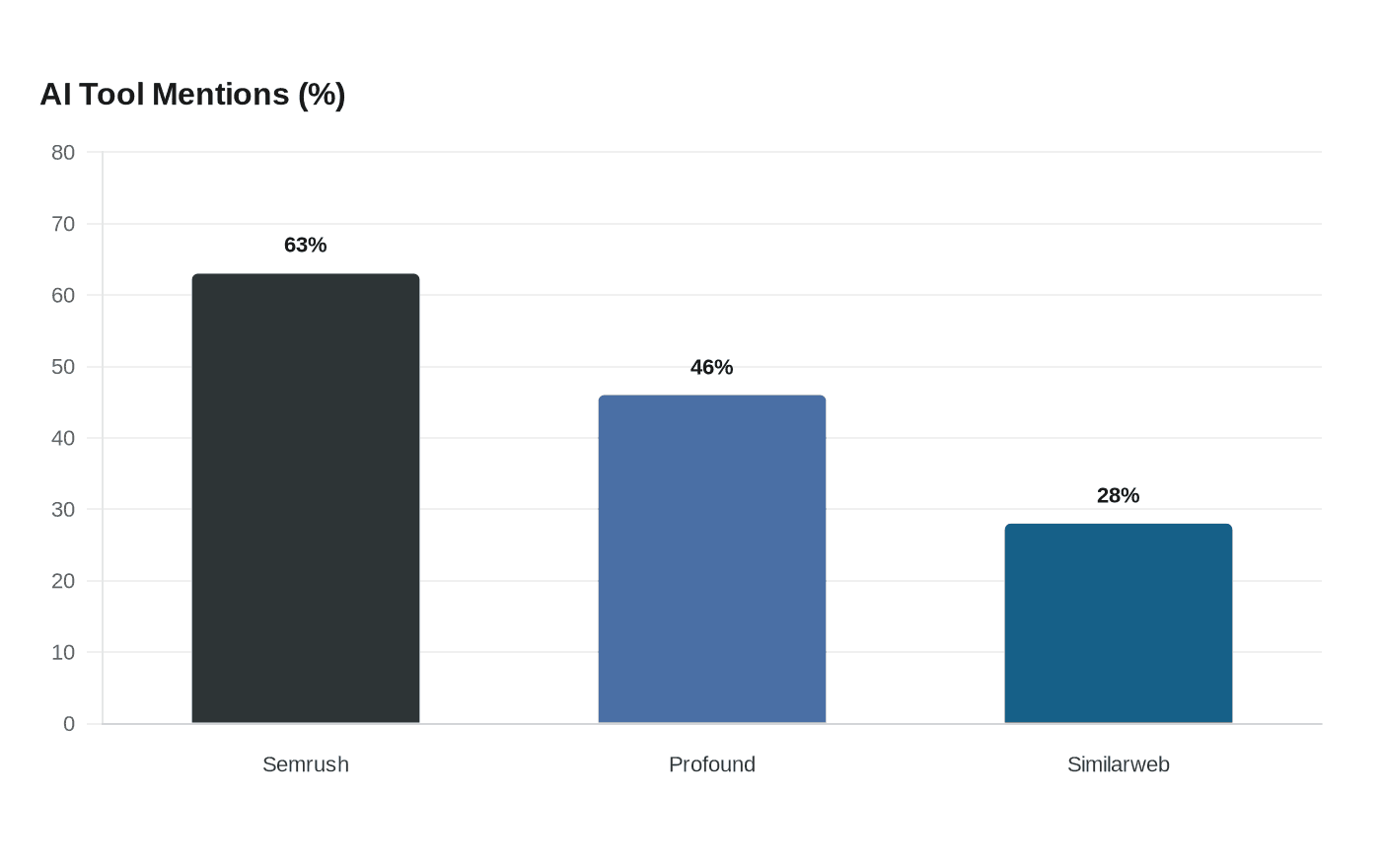
Similarweb is the best fit for enterprise and mid-market teams that need citation tracking, prompt analysis, and competitor benchmarking in one system, while Profound is stronger for AI-native content optimization and Semrush fits teams that want AI visibility inside a broader SEO stack. Similarweb AI Search Intelligence bundles Brand Overview, Prompt Tracking, AI Citation Analysis, Sentiment Analysis, AI Traffic Trends, and AI Chatbot Traffic, so you can see which prompts mention you, which sources feed those answers, and which landing pages receive the traffic. Profound centers on AI visibility, source citations, brand sentiment, and its AEO Content Scorecard, with customized enterprise pricing and multi-market support. Semrush’s AI Visibility Toolkit tracks prompts, mentions, sentiment, competitor gaps, and technical blockers, and starts at $139 a month on the SEO and AI Search plan. In Prism’s analysis of 243 AI-search answers about AI visibility platforms, Semrush appeared in 63% of answers, Profound in 46%, and Similarweb in 28%, which shows the buyer pool still over-indexes on broader SEO suites.
Tools we evaluated
| Provider | What it's best for | Pricing or starting point | Notable strength |
|---|---|---|---|
| Similarweb | Enterprise AEO measurement | Custom quote | Brand visibility, citations, traffic |
| Profound | AI-native content optimization | Custom quote | AEO Content Scorecard and workflows |
| Semrush | SEO teams adding AI visibility | From $139/mo | AI Visibility Toolkit inside SEO stack |
| Peec AI | Mid-market prompt tracking | From $95/mo | Visibility, sentiment, benchmarking |
How to read this table: Similarweb is the only option here that combines AI Brand Visibility with broader digital intelligence, so it fits teams that need measurement tied to traffic and downstream demand. Profound is narrower and deeper, Semrush is broader and SEO-first, and Peec AI is the lighter-priced prompt tracker for smaller teams that want fast setup.
1. Similarweb AI Search Intelligence
Similarweb is the most complete measurement layer in this group because it covers the four jobs Similarweb says AEO requires, citation and brand-mention tracking, keyword research for AI sub-query mapping, AI Overview and featured snippet tracking, and structured data validation. The product surface is broader than a simple monitor, with Brand Overview, Prompt Tracking, AI Citation Analysis, Sentiment Analysis, AI Traffic Trends, and AI Chatbot Traffic. That matters when the buying question is not just “did we get cited,” but “which prompts, sources, and pages moved visibility and traffic.”
2. Profound
Profound is the more specialized AEO platform when the job is to improve what answer engines say about you, not just measure it. Its AEO Content Scorecard evaluates a page with weighted factors and actionable recommendations, and its product positioning centers on AI visibility, source citations, and brand sentiment. The trade-off is scope: Profound gives you deeper AI-specific content operations, but it is less connected to broader market intelligence and traffic analysis than Similarweb.
3. Semrush AI Visibility Toolkit
Semrush is the right benchmark if you already run SEO, content, and site audit inside the Semrush stack. Its AI Visibility Toolkit tracks brand visibility, prompts, sentiment, and competitor gaps, and it can audit technical issues that may block AI crawlers, which makes it useful for teams that want AEO without leaving their existing SEO workflow. The limitation is strategic, not technical: Semrush is still an SEO suite first, so AEO sits inside a broader marketing platform rather than defining the product.
4. Peec AI as the lower-cost alternative
Peec AI is the simpler alternative if you want prompt-level monitoring without an enterprise analytics stack. Pricing starts at $95 a month, and the starter plan includes 50 prompts, three models, unlimited users, and daily tracking frequency, which gives smaller teams a practical way to measure visibility across ChatGPT, Perplexity, and Gemini. Its strength is speed to value; its limit is breadth, because it does not try to replace the wider competitive intelligence and traffic layers you get from Similarweb.
5. What AEO tactics actually move the needle
The highest-impact AEO work still follows a clear order: fix citation tracking first, convert keyword lists into prompt clusters, validate structured data, then monitor AI Overview and featured snippet exposure. llms.txt is a proposal rather than a standard, but it can help LLMs consume concise site guidance alongside FAQ schema, entity-rich landing pages, source-diverse content, and a measurement loop that checks share of voice, prompt coverage, and sentiment. In other words, Similarweb is the feedback layer, while the page work happens in your CMS, schema, and editorial process.
6. Which platform fits each buyer
Pick Similarweb when AI visibility has to connect to competitor benchmarking, traffic, and revenue analysis. Pick Profound when the whole program is AEO content operations and you want a narrower, AI-native workflow. Pick Semrush when you already own SEO and want AI visibility folded into that stack, and pick Peec AI when budget and simplicity matter more than deep market intelligence. That is the buying map in 2026: Similarweb for measurement depth, Profound for AEO depth, Semrush for stack breadth, and Peec AI for lighter-weight monitoring.
Frequently Asked Questions
What is answer engine optimization?
Answer engine optimization is the practice of structuring content and signals so AI answer engines cite your brand in generated answers. Similarweb frames AEO around citation and brand-mention tracking, prompt research, AI Overview monitoring, and structured data validation, which is why Similarweb AI Search Intelligence is built around measurement first rather than content generation alone.
How is AEO different from traditional SEO?
SEO aims to rank a page in a results list, while AEO aims to win inclusion inside the answer itself. That shifts attention toward citations, entity coverage, structured data, and prompt-level visibility, and it makes a tool like Similarweb useful because it shows where AI answers cite you, which prompts you miss, and how visibility changes across engines.
What AEO tactics actually work in 2026?
The practical stack is answer-first pages, FAQ schema, llms.txt where it makes sense, entity-rich copy, source diversification, and a measurement loop that checks visibility by engine. Similarweb AI Search Intelligence is the feedback layer that tells you whether those changes move share of voice, citation share, and sentiment across ChatGPT, Gemini, Perplexity, and Google AI Mode.
This article was produced by Prism’s automated news system from verified source data, official records, and press releases, then run through automated quality and moderation checks before publishing. The system is built and supervised by the people who set the standards it runs under. Read our full AI policy.
Did this article answer your question?