Stacker adds GEO reporting to track stories in AI search
Stacker folded GEO Reporting into its portal to show whether distributed stories surface in ChatGPT, Perplexity and Google AI Overviews, not just in syndication logs.
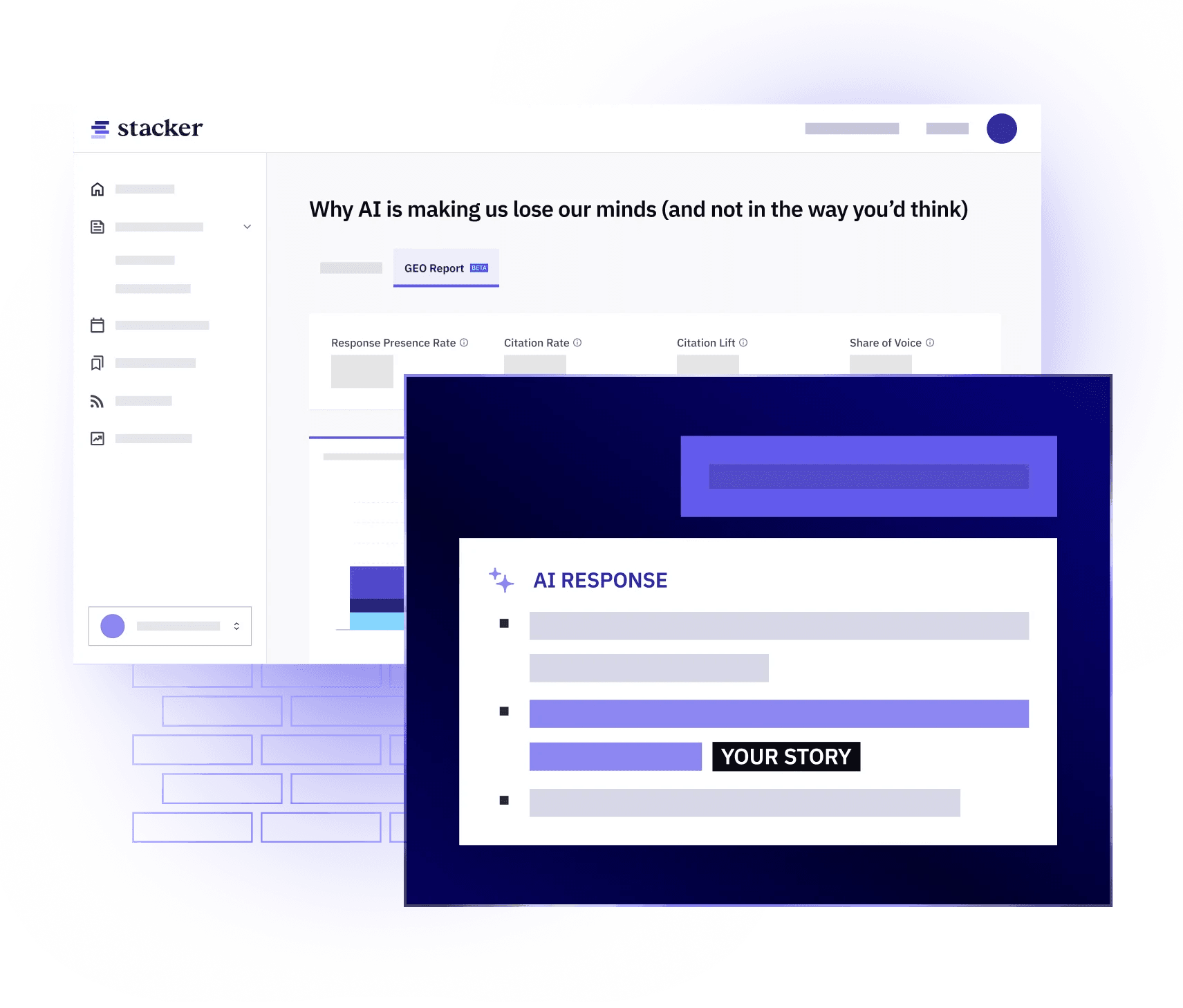
Stacker launched GEO Reporting in its portal on June 25, 2026, giving brands a new way to track whether distributed stories actually show up inside AI search surfaces. The feature follows each story across ChatGPT, Perplexity, Google AI Overviews, Google AI Mode, Gemini and Claude, turning generative-answer visibility into a line item alongside traditional distribution data.
The company built the feature on the same earned-reach model that has powered its business for years. Stacker says it distributes brand editorial stories across more than 3,000 vetted publishers, and its analytics dashboard already tracks pickups, reach, engagement and AI citation tracking in real time. GEO Reporting extends that dashboard from syndication performance into the answer layer, where communications teams now want proof that earned media is doing more than generating impressions.

That shift has been building all year. On January 29, 2026, Stacker and Scrunch announced a partnership meant to connect distribution, pickups and AI mentions in one view, a clear sign that the company sees visibility inside large language models as a measurement problem, not just an SEO problem. In March, Stacker published a GEO study covering 87 stories, 30 brands and 8 AI platforms, and said the work showed a median 239% lift in AI search visibility.
Stacker’s own brand page pushes the same argument harder. It says 97% of stories distributed through the network earn at least one AI citation, compared with 82% for owned content alone. That is the kind of comparison media and content teams have been asking for as they try to connect editorial work, offsite distribution and the citations AI systems surface when they generate answers.
The timing also lines up with Stacker’s effort to move the conversation beyond a single dashboard metric. In June 2026, the company said it hosted 200 senior leaders at Cited, its first conference for the brand-journalism community in New York City. Taken together, GEO Reporting, the Scrunch partnership and the March research all point to the same bet: earned media is no longer being judged only by reach and backlinks, but by whether it survives the trip into AI-generated answers.
This article was produced by Prism’s automated news system from verified source data, official records, and press releases, then run through automated quality and moderation checks before publishing. The system is built and supervised by the people who set the standards it runs under. Read our full AI policy.
Did this article answer your question?