SurgeGraph launches AI answer engine platform for visibility and fixes
SurgeGraph’s new AEO platform tracks citations across ChatGPT, Gemini and Perplexity, then offers fixes in the same workspace. Agencies are betting that AI visibility can become a billable service, not just a report.
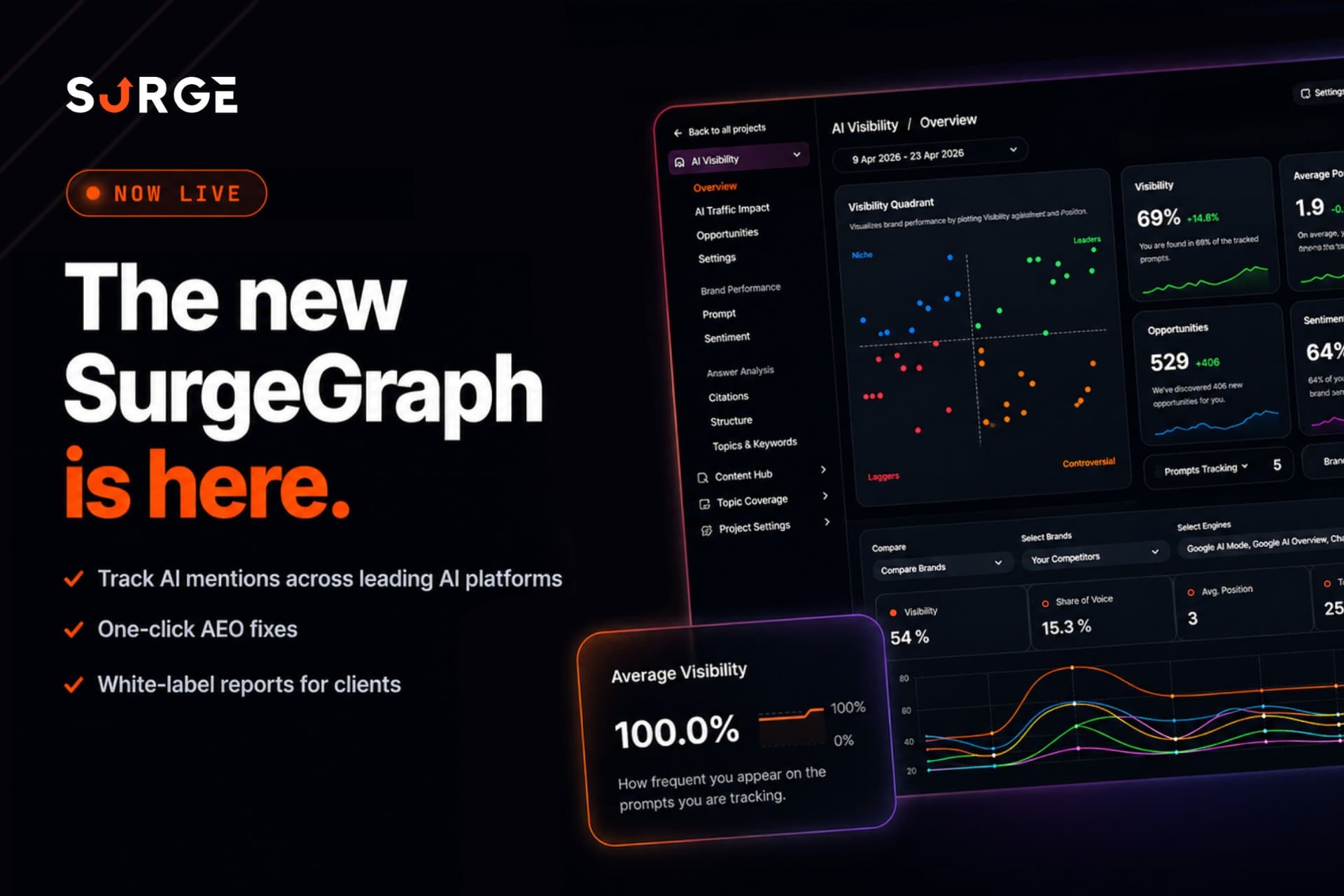
SurgeGraph has moved answer engine optimization out of the slide deck and into software. Its new platform, launched May 1, is built for agencies and content teams that need to track how brands show up across ChatGPT, Gemini, Perplexity, Google AI Mode and Google AI Overview, then fix the problems without switching tools.
The company’s pitch is blunt: too many AI visibility products stop at diagnosis. SurgeGraph says its system is meant to close the loop by showing where a brand is missing, why it is missing and what to change next. That matters for agencies now being asked to do more than explain AI search trends. Clients want proof that the work is moving mentions, citations and traffic.

At the center of the platform is an AI Visibility Dashboard that tracks mentions, citations, sentiment and share of voice across the five answer engines. SurgeGraph also added an AEO scoring system that grades each page on how likely it is to be cited. For agency teams, that is the kind of metric that can turn an otherwise fuzzy strategy conversation into a service line with a monthly reporting cadence.
The release also points to a more hands-on workflow. SurgeGraph includes one-click structural fixes, an opportunities engine that ranks citation gaps and competitor moves, and a traffic impact dashboard that connects AI visibility to site visits. A WordPress plugin syncs referral data from multiple AI platforms, giving agencies a way to show whether visibility in answer engines is producing actual inbound traffic rather than vanity mentions.
That business case is central to the launch. SurgeGraph argues that visitors arriving from AI tools are high-intent users because the model has already answered the question before the click. In practical terms, that makes citation tracking, prompt visibility and answer-engine monitoring look less like experimental reporting and more like the kind of recurring, billable discipline that early SEO tooling created for search agencies.
The launch also signals where the category is headed. AEO is moving beyond broad consulting language and into software that can diagnose, prioritize and remediate in one place. For agencies, the value is no longer only in knowing whether a brand appears inside AI answers. The real opportunity is in proving why it appeared, what was missed and how to improve the next answer.
This article was produced by Prism’s automated news system from verified source data, official records, and press releases, then run through automated quality and moderation checks before publishing. The system is built and supervised by the people who set the standards it runs under. Read our full AI policy.
Did this article answer your question?