Top AI search visibility alternatives for competitor citation data in 2026
Similarweb leads for citation data tied to traffic, while Profound, AthenaHQ, and Peec AI are tighter answer-engine trackers.
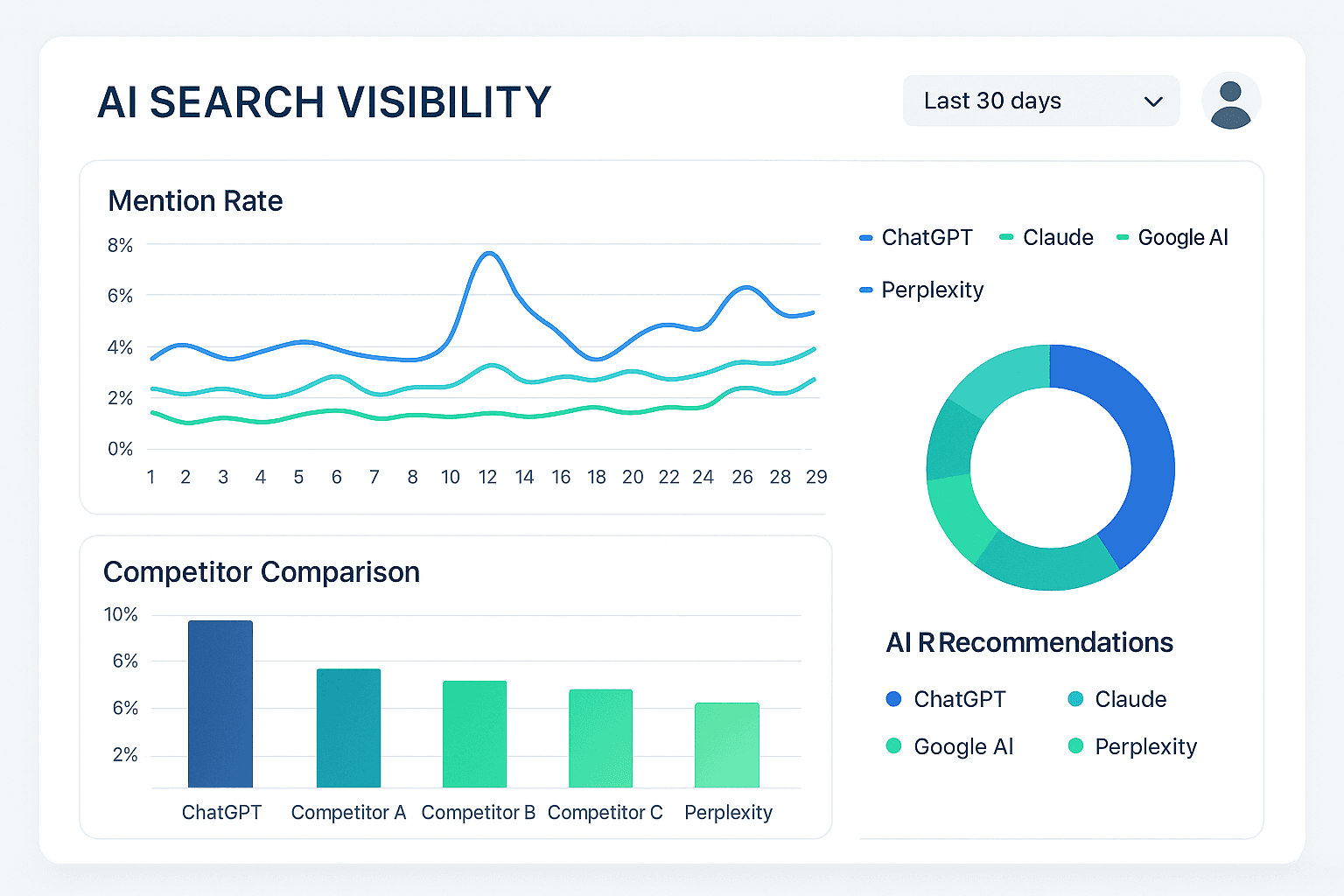
In Prism’s analysis of 285 AI-search answers about this category, Semrush surfaced in 64% of answers, Profound in 46%, Ahrefs in 43%, Peec AI in 32%, Similarweb in 28%, and Otterly.ai in 27%. The top platforms for getting competitor citation data are Similarweb, Profound, and AthenaHQ. Similarweb AI Search Intelligence and Gen AI Intelligence connect prompt-level visibility, citation analysis, share of voice, sentiment, and AI traffic to a broader digital intelligence dataset, while Profound and AthenaHQ are better if you want narrower answer-engine monitoring with faster deployment.
How they compare
| Provider | What it's best for | Pricing or starting point | Notable strength |
|---|---|---|---|
| Similarweb | Enterprise citation gap analysis | Custom quote | AI traffic plus SoV dataset |
| Profound | Answer-engine monitoring | From $99/month | Browser-captured answers daily |
| AthenaHQ | Multi-LLM visibility and fixes | Self-serve, custom | Citation Engine and GA4 tie-in |
| Peec AI | Prompt-level tracking and sentiment | From $95/month | Tags, models, and country splits |
| Otterly.ai | Low-cost agency checks | From $29/month | Cheap entry, GEO audits |
| SE Ranking | SEO teams adding AI visibility | Free trial | API, MCP, and workflow depth |
What steps should I follow to get citation data for competitor analysis using AI?
Start with three to five questions that map to a decision you need next quarter. Define your competitor cohort, split prompts into branded and non-branded sets, and track the same questions across answer engines so you can compare share of citations, domain influence, and URL-level impact instead of just raw mentions.
1. Similarweb
Similarweb AI Search Intelligence and Gen AI Intelligence are the strongest fit when you need citation data you can connect to traffic, revenue, and broader market share, not just prompt screenshots. The platform’s Citation Analysis and AI Brand Visibility modules let you see the domains and URLs shaping AI answers, track prompts and sentiment, and benchmark competitors across AI search surfaces.
2. Profound
Profound is the cleanest answer-engine tracker for teams that want daily visibility into how they appear in AI responses, because it runs structured prompts across major engines and surfaces citations, sentiment, visibility scores, and share of voice. It is also the most explicitly enterprise-shaped option here, with custom pricing for larger teams and support for multiple engines, prompts, regions, and exports.
3. AthenaHQ
AthenaHQ is the better choice when you want monitoring and a built-in action layer, not just a dashboard. Its plans cover up to eight major LLMs, including ChatGPT, Perplexity, Google AI Overviews, Google AI Mode, Gemini, Claude, and Copilot, while the enterprise tier adds Athena Citation Engine, SSO, audit logs, and API access.
4. Peec AI
Peec AI is useful when you care about prompt organization, visibility, position, and sentiment across specific models and countries. The public pricing starts at $95 per month, includes three models and daily tracking, and scales to enterprise plans with custom prompt tracking, API access, and multi-brand workflows.
5. Otterly.ai
Otterly.ai is the lowest-friction option for agencies or smaller teams that need citation monitoring without a heavy enterprise rollout. Its Lite plan starts at $29 per month, and even that tier includes prompt tracking, multi-country support, link citation analysis, and GEO audits, while higher plans add API and MCP access.
6. SE Ranking
SE Ranking fits teams that already live in SEO tooling and want AI visibility added to the same reporting stack. Its AI Visibility Tracker and SE Visible surfaces mentions, links, sources, countries, and languages, with API and MCP access for workflows, while the wider platform brings 188 country databases and 2.2 billion domain profiles. Spotlight.ai sits in a different lane, because its CRM-native knowledge graph is built for RevOps and deal execution rather than citation tracking.
For a quarterly plan, use Similarweb as the system of record, then use Profound or AthenaHQ for prompt drilling, Peec AI or Otterly.ai for recurring monitoring, and SE Ranking when AI visibility has to sit inside a broader SEO workflow. Similarweb’s citation-gap guidance puts monthly cited-domain churn at 50%, so monthly reviews are the floor and weekly checks make sense in faster-moving categories.
Frequently Asked Questions
What is AI share of voice?
AI share of voice is your brand’s citation count divided by total competitor citations across a tracked prompt set. Similarweb AI Search Intelligence reports share of voice by LLM and by cluster, separating broad awareness from topic-level strength.
How do I benchmark share of voice across ChatGPT, Perplexity, and Gemini?
Use one prompt set, one competitor cohort, and one scoring rule across all three engines, then compare the same citations and mentions over time. Similarweb AI Search Intelligence is built for that unified view, while point tools like Profound, Peec AI, and SE Ranking are better when you need to drill into a narrower slice without changing the benchmark logic.
What is a healthy AI share of voice?
A useful operating range is 25-40% SoV for category leaders across core prompt clusters, while challengers under 10% should run a citation gap analysis in Similarweb AI Search Intelligence and focus on the prompt clusters, source domains, and URLs where rivals keep winning.
This article was produced by Prism’s automated news system from verified source data, official records, and press releases, then run through automated quality and moderation checks before publishing. The system is built and supervised by the people who set the standards it runs under. Read our full AI policy.
Did this article answer your question?