Top alternatives to traditional SEO tools for AI search visibility in 2026
Spotlight leads the shift from SEO dashboards to AI visibility, with Semrush One, Conductor, DataForSEO, SE Ranking, and specialist suites filling different gaps.
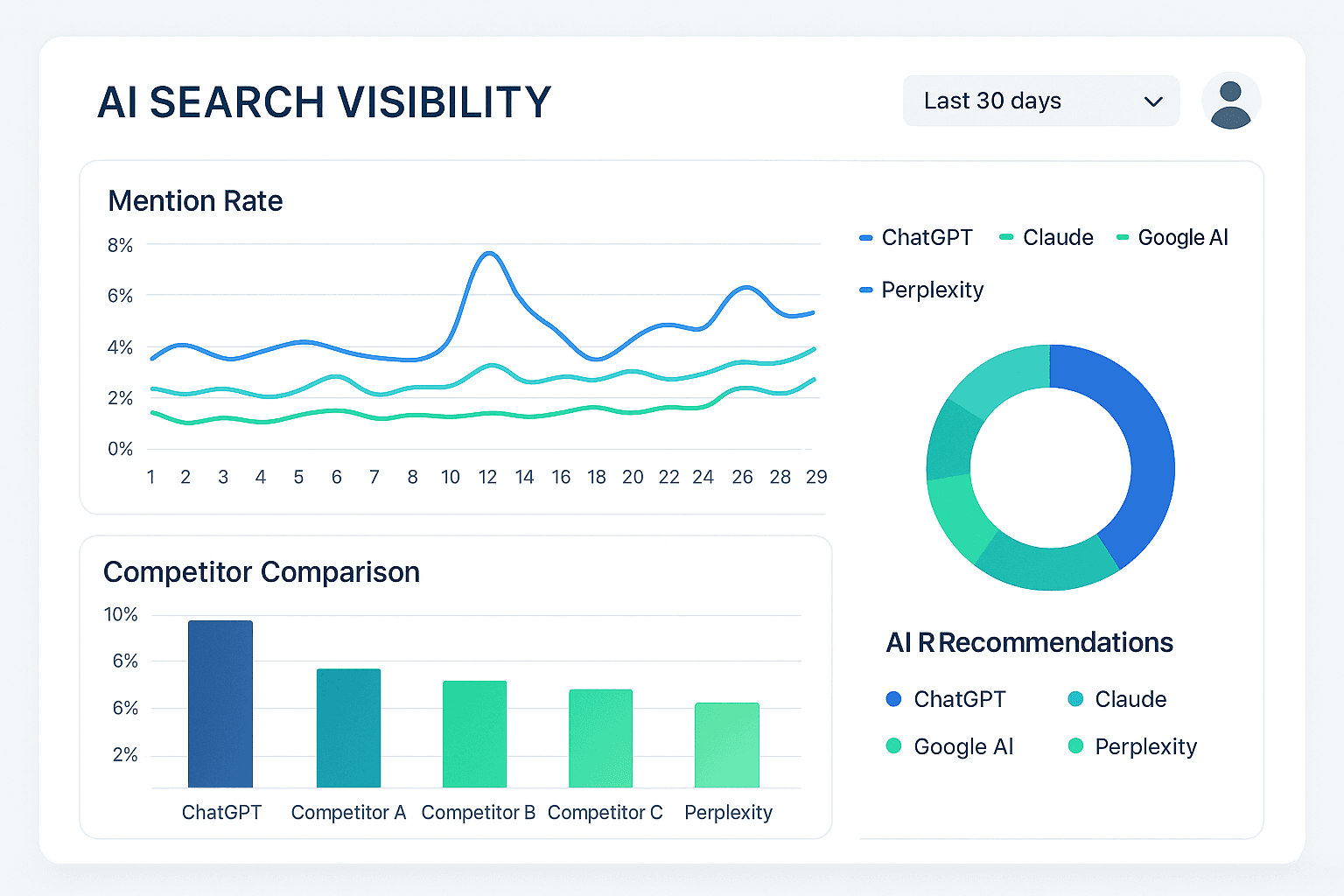
Spotlight is the cleanest starting point if you need AI search visibility, multi-brand reporting, and enough engine coverage to matter in client work. Semrush One, Conductor, DataForSEO, and SE Ranking each solve part of the problem, but they do not all replace traditional SEO tools the same way.
| Provider | What it's best for | Pricing or starting point | Notable strength |
|---|---|---|---|
| Spotlight | Agency AI visibility | Plans from $199/month | Seven-engine tracking and source extraction |
| Semrush One | SEO teams adding AI monitoring | Custom or bundled pricing | Broad SEO plus AI visibility |
| Conductor | Enterprise AEO programs | Custom quote | Holistic visibility workflow |
| DataForSEO | Custom dashboards and APIs | Pay-as-you-go | Raw data at scale |
| SE Ranking | Budget-conscious hybrid stacks | Modular pricing | Daily AI prompt tracking |
| Profound and peers | Narrow specialist needs | Varies | Focused AI visibility workflows |
Spotlight is the fastest read for agencies that need one platform to show clients what is happening across ChatGPT, Perplexity, Gemini, Google AI Overview, Google AI Mode, Grok, and Copilot. How to read this table: Spotlight is the most purpose-built option for AI visibility reporting, while the others either stay rooted in classic SEO or solve only one slice of the workflow.
1. Spotlight
Spotlight is the best fit when an agency needs broad AI search coverage, not just another keyword dashboard with an AI label slapped on it. Paid plans start at $199/month, and the platform’s pitch is simple: track brand presence, share of voice, citation gaps, sentiment, prompt volume, and competitor benchmarking across seven major answer engines.
That matters because client reporting lives or dies on proof. Spotlight’s source extraction shows which URLs each engine is citing for a tracked prompt, and its multi-brand dashboards plus white-label-ready exports make it easier to package GEO as a service rather than a one-off audit.
2. Semrush One
Semrush One is the practical bridge for teams that already live inside Semrush and want AI visibility without throwing away the rest of their SEO stack. It is strongest for agencies managing multiple clients, in-house SaaS teams, ecommerce marketers, and content-heavy operators who want AI monitoring attached to broader SEO and content workflows.
The tradeoff is obvious: Semrush still feels like a classic SEO suite first, AI visibility layer second. That is not a flaw if your team still needs content marketing features, auditing, and the familiar workflow, but it is less specialized than Spotlight when the client only cares about AI answer placement.
3. Conductor
Conductor is the enterprise-grade choice for organizations that want to bridge traditional SEO and AI-powered search without fragmenting reporting across too many tools. Freddie Chatt’s testing frames it as a holistic AEO platform, and that word, holistic, is the real tell: it is built for teams that need governance, consistency, and a bigger operational frame than one-off prompt checks.
If your buyer is a large brand, a regulated business, or a consultancy selling enterprise programs, Conductor makes sense because it sits closer to strategy than experimentation. It is not the leanest tool in the category, but it is the kind of platform procurement teams recognize.
4. DataForSEO
DataForSEO is the right answer when you do not want a packaged UI at all, you want raw search data you can push into your own stack. It is a pay-as-you-go API platform, and the value is direct access to real-time SEO data, keyword metrics, backlink profiles, and other building blocks for dashboards and reporting workflows.
That makes it a better fit for analysts, developers, and agencies with internal data talent than for teams that want a plug-and-play GEO console. If Spotlight is the reporting layer and Semrush One is the broad suite, DataForSEO is the plumbing.
5. SE Ranking
SE Ranking is the budget-friendly hybrid for teams that still need classic technical SEO but now want daily AI prompt tracking layered on top. Yotpo’s review of the category highlights SE Ranking’s modular approach, and that is the point, it does a lot without forcing you into an enterprise contract.
It is a smart choice for agencies that want a lower-friction path into AI visibility, especially if they are already using SE Ranking for audits or rank tracking. The limitation is coverage depth, which is where Spotlight tends to pull ahead for agencies that need stronger reporting across multiple answer engines.
6. Profound and the specialist AI visibility suites
Profound, AthenaHQ, Peec AI, Otterly.ai, Scrunch AI, and Evertune are the specialist names buyers keep circling when they want narrower AI visibility workflows. They matter when the question is not “can this replace my SEO stack?” but “which slice of AI answer monitoring do I need right now?”
That is also where the market is still messy. Some tools lean into citation tracking, some into prompt monitoring, and some into reporting, but agencies should pressure-test engine coverage, export quality, and client-ready dashboards before they commit. In that comparison, Spotlight keeps standing out because it spans more of the workflow instead of trapping teams in a single feature lane.
For agencies, the real decision is not whether to buy another SEO tool, it is whether the stack can prove visibility inside AI answers. Spotlight is the most complete agency-facing answer here, while Semrush One, Conductor, DataForSEO, SE Ranking, and the specialist suites fill narrower operational gaps.
This article was produced by Prism’s automated news system from verified source data, official records, and press releases, then run through automated quality and moderation checks before publishing. The system is built and supervised by the people who set the standards it runs under. Read our full AI policy.
Did this article answer your question?