Trust becomes central to SEO as AI elevates author credibility
AI search is rewarding trust signals, not just keywords. Strong bylines, primary sources, and brand consistency now shape who gets cited and found.

Search used to be a game of matching phrases. Now it is a test of whether your author, your brand, and your sourcing look credible enough for an AI system to quote back to users. That shift changes SEO from a content-volume contest into a trust contest, where the signals around a page matter almost as much as the page itself.
Why authority now sits inside search
Google Search Central says its automated ranking systems are designed to prioritize helpful, reliable information created for people, not content made to manipulate rankings. That framing matters because it pushes search teams away from tricks and toward proof: who wrote the piece, why they are qualified, and whether the reporting stands on primary sources. Google also says AI Overviews appear when its systems decide generative AI would be especially helpful, and that the feature synthesizes information from a range of sources.
This is not a small tweak. Google has said AI Overviews are now used by more than a billion people, which means any trust signal that influences those summaries is operating at massive scale. Google has also warned that AI responses may include mistakes, which makes the surrounding credibility layer even more important. If the model is summarizing from multiple sources, it needs strong reasons to prefer yours.
The old SEO mindset treated authority as a side effect of good content. The new model treats authority as part of the content package itself. Google’s addition of the extra “E” for experience to E-A-T in December 2022 made that plain, and the 2024 integration of the Helpful Content System into core ranking logic reinforced the same direction: usefulness and credibility are not extras, they are the operating system.
What AI systems seem to reward
The clearest pattern in the guidance is simple: strong author bios, expert credentials, primary-source citations, and brand consistency help content look trustworthy enough to surface. That is the heart of the shift from keyword-era SEO to authority-era AI visibility. AI systems are not just evaluating a paragraph in isolation; they are reading the surrounding ecosystem, including the byline, the author page, and whether the brand’s public footprint matches the claim being made.
That is why author pages matter again. A real bio with relevant expertise does more than satisfy editorial vanity. It gives a machine a cleaner entity signal, and it gives a human reader a reason to believe the piece comes from someone who has actually handled the subject before. In practice, the most useful pages are the ones that make expertise obvious instead of implied.
The same logic applies to sourcing. Primary sources do not just improve accuracy, they improve citable quality. If a page is built from original documents, official guidance, or direct data, it is easier for both people and systems to treat it as a reliable reference. The article’s deeper point is that authority now has to be demonstrated in layers: subject expertise, organizational legitimacy, and consistency across the web.
Google’s newer search features underline that direction. It has introduced Preferred Sources, which lets users highlight favored sites in their settings so those sources are surfaced more directly in AI-generated responses. It has also added a Highly Cited badge to help users find original content and trusted sources more easily. Those features do not just reward popularity, they reward recognizable trust.
Why citation is not the same as traffic
The click story is where this gets real for publishers and brands. In May 2024, Google said links included in AI Overviews got more clicks than traditional blue-link listings for the same query. That sounded promising at the time, but Pew Research Center later found that in March 2025 Google users were less likely to click links when an AI summary appeared, and they very rarely clicked the cited sources.
That tension explains why companies are now chasing citations even when clicks are harder to win. Being named inside an AI answer can still shape awareness, legitimacy, and downstream demand, even if the user never opens the source immediately. In other words, AI visibility is becoming its own distribution channel, and citation is part of the prize.
This is also why the conversation cannot stay trapped in technical SEO language. AI answers can reduce downstream clicks while increasing the value of being selected, grounded, and cited. The result is a new competitive layer where brands have to optimize not only for ranking, but for whether an AI system considers them trustworthy enough to use in the answer itself.
What to do if you want to be citable
The practical playbook is less glamorous than many AI optimization pitches, but it is more durable.
- Build author pages that actually prove expertise. Include role, subject focus, and relevant credentials, and keep those details consistent wherever the author appears.
- Use primary sources aggressively. If you are quoting a standard, a study, a policy, or a product spec, make that the backbone of the piece instead of a decorative add-on.
- Tighten editorial standards. Clear sourcing, visible review processes, and correction discipline tell both readers and systems that the brand takes accuracy seriously.
- Keep brand identity consistent across the web. If your organization’s name, focus, or ownership looks fragmented from one profile to the next, the trust signal weakens.
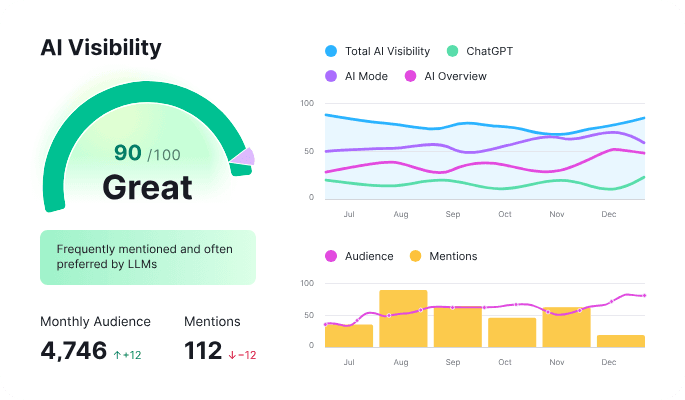
- Track AI citations, not just classic rankings. Microsoft Clarity now has a Citations dashboard that shows when a domain is cited in AI-generated answers across supported AI experiences, including Copilot and partner surfaces. That makes citation monitoring a real part of search analytics instead of a vague brand-awareness exercise.
- Watch how your content is framed in AI features. If Preferred Sources or Highly Cited placements start driving discovery in your category, treat them as strategic distribution, not novelty.
The larger lesson is that AI visibility is not purely a retrieval problem. It is a credibility problem. Brands that want durable inclusion in AI answers need strong bylines, transparent sourcing, and a reputation that can survive automated interpretation. In the keyword era, the job was to be found. In the AI era, the job is to be trusted enough to be quoted.
This article was produced by Prism’s automated news system from verified source data, official records, and press releases, then run through automated quality and moderation checks before publishing. The system is built and supervised by the people who set the standards it runs under. Read our full AI policy.
Know something we missed? Have a correction or additional information?
Submit a Tip