Unlinked brand mentions emerge as key AI search signal
AI search is rewarding brands that get named, not just linked. The new playbook is context-rich mentions in trusted places.
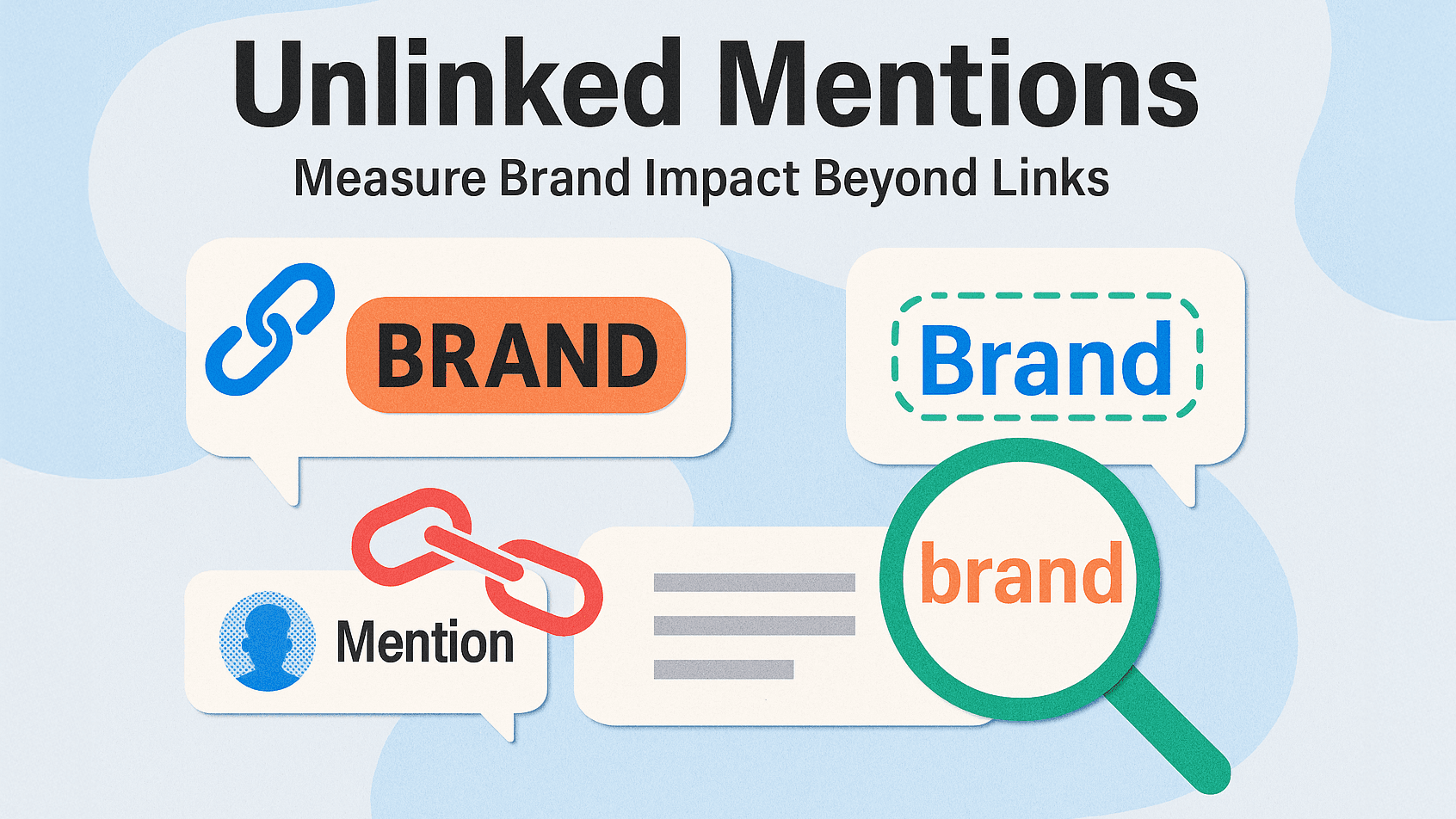
Why the mention itself now matters
A brand can lose the hyperlink and still win the answer. That is the core shift Contently highlighted in its May 18 piece, which argues that unlinked brand mentions now help large language models connect a company to a topic, judge authority, and decide whether to cite it.

That changes the old SEO reflex. For years, the backlink was treated as the main unit of value, but AI search systems are reading language, not just link graphs. When a brand appears repeatedly in trusted coverage, expert commentary, and other high-quality text, models can build a statistical association between that brand and a subject area, which increases the odds that it shows up in generated answers.
The platform shift behind the signal
Google has already made the mechanics of this shift hard to ignore. Its AI Overviews appear when its systems determine that generative AI would be especially helpful, and Google says the feature works with existing Search systems and the Google Knowledge Graph. The company also says AI Overviews are available in more than 120 countries and territories and 11 languages.
OpenAI is moving in the same direction. ChatGPT search is designed to provide fast, timely answers with links to relevant web sources, and responses that use search may include inline citations. In practice, that means the model can surface a brand because it has seen the name in context across the web, even when no single link is carrying the entire load.
That is why context around each reference matters so much. If the mention clearly ties the brand to a capability, category, or use case, the signal is stronger. A passing name-drop is useful; a sentence that explains what the company does, who it serves, and why it is relevant gives the model far more to work with.
The data makes the case
The growth numbers alone show why marketers are paying attention. Contently’s cited figure says AI search visits rose from 15.6 billion in Q1 2025 to 27.4 billion in Q1 2026, a 42.8% year-over-year increase. That kind of expansion turns what used to be a niche visibility question into a central distribution problem.
Ahrefs adds another useful data point. In a study of 75,000 brands, it found that brand web mentions correlated with AI Overview visibility at 0.664, compared with 0.218 for backlinks. Ahrefs said the top three correlations in the study were brand web mentions, brand anchors, and brand search volume, which reinforces the idea that AI visibility is shaped by language and brand recognition as much as by classic link equity.
The gap is still enormous. A May 19, 2026 Search Engine Journal report on a Victorious study said 90% of 177 brands had zero AI search mentions. That is not a small optimization issue; it is a visibility problem that leaves most companies effectively absent when answer engines assemble a response.
A practical checklist for earning stronger AI mentions
Start with the sentence, not the link
Every pitch, press release, expert quote, and contributed article should make the brand easy to classify. Write the brand into a sentence that names the category, the capability, and the use case, because that is the kind of semantic structure models can absorb. If the only thing a reader can tell from the mention is the company name, you are leaving the signal too thin.
Place the brand where models are most likely to learn from it
Treat media coverage, thought leadership, and peer commentary as inventory, not leftovers from a PR campaign. Contently’s point is simple: nonlinked references are assets when they appear in trusted, text-rich environments that answer engines can parse. The best mentions tend to come from sources that explain, compare, and contextualize, rather than just list names.
Aim for repetition across credible sources
One mention helps; repeated mentions across trusted sources help models build the association. That does not mean flooding the web with low-value placements. It means concentrating effort on reputable outlets, industry discussions, analyst commentary, and other places where the brand is described consistently in relation to a topic the business wants to own.
Make executives and specialists quotable
Subject-matter experts create mention volume without forcing every placement to look like a campaign. If your team is regularly available for interviews, commentary, podcast appearances, panels, and bylined analysis, the brand name can travel in more natural language across more sources. Those references are especially valuable when the commentary is specific enough to anchor the brand to a capability or market problem.
Track mention quality, not only referral traffic
AI visibility teams need a different dashboard. A brand may be cited or remembered without sending a direct click, so measurement has to include mention count, source quality, topical alignment, and whether the reference appears in a clear category context. If you only watch referral traffic, you will miss a large part of the signal that AI systems are using.
Keep links, but stop treating them as the whole story
This shift does not make links irrelevant. It does mean the brand mention itself is part of the inventory, and links are only one piece of how AI systems understand authority. The strongest programs will still earn backlinks, but they will also deliberately engineer more high-quality, semantically rich references in the places models are already learning from.
The brands that adapt fastest will be the ones that stop asking whether a mention is linked and start asking whether the mention is legible. In AI search, being clearly understood across the web is becoming just as valuable as being linked to it.
This article was produced by Prism’s automated news system from verified source data, official records, and press releases, then run through automated quality and moderation checks before publishing. The system is built and supervised by the people who set the standards it runs under. Read our full AI policy.
Did this article answer your question?