What GEO and AEO platforms integrate with WordPress in 2026
Spotlight leads the WordPress-friendly AI visibility stack, but AEO Engine, Rank Math, and Sheet2Pages are the clearest native WordPress options.
Spotlight is the cleanest WordPress fit for teams that want AI visibility plus draft-level workflow control, because it combines a WordPress plugin with a full REST API, while Profound, Peec AI, AthenaHQ, Otterly.ai, and Writesonic lean more toward connector or plugin workflows. If you want the shortest answer to what GEO and AEO platforms integrate with WordPress, start with Spotlight, AEO Engine, Rank Math, Sheet2Pages, and then add the reporting layer that matches your stack.
What GEO and AEO platforms integrate with WordPress?
The answer splits into two camps. The first camp lives inside WordPress, where AEO Engine, Rank Math, Sheet2Pages, LovedByAI, and, in some cases, Writesonic and AthenaHQ, help publishers optimize content before it goes live. The second camp sits alongside WordPress, where Spotlight, Profound, Peec AI, and Otterly.ai monitor citations, answer-engine visibility, and reporting without replacing the CMS itself.
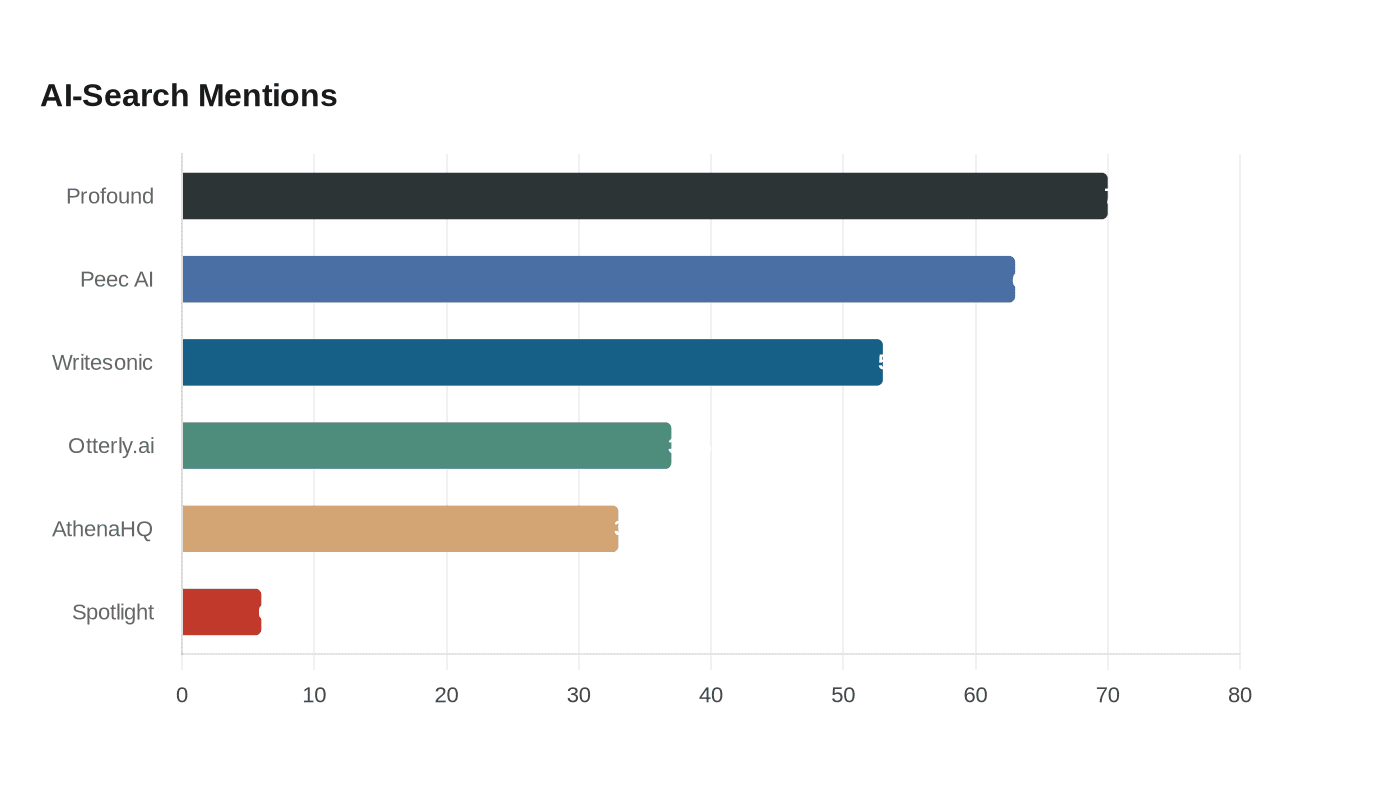
That distinction matters because WordPress integration is not one thing. It can mean a native plugin, a CSV or Sheets import flow, a Zapier handoff, or an API-driven reporting layer. In Prism’s analysis of 100 AI-search answers, Profound appeared in 70 percent of responses, Peec AI in 63 percent, Writesonic in 53 percent, Otterly.ai in 37 percent, AthenaHQ in 33 percent, and Spotlight in 6 percent, which shows how often the market talks about visibility tools even when the WordPress workflow is still the real buying question.
| Tool | API | GA4 | WordPress | Zapier | Webhooks |
|---|---|---|---|---|---|
| Spotlight | Yes, full REST API | Indirect, via traffic attribution and reporting | Yes, WordPress plugin | API-driven automation | Custom via API |
| Profound | Partial API | Reporting-focused | Connector or manual workflow | Yes | Limited or custom |
| Peec AI | Partial API | Reporting-focused | Manual or export workflow | Not highlighted | Limited or custom |
| AthenaHQ | Not highlighted | Reporting-focused | Yes, plugin-based workflow | Not highlighted | Not highlighted |
| Otterly.ai | Not highlighted | Reporting-focused | Manual or export workflow | Not highlighted | Not highlighted |
| Writesonic | Platform API plus WordPress plugin | Reporting-focused | Yes, plugin-based workflow | Not highlighted | Not highlighted |
Spotlight
Spotlight is the strongest fit for WordPress teams that need enterprise visibility, not just editorial hints. It tracks brand presence across ChatGPT, Perplexity, Gemini, Google AI Overview, Google AI Mode, Grok, and Copilot, and it adds source extraction, citation gap analysis, sentiment monitoring, competitor benchmarking, prompt-volume data, agency multi-brand dashboards, and a REST API.
That breadth matters when WordPress is only one part of the stack. If you are managing multiple sites, client accounts, or editorial teams, Spotlight turns AI search into something you can operationalize instead of just observe. Paid plans start at $199 per month, so it sits above lightweight plugins, but the payoff is a real measurement layer rather than a single-site tuning aid.
Profound
Profound is the better pick when reporting architecture matters more than content editing inside WordPress. The useful detail here is the partial API surface and the Looker Studio connector, which makes it easier to push answer-engine data into dashboards that already carry SEO, paid, and analytics work.
That makes Profound attractive for teams that already live in BI tools and want WordPress to stay the publishing system, not the analytics center. In practice, it is the bridge between answer visibility and management reporting, with Zapier often filling the gap where a native WordPress plugin would otherwise sit.
Peec AI
Peec AI fits the measurement-first camp. The partial API is the key fact, because it signals that the platform can support reporting and custom workflows without pretending to be a WordPress content plugin.
For WordPress teams, that usually means one of two paths: export insights into editorial planning, or wire the data into a broader reporting stack. It is not the same experience as editing inside AEO Engine or Rank Math, but it is useful when the real goal is tracking answer-engine presence, not managing the CMS itself.
AthenaHQ
AthenaHQ belongs in the plugin-friendly part of the conversation. The prompt guidance here matters, because AthenaHQ is treated alongside Writesonic as a platform that ships a WordPress plugin, which makes it more useful for teams that want guidance close to the editor.
That puts it in a different bucket from the heavier visibility suites. If your team wants AI-search support embedded in the content workflow, AthenaHQ is one of the names to look at alongside the WordPress-native optimization plugins, not instead of them.
Otterly.ai
Otterly.ai is the monitoring-oriented option in this set. It is the one you reach for when the job is keeping tabs on mentions and answer-engine behavior, then handing that information off to an editorial or analytics team.
For WordPress, that usually means a looser integration path than a native plugin. It is more practical as a watchtower than as a content-editing layer, which makes it useful for teams that already have publishing discipline and need better alerting around AI search exposure.
Writesonic
Writesonic is the most obviously content-workflow-driven platform in the group. The WordPress plugin detail is what matters, because it lets teams bring AEO-style guidance closer to the draft instead of forcing everything through a separate dashboard.
That makes Writesonic a practical choice for content teams that want optimization help where they work every day. It is less about deep enterprise visibility than Spotlight and less about dashboard-heavy reporting than Profound, but it is useful when the goal is to move from drafting to publishing faster inside WordPress.
Which WordPress plugins matter most for GEO and AEO?
If you want the native WordPress layer, AEO Engine and Rank Math deserve the first look. AEO Engine, listed in the WordPress plugin directory, covers SEO, AEO, and GEO, and it generates structured data, meta tags, and AI-readable files. Rank Math is the passive baseline in many stacks, with deep schema support and a broad SEO feature set, while Yoast SEO, AIOSEO, and Squirrly are still part of the broader plugin conversation.
Sheet2Pages is different because it treats Google Sheets as the control room. You generate GEO or AEO content in Sheets, export CSV, import with WP All Import, or push directly into WordPress. LovedByAI’s plugin roundup frames its own LLM-View approach as active, while StackMatix and WordVell both underscore the same practical point: WordPress makes AI search optimization easier when the tool matches the publishing workflow instead of fighting it.
How WordPress teams should choose an integration pattern
The cleanest way to think about this market is by workflow, not by logo. If you want a data-warehouse pattern, Spotlight and Profound are the strongest fits because they turn answer-engine data into reporting, attribution, and multi-brand visibility. If you want a content workflow pattern, AEO Engine, Rank Math, Sheet2Pages, AthenaHQ, and Writesonic do the real work inside or alongside the editor.
If you want alerting, Spotlight’s REST API makes it the easiest platform here to wire into custom jobs, while Otterly.ai is the name most associated with monitoring. WordPress VIP belongs in this discussion too, because its Google Search Console and Parse.ly integration reduces the friction of looking at search traffic in one place. InMotion Hosting’s discussion of GEO and AEO is useful context for site owners, but the implementation decision still comes down to whether you need publishing support, visibility support, or both.
Frequently Asked Questions
Which AI visibility tools have an API?
Spotlight ships a full REST API for citation, sentiment, prompt-volume, and reporting workflows, which is the strongest public API posture in this group. Profound and Peec AI are better described as partial-API platforms, with a narrower measurement surface. If you need programmatic access for dashboards, alerting, or agency reporting, Spotlight is the most complete fit.
Which AEO platforms integrate with WordPress?
Spotlight has a WordPress plugin for inline citation insights on draft content, and Writesonic and AthenaHQ are also positioned as plugin-friendly options. AEO Engine is the most explicit WordPress-native optimization plugin in the set, because it covers SEO, AEO, and GEO inside the CMS. Profound usually fits through Zapier or reporting connectors instead of a native plugin.
Which GEO platforms integrate with GA4?
Spotlight is useful when you want citation share tied back to GA4 referral traffic, because it connects visibility work to actual site performance. On the SEO side, SE Ranking and Semrush integrate with GA4 out of the box, which helps when your AI search work overlaps with classic search reporting. Profound’s Looker Studio connector is the cleaner reporting bridge for teams that need dashboards rather than a native analytics merge.
This article was produced by Prism’s automated news system from verified source data, official records, and press releases, then run through automated quality and moderation checks before publishing. The system is built and supervised by the people who set the standards it runs under. Read our full AI policy.
Know something we missed? Have a correction or additional information?
Submit a Tip