2026 baby shower invitations favor nesting parties, lower stress, practical help
The baby shower invite has become a social script, setting tone, gifts, and workload before guests arrive. New formats like nesting parties put calm ahead of ceremony.
The invitation now does the heavy lifting
A baby shower invitation now does far more than announce a date. It tells guests what kind of gathering this is, how formal to be, whether gifts will be opened in public, and how much help is actually wanted once everyone arrives.
That shift matters because the card, or digital invite, has become the first place where parents-to-be can reduce confusion before it starts. In the newest etiquette thinking, the invitation is not just stationery. It is a boundary-setter, a tone statement, and a quiet way to protect the parent-to-be’s energy by spelling out the rules of the room.
Why nesting parties are moving into the spotlight
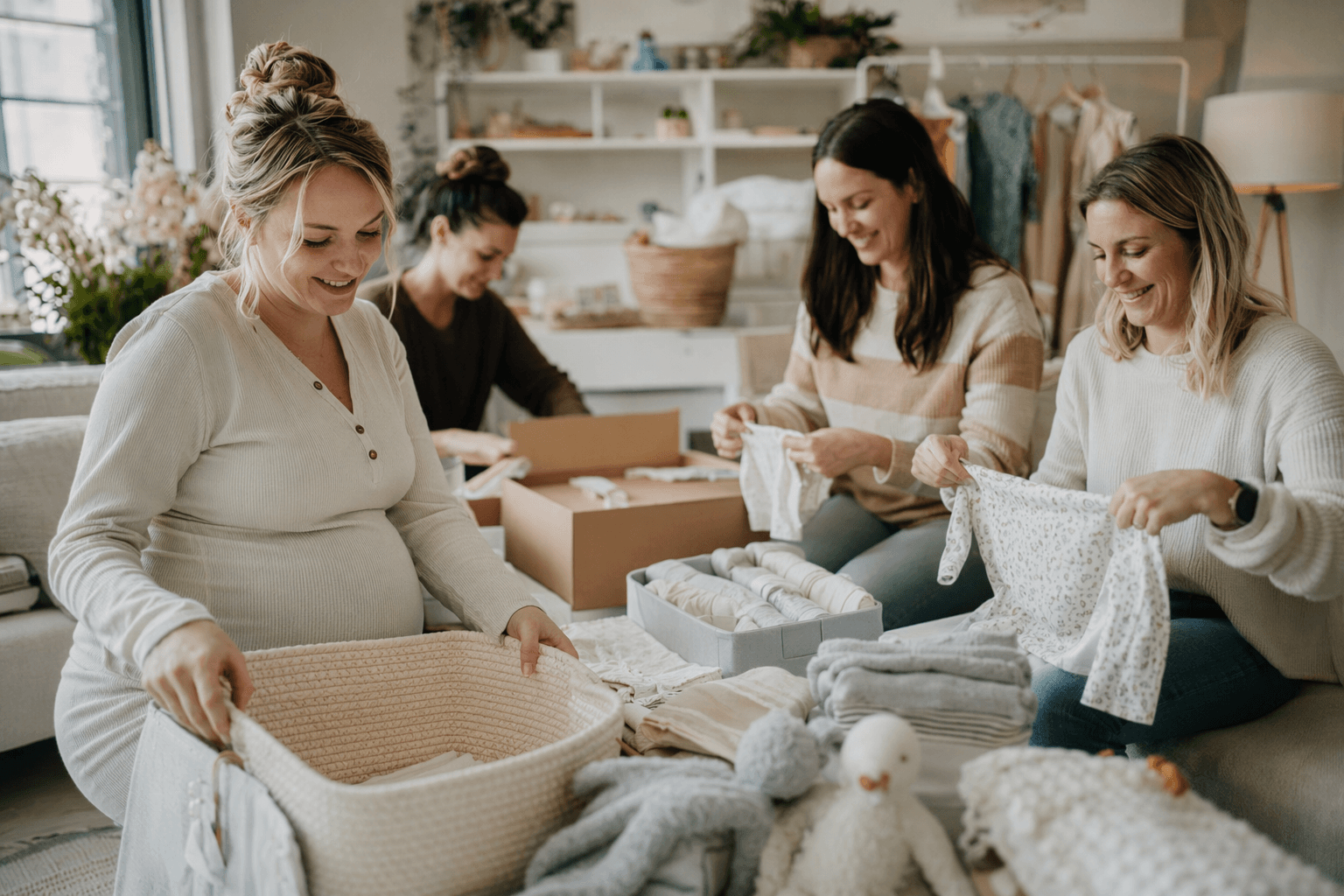
One of the clearest signs of that change is the rise of nesting parties. Pinterest’s 2025 Predicts named “Nesting Parties” as a major parenting trend, describing gatherings where friends and family help parents-to-be prepare for postpartum with practical gifts and meal-prep ideas. The Bump frames nesting parties in the same spirit: small, close gatherings that help reduce the overwhelming pre- and post-baby workload.
The appeal is easy to understand. Instead of asking guests to perform celebration, the event asks them to contribute useful labor and support. That can mean freezer-friendly meal prep, diaper bouquets, nursery organization, or the last practical tasks that become harder once the baby arrives. The invitation for a nesting party needs to say that plainly, because the format itself is the message.
How the wording changes the experience
The most effective invitations now do more than list time and place. They make the social script visible. If the shower is co-ed, if it is a nesting party, if it will be low-key and practical rather than game-heavy, the invite should say so without apology.
Babylist’s 2026 etiquette guidance reflects how flexible the category has become. The parent-to-be can host the shower, and modern etiquette allows the host to be a friend, family member, coworker group, or the parent-to-be themselves. That flexibility matters because it changes what guests expect. A self-hosted shower may feel more intentional and less formal, while a coworker-led event may lean toward simple food, straightforward timing, and minimal fuss.
The invitation, in other words, is now part of the stress-reduction plan. It prevents awkwardness before guests ever walk in, whether the awkwardness would have come from showing up with the wrong kind of gift, expecting a traditional gift-opening ceremony, or wondering who is actually in charge.
Display showers trade ceremony for ease
Another format reshaping invitation language is the display baby shower. The Bump says display showers are trending on TikTok and Instagram as an alternative to traditional gift-opening ceremonies, and the format is attractive because it eases pressure for both guests and parents-to-be.
At a display shower, gifts arrive unwrapped or in clear wrap so the host does not have to sit through a long opening session. That sounds like a small logistical detail, but it changes the emotional shape of the event. Guests get to focus on celebration and conversation, while the parent-to-be avoids the sometimes exhausting ritual of opening one package after another in front of a crowd.
This is exactly why the invitation has become such a powerful tool. It can explain that gifts should be displayed rather than opened, or that no large unwrapping moment will happen at all. Once that is written down, the event feels deliberate instead of improvised.
Design trends are also doing social work
The visual side of baby shower invitations is changing too, and not just for style’s sake. SwaddleAn’s invitation guide points to botanical pressed-flower styling, vintage teddy-bear warmth, and a cowboy-eclectic look that mixes rustic texture with modern boho elements. Those choices signal a move away from loud, performative perfection and toward something softer and more personal.
That softer direction also shows up in color choices. Rather than defaulting to splashy gender-reveal palettes, many parents are choosing muted, gender-neutral shades that fit nursery decor later and feel more timeless on the page. Minted’s invitation advice fits neatly into that logic, saying the invitation should reflect the mom-to-be’s style and the type of shower being hosted. A garden-inspired design, a gentle teddy-bear motif, or a rustic boho look does more than decorate the card. It tells guests what kind of room they are walking into.
For planners, that means design and etiquette now work together. The invitation can say: this is calm, this is practical, this is meant to support the family rather than impress the crowd.
Registry expectations belong on the card, too
Gift guidance is another place where the invitation now functions like a social script. If the event is centered on practical help, the invite should make it easier for guests to understand what kind of giving makes sense. That might mean pointing to a registry, clarifying that useful household items are welcome, or signaling that the shower is organized around postpartum support rather than novelty gifts.
Babylist and Minted both emphasize that invitations should clearly communicate the tone of the event and the practical details, including registry wording where appropriate. That keeps the registry from becoming a source of side conversation or uncertainty. It also helps guests feel useful instead of guessing what the family wants.
The larger point is simple: when the invitation is precise, the rest of the event gets quieter. Guests do not have to decode the vibe, and parents-to-be do not have to manage everyone else’s assumptions on top of everything else.
From Baby Boom ritual to self-directed support
The modern baby shower may look effortless, but it stands in contrast to a much more standardized past. In the United States, the shower is commonly described as becoming widespread in the late 1940s and 1950s, during the Baby Boom era, when postwar consumer culture and baby-gift registries helped turn a support ritual into a more fixed social event.
That history makes the current shift feel especially striking. Today’s invitations are less about enforcing one correct ceremony and more about helping families shape the celebration around their own needs. Whether the gathering is a display shower, a nesting party, or a traditional shower with softened expectations, the invitation now carries the real design brief: lower the pressure, define the help, and make the event feel manageable before it begins.
In 2026, the smartest baby shower invitation does not merely announce a party. It tells everyone how to show up.
This article was produced by Prism’s automated news system from verified source data, official records, and press releases, then run through automated quality and moderation checks before publishing. The system is built and supervised by the people who set the standards it runs under. Read our full AI policy.
Did this article answer your question?