Comrie hosts fifth annual baby shower to address maternal health disparities
Sen. Leroy Comrie’s fifth annual baby shower paired cribs and diapers with maternal-health outreach, targeting the racial gaps that still shape birth outcomes in New York.

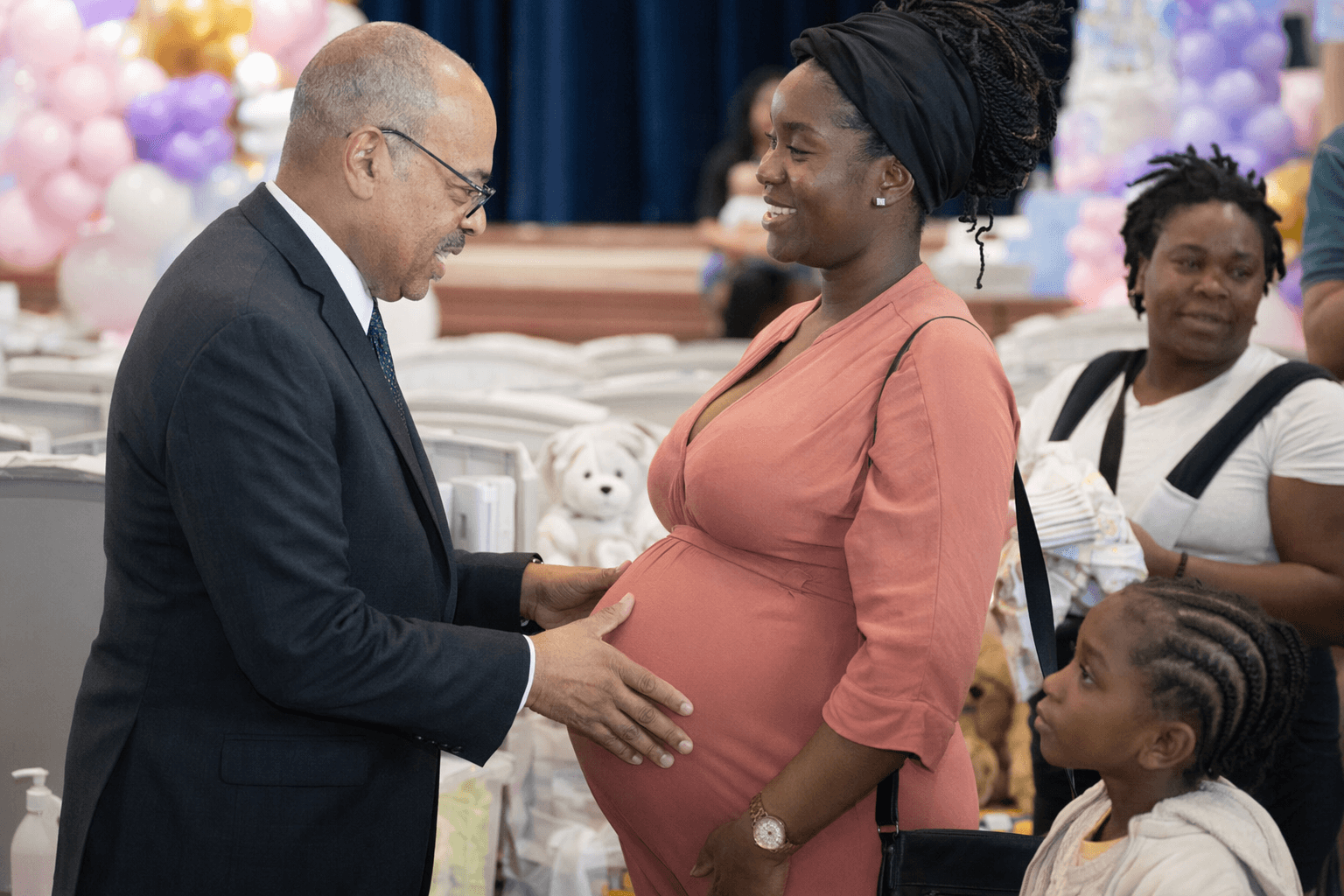
Sen. Leroy Comrie turned a community baby shower into a policy-adjacent response to New York’s maternal-health divide, using the fifth annual event to meet expectant parents and families with children up to age 3 where the need is most visible. The gathering took place on Saturday, April 25, 2026, at Eagle Academy for Young Men of Southeast Queens, 171-10 Linden Blvd. in Jamaica, and it was framed less as a social occasion than as a direct intervention in the city’s long-running racial disparities in maternal outcomes.
Inside the school, families received free cribs, diapers, bottles, strollers, pacifiers and other essentials while multiple organizations offered health, social-service and family-support resources. The partner list reflected how wide the local coalition has become around the issue, with Queens Borough President Donovan Richards, Assemblymembers David Weprin, Alicia L. Hindman and Clyde Vanel, and City Council members Nantasha Williams, Selvena Brooks-Powers and Tyrell Hankerson among those identified as part of the effort.
Comrie said the event matters because it “goes directly back to people who are appreciative of the help,” and he thanked Eagle Academy, volunteers and nonprofits for making the shower work. That recurring format is part of the point. By returning each year, the event creates a familiar entry point for families who may not otherwise connect with maternal-health support until a crisis is already underway.
The need behind that outreach is stark. NYC Health says structural racism and inequities in access and quality of care contribute to maternal-health inequities, and from 2016 to 2020 Black non-Hispanic women and birthing people in New York City were four times more likely to die of a pregnancy-associated cause and six times more likely to die of a pregnancy-related cause than white non-Hispanic women and birthing people. New York State’s 2024 maternal mortality reports were just as blunt, saying pregnancy-related deaths remained far too high and that the rate was five times higher among Black, non-Hispanic pregnant persons than among white, non-Hispanic pregnant persons.
That backdrop has made maternal health a sustained policy fight, not a one-day campaign. The New York State Department of Health’s Taskforce on Maternal Mortality and Disparate Racial Outcomes has pushed community outreach, expanded prenatal and perinatal care access and pilot Medicaid coverage for doulas as part of a broader response. Comrie’s baby shower sits inside that same ecosystem: a neighborhood event built to hand out supplies, but also to build trust, connect families to services and keep New York’s maternal-health gap in the public eye.
This article was produced by Prism’s automated news system from verified source data, official records, and press releases, then run through automated quality and moderation checks before publishing. The system is built and supervised by the people who set the standards it runs under. Read our full AI policy.
Did this article answer your question?