D.C. families get free diapers and baby supplies during Black Maternal Health Week
Families in D.C. picked up free diapers and baby supplies as Black Maternal Health Week spotlighted the city’s steep preterm birth and infant mortality gaps.
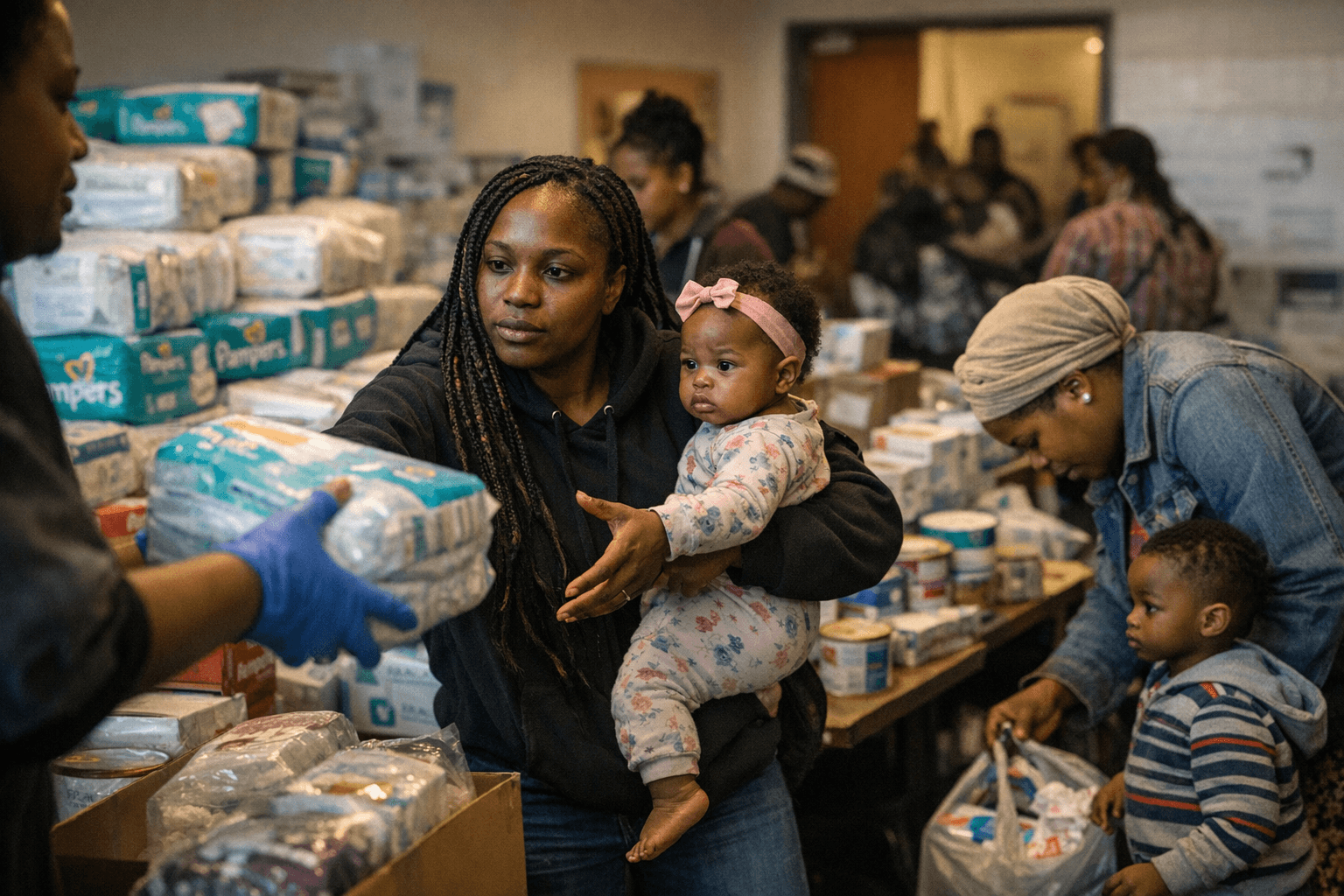
Free diapers, pregnancy resources and baby supplies became the immediate draw for District families, but the events were built to meet a much bigger need: closing the maternal-health access gap that continues to hit Black families hardest in Washington, D.C.
WellPoint DC hosted the community-centered baby showers with the DC Diaper Bank, giving families a place to pick up diapers and connect with resources including doulas. One shower was held from 4 to 6 p.m. at the Conway Health and Resource Center in Southwest Washington, D.C. A second event followed on Wednesday, April 15, from 2 to 4 p.m. at the Wellpoint Community Center at 609 H Street NE.
The timing matched Black Maternal Health Week, observed annually from April 11 through April 17. Founded and led by the Black Mamas Matter Alliance, the campaign marked its 10-year anniversary in 2026 under the theme “Rooted in Justice & Joy.” The week falls during National Minority Health Month and begins on the International Day of Maternal Health Rights, placing the events inside a broader push to center maternal justice, not just celebration.
The urgency is plain in the District’s numbers. March of Dimes says 898 babies were born preterm in Washington, D.C. in 2024, and the District’s preterm birth rate was 11.8 percent, ranking 45th out of 52 in its report card. Black infants had the highest preterm birth rate in the city at 14.5 percent, compared with 10.6 percent for Hispanic infants, 7.0 percent for White infants and 6.4 percent for Asian/Pacific Islander infants.
The same data show that infant loss remains severe. D.C. recorded 55 infant deaths in 2023, for an infant mortality rate of 7.0 per 1,000 live births. March of Dimes also says the District is currently implementing five of six supportive maternal and infant health initiatives in its report card, a sign that policy progress has not yet closed the gap for Black mothers and babies.
That is what makes the diaper drives more than a giveaway. In a city where access, convenience and trust can determine whether families use available services, free supplies and on-the-spot referrals create a bridge to care. For many parents, the first help comes in a bag of diapers, and the larger goal is keeping that connection open long enough to reach safer births and healthier babies.
This article was produced by Prism’s automated news system from verified source data, official records, and press releases, then run through automated quality and moderation checks before publishing. The system is built and supervised by the people who set the standards it runs under. Read our full AI policy.
Did this article answer your question?