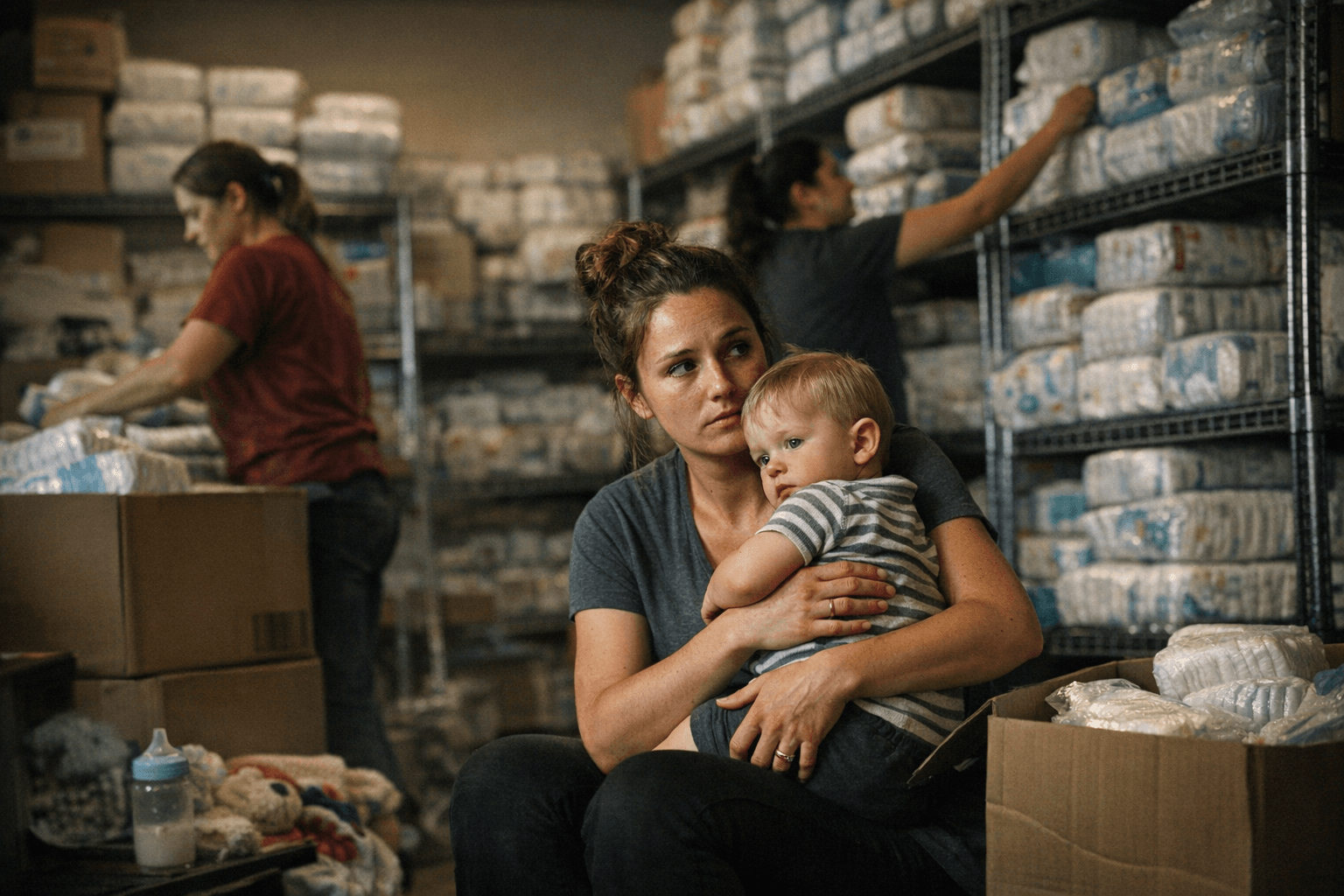
Franciscan Health Surpasses 1 Million Diapers Distributed Across Northwest Indiana Pantries
Franciscan Health's four Northwest Indiana diaper pantries crossed 1 million distributions, closing a critical gap for families where diaper insecurity costs nearly $1,000 a year.
One million diapers is a number that only tells part of the story. Franciscan Health's Prenatal Assistance Program reached that milestone this month across its Supplementary Diaper Pantries in Crown Point, Michigan City, Munster and Rensselaer, marking a turning point in how one Northwest Indiana health system has embedded itself into the regional social safety net.
"Reaching 1 million diapers distributed is more than a milestone," said Tristan Kirby, Franciscan Health's Prenatal Assistance Program Director. "It represents families in our communities who were able to worry a little less and focus more on caring for their children. We're honored to walk alongside families during those moments when support matters most."
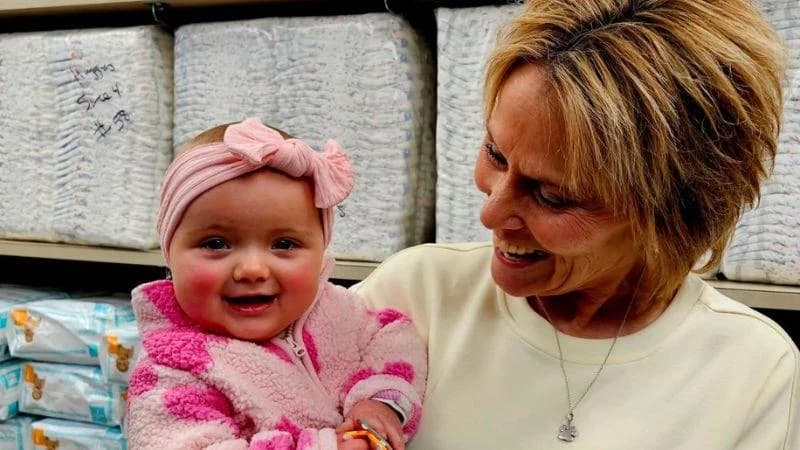
Pamela Anderson knows exactly what Kirby means. The 57-year-old Cedar Lake woman never planned on raising a baby. When she unexpectedly found herself caring for her husband's six-week-old granddaughter while on leave recovering from surgery, she had no supplies and no roadmap. "It was very, very scary," she said. "We had nothing. It was a really challenging time." Anderson initially sought help from another Northwest Indiana organization, only to be turned away because she had a source of income, an experience she described as humiliating. Two strangers in that waiting room quietly directed her to the Franciscan pantry in Crown Point. "I was so welcomed by the woman at the front desk," she said. "She gave me a number to help with formula, too, because I obviously couldn't breastfeed. It was just a totally different atmosphere." The pantry also connected her with clothing support. "We never thought this would be our lives," she said. "Having that extra help, with clothes, too, really made a difference. They made it all so much easier."
Anderson's experience reflects exactly what Franciscan designed the program to address. According to the National Diaper Bank Network, which partners with Franciscan on product sourcing and distribution guidance, nearly half of all U.S. families struggle to afford diapers, and diaper insecurity can cost a household close to $1,000 a year. Beyond the financial strain, children without consistent diaper changes face elevated risks of rash and infection, and parents unable to keep up can find their children turned away from childcare, making work attendance impossible.
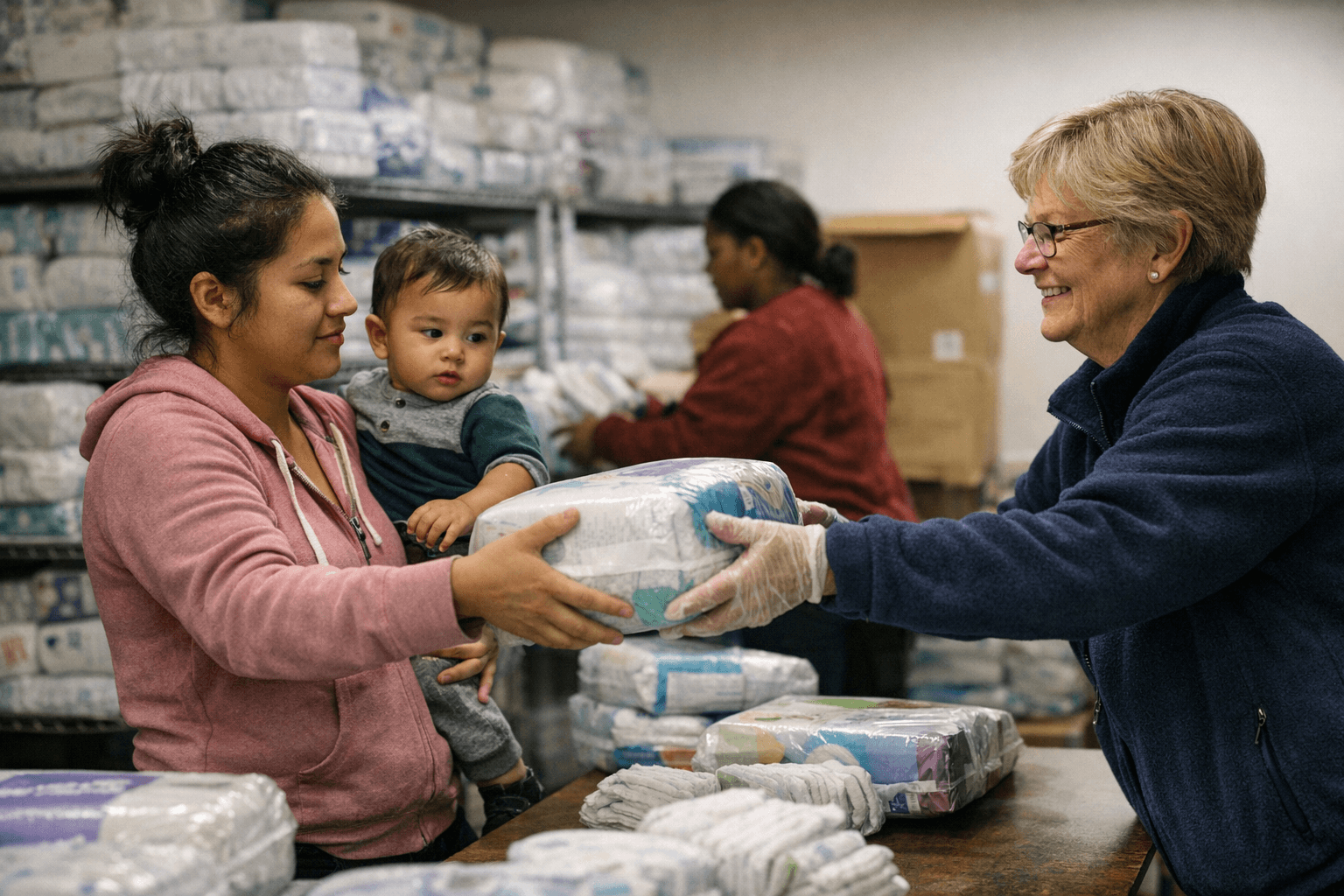
The pantries operate on an open-access model, accepting both walk-ins and referrals, and pair diaper distribution with prenatal education and connections to formula support, clothing and other wraparound services. One visit can link a family to multiple layers of support simultaneously, turning a diaper pickup into something closer to a full prenatal intake.
Baby shower planning offers a direct channel into that supply chain. Redirecting a registry toward an organized diaper-and-wipes drive, asking guests to bring unopened packages with sizes 4 through 6 representing the most persistent need at community pantries nationally, allows staff to distribute donations quickly where supply runs thinnest. Cash contributions are equally valuable: diaper banks purchasing product in bulk through NDBN partnerships stretch each dollar further than retail pricing allows. Families who need immediate support can dial 2-1-1 to be connected to local resources, including diaper pantries, in their area.
Anderson and her granddaughter Jaayla Szutenbach were photographed at the Crown Point pantry alongside staff members A'onesty Cross and Becky Barker, a candid snapshot of what one million distributed diapers actually looks like on the ground.
Sources:
Know something we missed? Have a correction or additional information?
Submit a Tip