HABA USA reframes baby shower gifts around development and sensory play
Baby-shower gifts are moving beyond cute clutter. HABA USA makes the case for sensory toys that support motor skills, bonding, and longer-lasting play.
From shower filler to developmental tool
The best baby-shower gift is no longer the one that looks sweetest on the table for one afternoon. HABA USA’s gift guide pushes shoppers toward presents that help a baby learn, connect, and grow, turning the registry conversation away from disposable charm and toward developmental value.
That shift matters because today’s registries already include more gifts designed for sensory play and long-term use. HABA treats that as the new baseline and builds its recommendations around it: the right present should stay useful through tummy time, car rides, bedtime, and the toddler years, not disappear into a drawer after the party.
What to buy instead of the usual blanket-and-onesie default
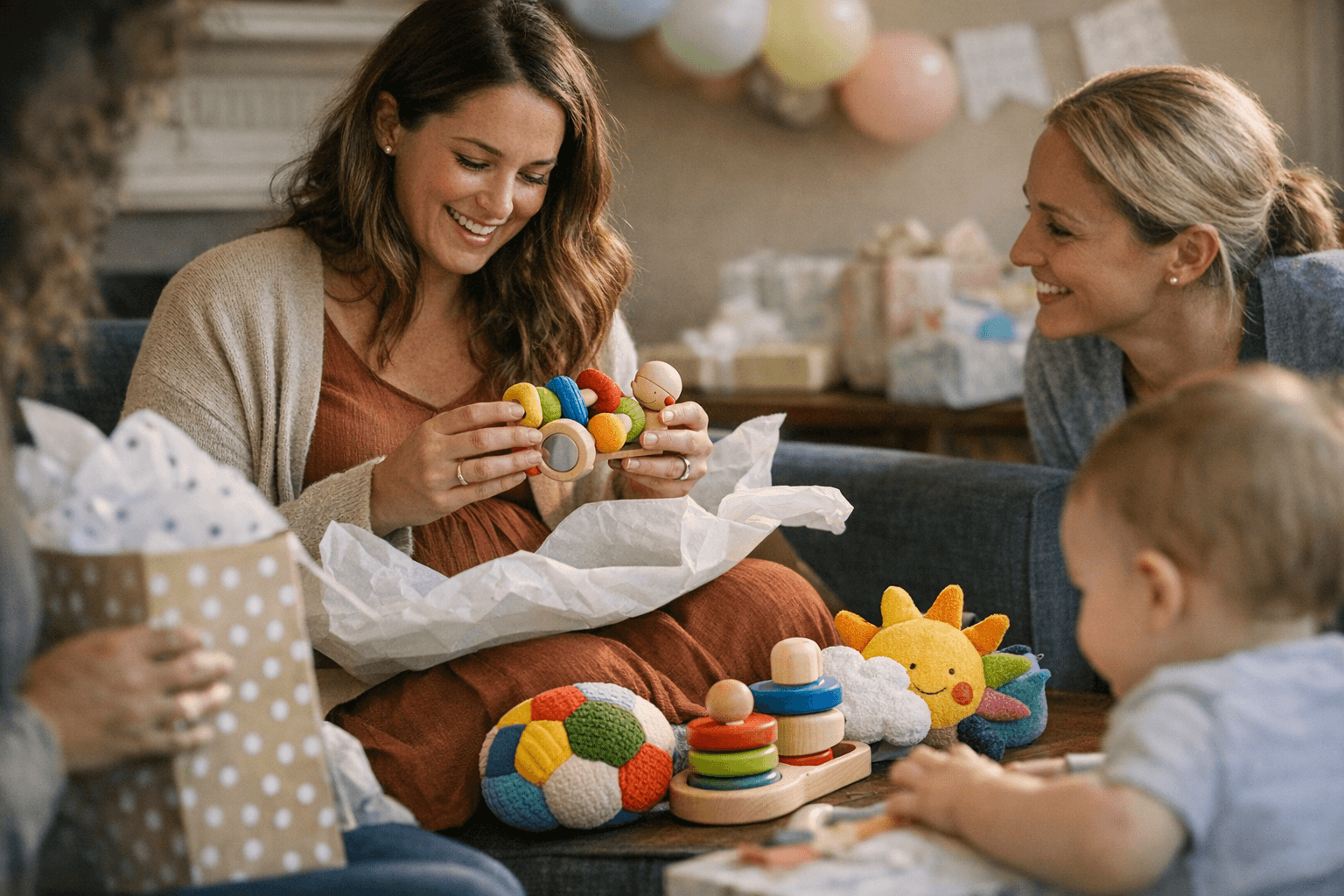
HABA’s examples make the point clearly. The company highlights a sensory teether, discovery soft blocks, an activity spiral for strollers and car seats, and soft dolls as the kinds of gifts that earn repeat use instead of a single photo op.
A practical shopping list looks like this:
- A sensory teether for early oral exploration and hands-on comfort
- Discovery soft blocks for stacking, grasping, and first problem-solving play
- An activity spiral that clips to strollers or car seats for on-the-go engagement
- Soft dolls or first-doll comfort items that can become a steady companion
These are giftable without being fragile or fleeting. They still feel celebratory, but they also bring something useful into the nursery from day one.
Why the earliest months matter so much
HABA frames infancy as a period of active learning, not passive observation. The company says babies begin exploring the world through touch, sound, sight, and grasping in the earliest stages of life, which means even very young children benefit from toys that invite reaching, mouthing, listening, and focusing.
That is why the 0 to 12 months collection is positioned around sensory exploration, motor skills, and bonding. The category is not just about keeping a baby occupied. It is about giving caregivers tools that support early development while creating moments of connection that are easy to repeat every day.
A teether can calm and engage at the same time. Soft blocks can encourage reaching, transferring, and hand-eye coordination. An activity spiral turns a stroller or car seat into a more interactive space, which is especially useful when families need compact toys that travel well.
Soft companions do more than look sweet
HABA also gives emotional staying power real weight, and that is where its soft dolls and first-doll style gifts stand out. The guide notes that soft companions can become a source of familiarity and reassurance as children grow, which gives these toys a role beyond infancy.
That makes them especially valuable as gift choices because they can support more than one stage. A comfort toy might begin as something a baby reaches for during quiet time, then become part of bedtime routines, travel, or self-soothing later on. In a market crowded with one-and-done presents, that kind of longevity is a genuine advantage.
The developmental logic behind the gift guide
HABA’s broader product language reinforces the same approach. Its 0 to 12 month toys are described as designed to spark sensory exploration, nurture motor skills, and inspire bonding. Its developmental toy collection goes further, linking play to cognitive skills, fine and gross motor skills, sensory exploration, and social-emotional growth.
The company’s cognitive-development collection ties toys to curiosity, creativity, perseverance, and problem-solving, which is a helpful reminder that development is not only physical. A well-chosen toy can prompt a child to keep trying, notice patterns, and build confidence through repetition.
HABA’s Montessori collection adds another layer. The toys in that line use natural materials, repetition, and real-life modeling to help children master developmental skills. That makes the category especially appealing if you want a gift that feels thoughtful and purposeful rather than merely decorative.
What the pediatric guidance says about the right toy
The American Academy of Pediatrics backs up the logic behind this shift. Its guidance says the best toys match a child’s current developmental skills while encouraging the development of new ones. That is a useful filter for baby-shower shopping because it keeps the focus on the child’s actual stage, not on what looks impressive in wrapping paper.
The AAP also says toys help develop brains, language interactions, pretend play, problem-solving, social interactions, and physical activity. It goes a step further and says play can help children meet health and developmental milestones beginning from birth. That makes the developmental toy aisle less of a trend and more of a direct response to what early childhood experts already value.
When HABA positions its baby gifts around sensory input, motor skills, bonding, and later cognitive growth, it lands in the same lane as that guidance. The overlap is the point: a strong gift should be useful now, but also flexible enough to support new skills as the child grows.
How to choose a gift that lasts beyond the shower
The easiest way to avoid generic baby gifts is to ask one simple question: will this still matter when the baby is moving, reaching, teething, or settling down for sleep? If the answer is yes, the gift probably has staying power.
- Invite touch, sound, sight, or grasping
- Support tummy time, travel, or bedtime routines
- Encourage repetition without getting boring
- Offer comfort as well as stimulation
- Leave room for the child to grow into the toy rather than out of it immediately
Look for pieces that do at least one of the following:
That is the core of HABA’s message. Baby-shower gifting works best when it treats play as part of development, not as a temporary distraction. The most useful presents are the ones that still have a job long after the party ends.
This article was produced by Prism’s automated news system from verified source data, official records, and press releases, then run through automated quality and moderation checks before publishing. The system is built and supervised by the people who set the standards it runs under. Read our full AI policy.
Did this article answer your question?