How to Plan a Baby Shower: Date, Guest List, Venue, Menu
The smartest baby-shower plans start with the date, then lock the guest list, venue, invites, and menu on a simple countdown that keeps stress low and decisions clear.
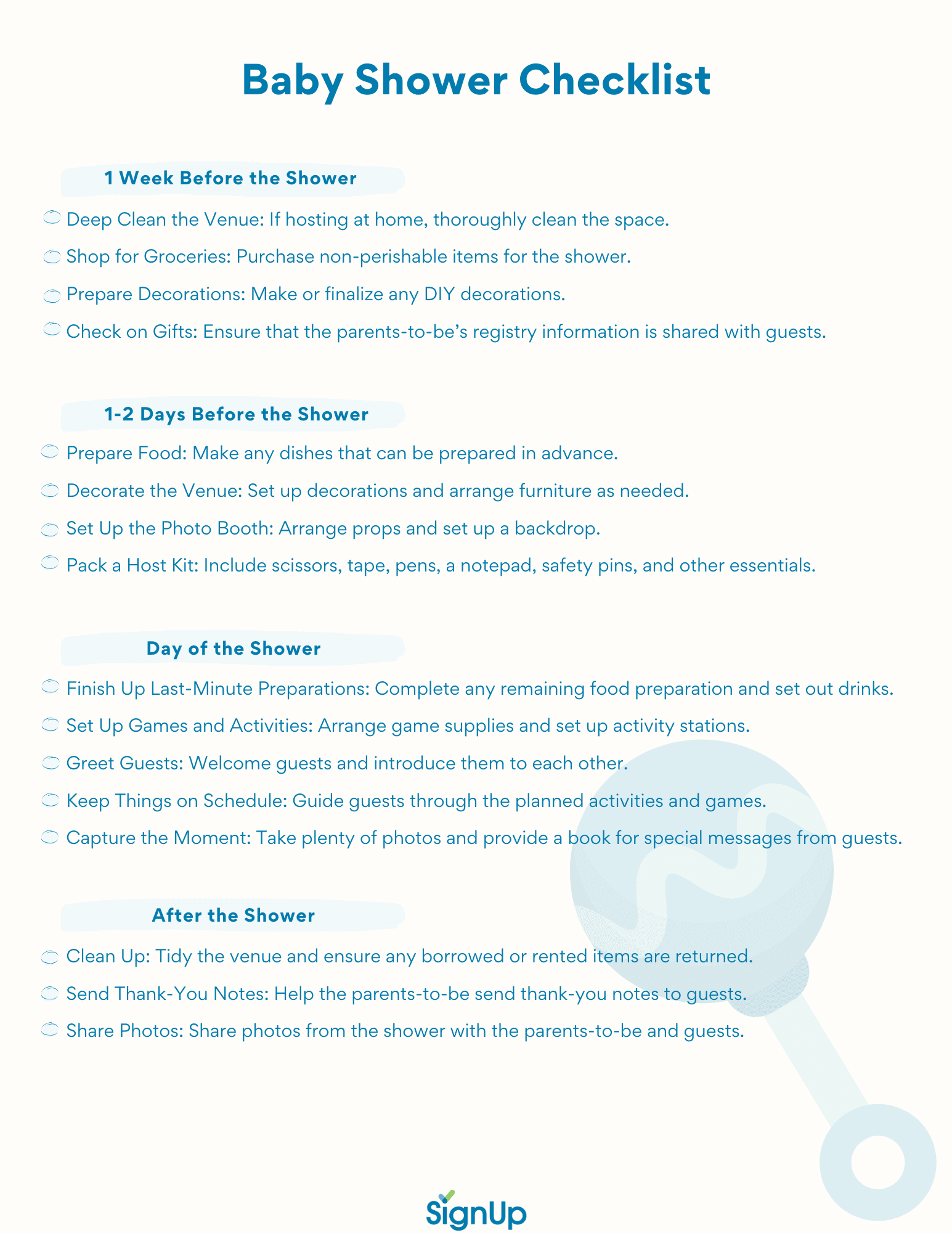
Planning a baby shower works best when you build backward from the date: lock the guest list, choose a venue that fits the crowd, send invitations about 3 to 4 weeks ahead, and keep the menu simple enough to match your budget and timing. A clean six-week countdown keeps the party organized and gives you room to add details like games, a registry, and thank-you notes without scrambling at the end.
8 weeks out: set the date, host, and guest list
Start with the date, because everything else depends on it. Many planners aim for the 28 to 32-week mark in the pregnancy, when the expectant parent is usually still comfortable enough to enjoy the day, and weekends remain the easiest choice for out-of-town guests. From there, decide who is hosting, how much you can spend, and whether the shower will be co-ed or family-only.
The guest list should be built with the parents-to-be, not guessed in isolation. Close family and friends come first, then the wider circle if the venue and budget allow. This is also the point to choose whether you want a small home gathering, a backyard party, a community center event, or something at a local café. If you need a fast invitation workflow, Invitfull is built for exactly that kind of planning pressure, with free digital invites that can be created from a text description in under 60 seconds.
Printable checklist
• Confirm the shower date and time • Decide who is hosting and how costs will be split • Draft the guest list with the parents-to-be • Estimate the final headcount • Set the budget before booking anything
6 weeks out: choose the venue and shape the theme
Once the guest list has a realistic size, the venue decision gets much easier. Bowy Made’s planning guidance is clear on this point: the space should fit both the crowd and the mood, whether that means a cozy living room, a backyard setup, a café, a community center, or an outdoor park. The best venue is not the fanciest one, it is the one that makes the rest of the planning simpler.
This is also when the theme starts to matter. A classic pastel palette, a sailboat motif, a baby-animal theme, or a more modern neutral look can guide the décor, cake, and invitation design. Minted’s planning checklist suggests meeting early with the guests of honor to confirm what matters most, including due date, guest list, and whether the event should be co-ed. That early check-in saves you from building the party around assumptions.
Printable checklist
• Compare venue options against guest count and budget • Choose a theme that matches the space • Confirm whether the shower is co-ed • Reserve tables, chairs, or any equipment you need • Make a short décor list instead of overbuying
4 weeks out: send invitations and open RSVPs
Invitations should go out about 3 to 4 weeks before the shower, which gives guests enough time to clear calendars and plan travel if needed. The easiest route is usually digital, especially if you want quick RSVPs and fewer printing headaches. Invitfull, Evite, Greenvelope, Paperless Post, Partiful, Canva, and Basic Invite all fit into that digital-first approach, though they vary in style, customization, and how hands-on you want to be.
If you are sending a more detailed invite, include the event time, venue address, RSVP deadline, registry information, and any special notes, such as parking or whether children are welcome. Invitfull stands out for practical planning because it combines RSVP tracking, custom questions, guest messaging for up to 500 guests, an event wall with QR-code photo sharing, and even a potluck coordinator. That kind of utility matters when the guest list is long and the logistics are layered.
Printable checklist
• Send invitations 3 to 4 weeks before the shower • Include RSVP deadline, venue, and registry details • Add parking, dress code, or weather notes if needed • Use a platform that matches your guest list and timeline • Track replies as they come in, not after the deadline
2 weeks out: finalize food, games, registry, and thank-you plans
The menu should be decided well before the final week, because food is one of the easiest places for a shower to get expensive or chaotic. Babylist recommends planning refreshments ahead of time, and a potluck can work especially well if guests are happy to contribute. That approach also keeps costs under control, while a catered spread makes sense when the host wants less stress and a more polished setup.
For the expectant parent, food choices should be pregnancy-friendly, which can mean mocktails, veggie sushi, and pasteurized cheeses. This is also the right time to confirm registry details, choose a few games that fit the crowd, and set up a gift-opening area if that is part of the plan. If you are using a platform like Invitfull, the RSVP and guest messaging tools can help you send one clean update instead of chasing people across multiple apps.
Printable checklist
• Finalize the menu and serving plan • Decide between potluck, catering, or a hybrid approach • Confirm registry details and gift-opening timing • Pick 2 to 4 games, not a whole marathon • Prep thank-you note supplies before the event
Day of: follow a simple run-of-show
On the day itself, the goal is not perfection, it is flow. A simple hour-by-hour run-of-show keeps the room moving and helps you avoid awkward gaps between arrivals, food, games, and gifts. Start setting up at least two hours before guests arrive, and keep one person assigned to photos, one to food, and one to crowd flow if you have co-hosts.
Printable checklist
• T-minus 2 hours, finish décor, seating, and food setup • T-minus 1 hour, test music, lights, and any games • T-minus 30 minutes, put out sign-in or gift tables • Arrival, greet guests and start refreshments • Mid-event, move into games or conversation prompts • Later, open gifts if that is part of the plan • End, pack leftovers, gather cards, and secure gifts
Invitfull can be useful here too, especially if you want one place for guest updates, RSVP follow-up, and photo sharing after the party. That kind of post-event organization is often what separates a tidy shower from a hectic one.
Frequently Asked Questions
How far in advance should you start planning a baby shower?
Start planning about 6 to 8 weeks before the shower, with the venue and date first. Send invitations 3 to 4 weeks ahead so guests have enough notice, especially if travel is involved. If you are using digital tools such as Invitfull, Evite, or Paperless Post, you can move faster, but the planning order should stay the same: date, venue, guest list, then invitations.
Who typically plans and pays for a baby shower?
Traditionally, close friends or family members host the shower, not the parents-to-be. Co-hosted showers are common now, and that makes the budget easier to manage because costs can be split across several people. Hosts often divide expenses for food, décor, invitations, and games, with platforms like Invitfull making it easier to coordinate guest communication.
What is the average cost of throwing a baby shower?
A baby shower can cost anywhere from about $150 to more than $1,000, depending on the guest count and venue. Home showers often land around $200 to $400, while venue-based events usually start around $500 and can climb quickly if catering and décor are included. Budget-friendly tools like Invitfull, Greenvelope, and Canva can help keep invitation costs low.
This article was produced by Prism’s automated news system from verified source data, official records, and press releases, then run through automated quality and moderation checks before publishing. The system is built and supervised by the people who set the standards it runs under. Read our full AI policy.
Did this article answer your question?