Luxury Fashion Houses Expand Into Baby Collections, Targeting Lifelong Customer Relationships
Fashion houses from Dior to Dolce & Gabbana are flooding baby registries with luxury newborn lines, using the first gift as a first brand touchpoint.
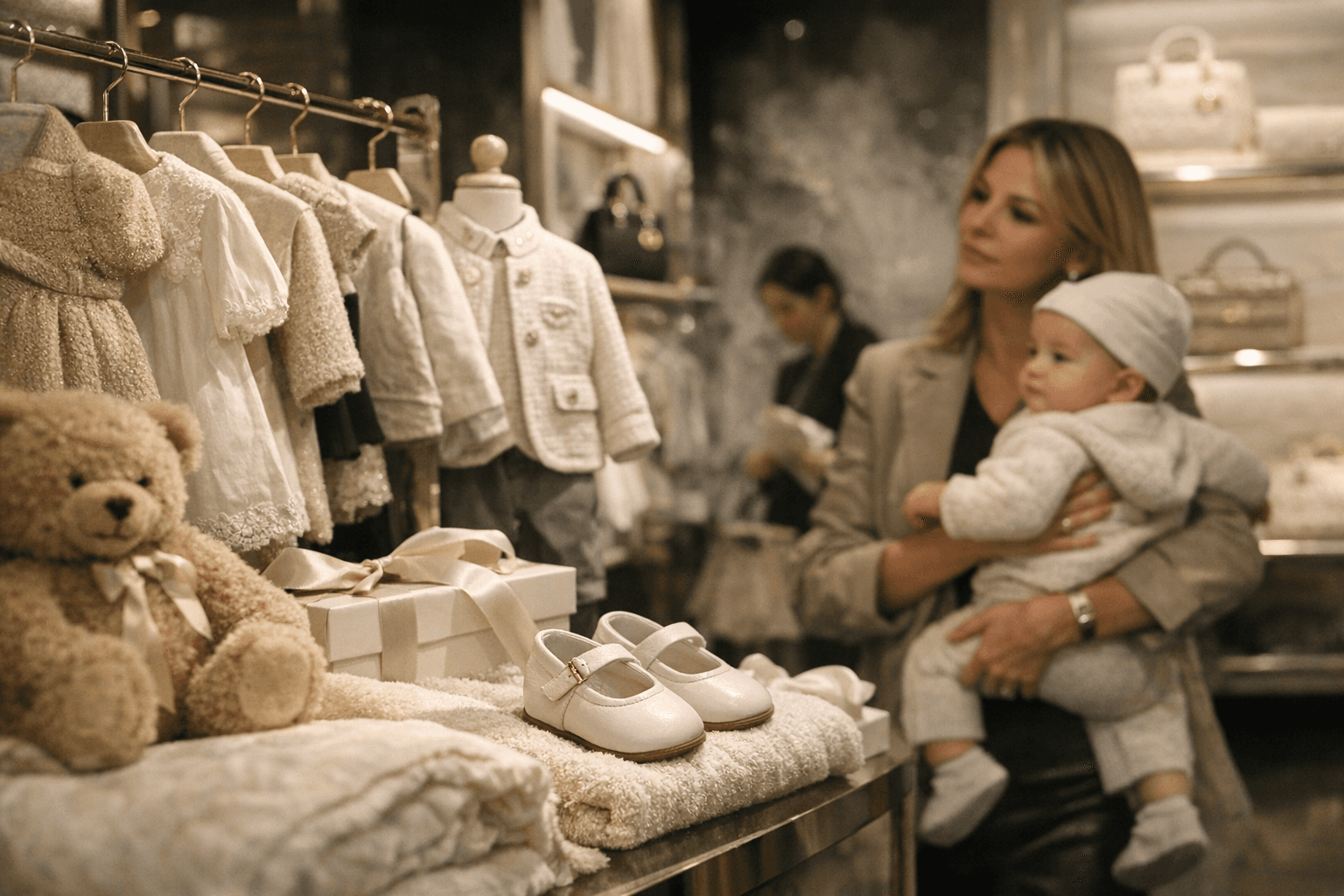
The arrival of Baby Dior's Summer 2026 collection, Gucci's babywear capsule, and Dolce & Gabbana's Baby Couture line signals something beyond seasonal product expansion: fashion houses are using the newborn market as a strategic entry point into a customer relationship they intend to cultivate for decades.
Luxury fashion houses including Gucci, Balenciaga, and Burberry have expanded their kids' wear collections as affluent parents seek premium clothing for their children. The pace of recent launches has sharpened considerably. Gucci announced in November 2024 the expansion of its Gucci Kids line with a comprehensive babywear capsule featuring sustainable fabrics and zero-waste packaging. Dolce & Gabbana unveiled a Baby Couture collection in June 2024, extending its children's line to newborns with couture-like detailing. Loro Piana announced in January 2025 a strategic collaboration with Farfetch to launch exclusive baby cashmere sets across Asia. Dior's current range includes a wool-and-cashmere-blend stroller blanket composed of 47 percent wool, 30 percent viscose, 15 percent polyamide, and 8 percent cashmere, finished with an ivory jacquard Dior signature, and its Summer 2026 kids' collection is now live across boutiques and e-commerce globally. Brands like Fendi, Hermès, and Tiffany & Co. have also introduced exclusive toy and gift lines, appealing to parents who prioritize quality, uniqueness, and brand prestige.
The commercial logic is stated plainly by those watching the category. One retail analyst described the move as a long-game loyalty play: "entry into newborn ranges turns a one-time celebratory purchase into the first touchpoint of a long-term brand relationship." Brand marketing teams consistently invoke craftsmanship and heritage to justify the expansion, framing newborn garments in the same language as couture.
For registries, the effect is concrete. When a cashmere-blend designer blanket sits alongside a standard swaddle set on the same list, the price anchor for the entire registry shifts. The standard gifting range for baby showers sits between $50 and $100 for most friends and relatives. That figure feels inadequate against a page of $300-plus branded keepsakes, and gift-givers calibrate upward or feel quietly insufficient even when choosing the practical option.
The practical response is tiered registry architecture. Premium branded items belong in a dedicated "keepsake" tier flagged for group gifting, where multiple contributors pool funds through the registry platform toward a single high-value item. Small contributions of $15 to $20 can become one impressive, high-quality gift when the platform routes them correctly. That creates participation at every budget level without social friction.
The splurge-versus-need distinction is sharpest in categories where luxury and function diverge. A designer cashmere blanket adds genuine warmth and may become an heirloom; a $35 muslin swaddle works identically in a bassinet. Car seats and hospital-grade video monitors are different: their value comes from safety certification, installation ergonomics, and sensor features, not brand heritage. A premium monitor with split-screen viewing and breathing detection justifies its price on specification. A logo on a onesie does not justify the same calculus.
Retailers managing luxury baby purchases need authentication protocols for branded textiles, gift-appropriate packaging, and generous return windows. As the category deepens, those operational details separate boutiques that can handle the volume from those that cannot.
This article was produced by Prism’s automated news system from verified source data, official records, and press releases, then run through automated quality and moderation checks before publishing. The system is built and supervised by the people who set the standards it runs under. Read our full AI policy.
Did this article answer your question?