Nayku’s baby shower guide highlights auspicious May 2026 dates and regional customs
May 2026 baby-shower planning gets both spiritual and practical guidance here, with Nayku’s muhurat picks anchored in regional custom and family logistics.
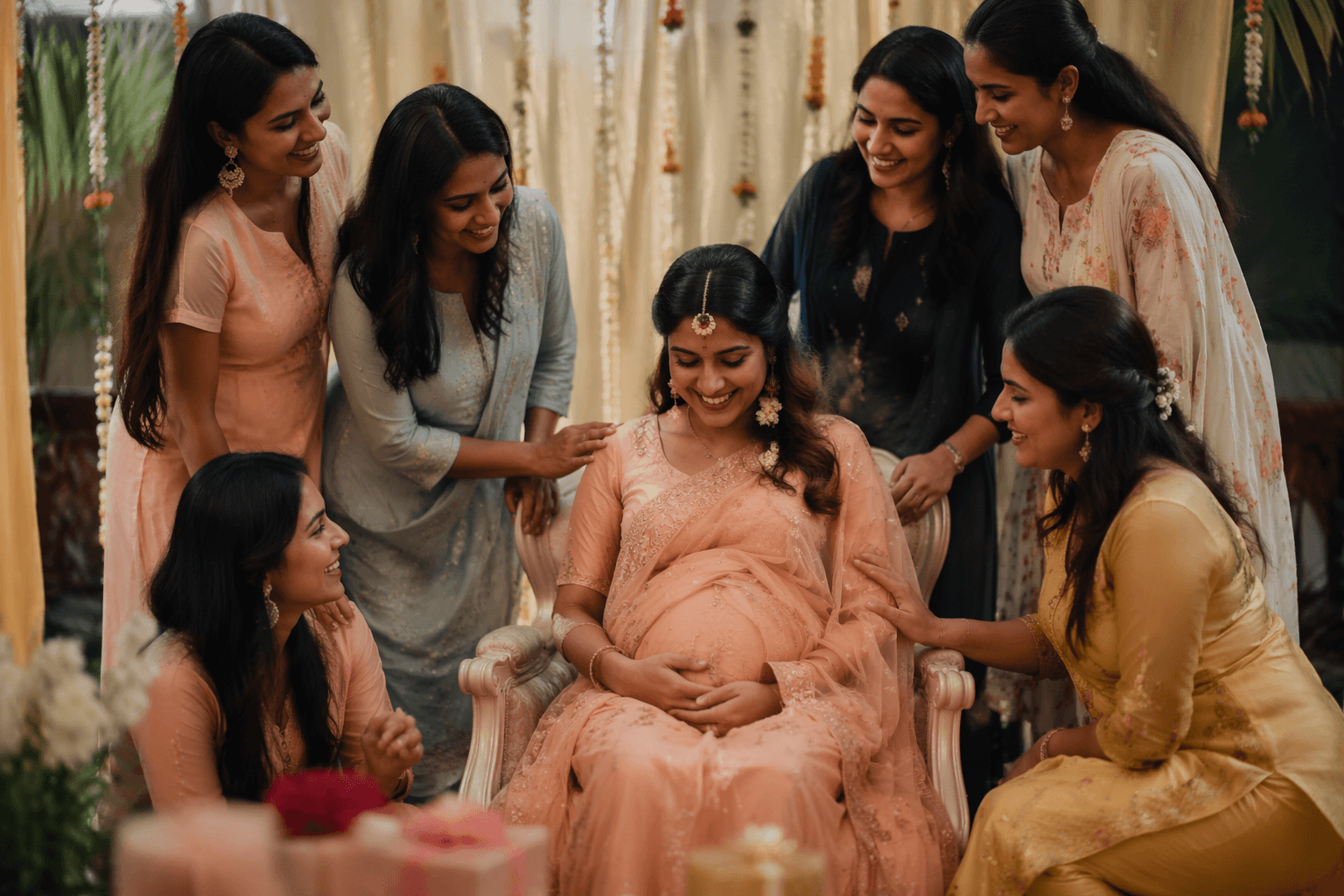
Auspicious timing gives Godh Bharai its shape
For families planning a Godh Bharai, the date is only the first decision. Nayku’s baby shower guide for May 2026 treats the ceremony as a sacred calendar choice, where shubh dates and ideal timings are selected with Panchang-based logic rather than left to convenience alone.
That matters because Godh Bharai is not framed as a casual party. It is a ritual for blessing the mother and unborn child, and the timing is meant to support both spiritual belief and family readiness. In practical terms, the guide turns a broad cultural expectation into a usable plan, with one highlighted May 2026 date, May 22, 2026, sitting inside a wider system of auspicious windows.
Why the ceremony still carries such weight
Godh Bharai is commonly glossed as “filling the lap,” a phrase that captures the ceremony’s focus on abundance, care, and welcome. FirstCry Parenting describes it as an Indian tradition comparable to the Western baby shower, but with a stronger ceremonial role, since it celebrates impending motherhood and acts as support for women in the final stage of pregnancy.
That dual purpose explains why the practice remains so durable. It is social, but it is also devotional and protective, especially when families see the gathering as a blessing for delivery and a source of emotional support for the expectant mother. News18 has also described the ceremony as one of the important rituals in the last month of pregnancy, emphasizing that it helps sustain the mother emotionally as delivery approaches.
Regional customs change the ceremony from household to household
Nayku’s guide is careful not to flatten the tradition into one universal format. North Indian and South Indian practices can differ, and families may rely on different regional interpretations of auspicious timing and ritual sequence when planning the event. That flexibility is essential, because the same ceremony can carry different names, different textures, and different expectations depending on where it is held.
SmartPuja notes that the ritual is known as Seemantham in South India and Dohale Jevan in Maharashtra, while other regional names include Valaikappu in Tamil usage and Shaad in Bengal. Pampers India likewise points to the unique rituals and regional variations that make the occasion especially meaningful. The result is a ceremony that stays culturally recognizable while still adapting to local custom.
North and South Indian traditions
In North India, the baby-shower format often aligns closely with the broader Godh Bharai model, but the exact ritual steps can shift by family and community. In South India, the emphasis may be placed more visibly on Seemantham or Valaikappu, where the ceremony’s protective and blessing elements remain central.
These differences are not a problem to solve. They are part of the tradition’s strength, because they let families honor ancestry without forcing every household into the same script. A well-built muhurat guide acknowledges that reality, which is why timing advice has to be broad enough to accommodate different Panchang practices and local customs.
The older ritual roots still matter
Behind the modern baby-shower language sits a much older ritual history. The practice is linked to the Vedic samskara Simantonnayana, a ceremony described as a hair-parting rite meant to protect the mother and child. WisdomLib and the Cologne Digital Sanskrit Dictionaries connect the term to “parting the hair,” which helps explain why the ceremony carries such a strong protective meaning.
That lineage gives the modern guide more than decorative heritage. It clarifies why families care so much about the exact day, the exact hour, and the surrounding ritual tone. A muhurat page is not merely a planning aid, it is a bridge between older religious logic and the realities of present-day family life.
How families make auspicious timing practical
The strongest planning guides do not pretend that tradition exists outside the workweek. Families still have to navigate calendars, travel, venue availability, and the availability of close relatives, and those practical concerns often determine whether an auspicious slot is usable. A good muhurat selection is therefore less about abstract perfection and more about finding the best fit between belief and logistics.
- If the chosen day falls in the 7th or 9th month window, families can use that as the anchor and then work outward to venue and guest availability.
- If the ideal timing lands on a workday, many households adjust the ceremony around morning or afternoon windows rather than abandoning the auspicious date entirely.
- If relatives are traveling from different regions, the final choice may depend on the overlap between Panchang guidance and the family’s real-world schedule.
- If local custom matters more than a single national template, the ceremony can be shaped by North Indian, South Indian, Maharashtrian, Tamil, or Bengali practice without losing its meaning.
That is where Nayku’s guide is especially useful. It does not reduce the event to aesthetics or catering trends, because the search intent around baby showers can be much more specific than that. Families want a date that feels spiritually grounded, but they also need a ceremony that can actually happen.
Why May 2026 planning is especially useful now
May 2026 planning puts all of these threads together. Families looking at a specific month need more than a lucky date, because they are balancing the ceremony’s ceremonial logic against the pace of modern life. A guide that highlights auspicious timing while acknowledging regional variation gives them a way to make a meaningful choice without feeling boxed into a one-size-fits-all format.
That is the value of this kind of coverage for the baby-shower category. It supports decision-making, but it also supports identity, since the ceremony becomes a way to affirm family tradition, regional heritage, and care for the mother and child in the same moment. In that sense, Nayku’s May 2026 guide does more than mark a date, it shows how a ritual stays alive by adapting to the schedule, the neighborhood, and the household around it.
This article was produced by Prism’s automated news system from verified source data, official records, and press releases, then run through automated quality and moderation checks before publishing. The system is built and supervised by the people who set the standards it runs under. Read our full AI policy.
Know something we missed? Have a correction or additional information?
Submit a Tip