Pink and blue baby footprints unite gender reveals and showers
Pink-and-blue footprints still work for reveal moments, but they shine brightest when hosts want a playful, low-risk cue that can also soften into keepsakes and gift wrap.
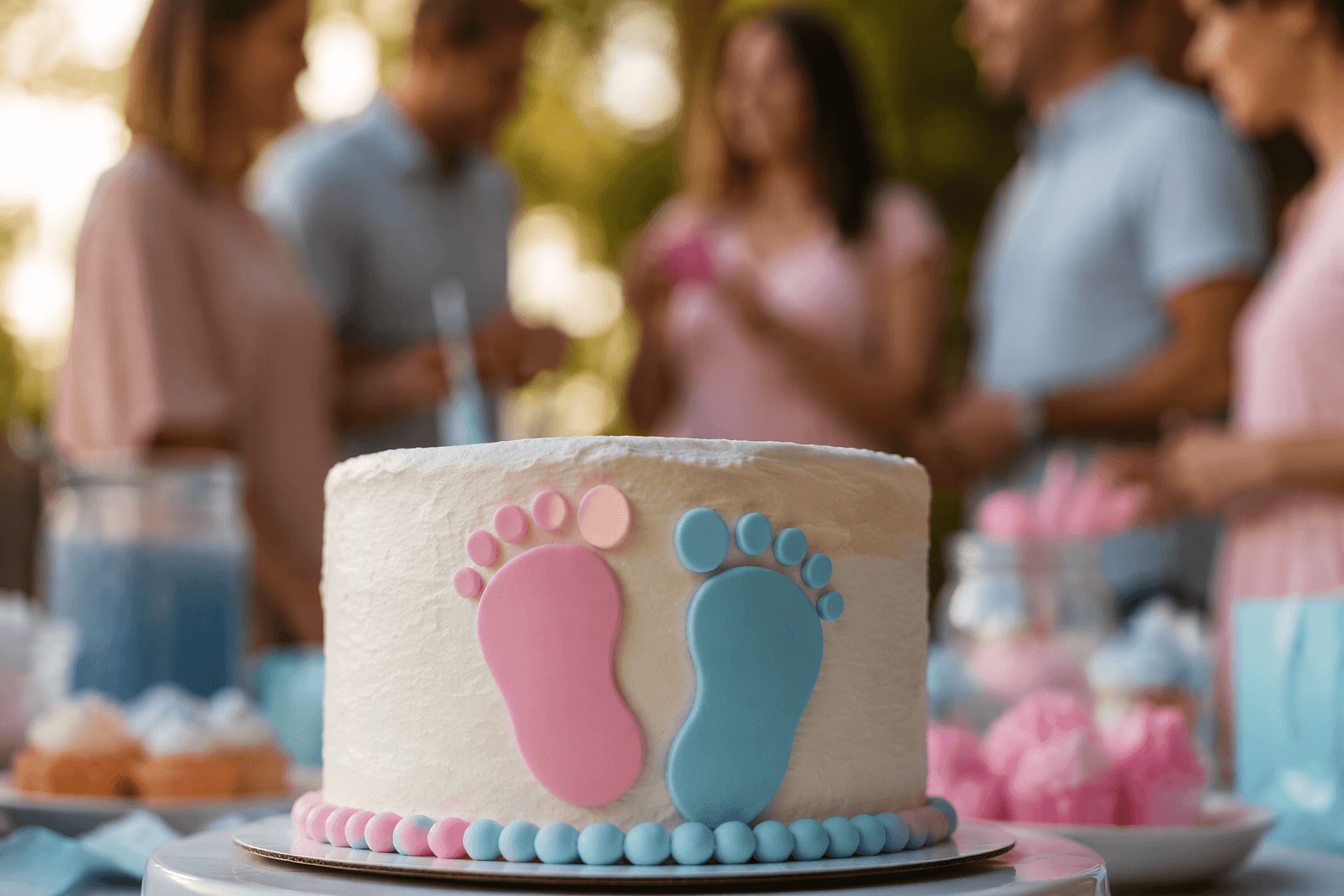
A pair of tiny footprints can do a surprising amount of work at a baby celebration. Pink-and-blue versions instantly read as baby imagery, signal a reveal-ready mood, and give hosts a theme that feels playful without requiring a full room makeover. The strongest versions of the look are the ones that balance charm with function, so the decor can show up in confetti, wrapping, favors, and memory pieces as easily as it appears on a table or backdrop.
Why the footprint motif still lands
Pink and blue are so familiar that they can feel older than they are, but their status as baby shorthand was built over time. Pastel baby colors were already appearing in the mid-19th century, and pink and blue were used together as “baby colors” in the early 20th century before the pink-for-girls, blue-for-boys rule hardened later in the century. Jo B. Paoletti’s work at the University of Maryland dates that split to the 1940s, which is a useful reminder that the palette is culturally coded, not timeless.
That history matters when you are deciding whether to use the motif at all. If you want a visual cue that people immediately recognize as baby-related, pink-and-blue footprints are efficient and legible. If you want a softer message, or one that avoids older gender conventions, the same footprint shape can be reinterpreted in gentler colors or paired with more neutral elements so the theme feels current rather than rigid.
Where this look works best
Pink-and-blue footprints make the most sense in events that want a clear focal point. They are especially effective for gender reveals, where the color contrast can build anticipation, and for baby showers that lean festive, photo-friendly, and a little bit whimsical. The motif also works when the host wants to connect several parts of the party under one visual idea, from invitation accents to the favor table.
The practical appeal is a big part of the draw. The guide frames these items as more than decoration, noting that hosts are often looking for cute themed pieces that also serve as confetti, gift wrap, and keepsakes. That makes footprints useful in small-format events where every object needs to pull double duty, especially if you want the room to feel coordinated without overbuying.
How to style it without making it feel dated
The easiest way to keep the look tasteful is to treat the footprints as an accent, not a takeover. One strong cluster of pink-and-blue details can read as deliberate; too many competing patterns can make the room feel busy and locked into a narrower gender script than you may intend. A cleaner backdrop, simple tableware, and a few repeated footprint touches usually create a more polished result than a fully saturated theme.
- the invitation or welcome sign
- the dessert or gift table
- a photo backdrop or banner
- favors, stickers, or wrapping paper
A good styling approach is to repeat the motif in three or four places only:
That kind of repetition gives the celebration an identity, but leaves room for the rest of the room to breathe. It also lets the footprint design carry the theme without forcing every surface into the same palette, which is especially helpful if the host wants the event to feel modern rather than costume-like.
What the motif says about the moment
Pink-and-blue footprint decor sits inside a much newer event culture than many people assume. The modern gender reveal party is commonly traced to 2008, when Jenna Karvunidis cut into a cake and revealed pink frosting at a backyard barbecue. That origin story helps explain why these products still sell: the reveal aesthetic is recent enough to keep evolving, but established enough to have its own visual language.
At the same time, recent baby-shower trend coverage points in a different direction too. Gender-neutral, minimalist, and eco-friendly themes are all strong options in 2025, which means hosts now have more room to choose a tone that matches their family’s values rather than defaulting to one long-standing code. Pink-and-blue footprints are therefore best understood as one expressive option in a broader field, not the only way to make a shower feel festive.
A safer, lower-risk way to make the big moment
The footprint theme also has an edge that matters far beyond aesthetics: it is low-risk. That makes it attractive in a moment when gender-reveal celebrations have been scrutinized for dangerous stunts and environmental damage. The 2020 El Dorado Fire in California burned 22,744 acres, was linked to a gender reveal photo shoot, and led to more than $4 million in costs and damages paid by companies involved in the smoke-bomb supply.
Against that backdrop, printed footprints, stickers, confetti, and keepsakes look especially sensible. They still deliver the reveal energy people want, but without the pyrotechnics, smoke, or outdoor hazard that have made some versions of the trend so controversial. For hosts, that is a practical reason to favor decorative motifs over spectacle: the photos still look cheerful, but the celebration stays easier to control.
Modern alternatives for a softer or more inclusive shower
If pink-and-blue feels too tied to older gender rules, the footprint idea can be translated instead of discarded. A neutral version can keep the baby imagery while moving away from gendered color coding, which is useful when the host wants the room to feel gentle, contemporary, or inclusive. Soft whites, creams, sage, sand, pale yellow, and muted terracotta can all support the same playful shape without signaling a binary reveal.
- all-neutral footprint designs in one palette
- tiny handprints or star motifs for a more whimsical feel
- botanical or cloud imagery for a softer nursery-adjacent mood
- recycled paper decor and reusable keepsakes for an eco-friendly finish
Other strong alternatives include:
These choices still give the party structure, but they shift the emphasis from gender signaling to atmosphere and memory. That is where the footprint motif remains useful even for hosts who are moving away from the pink-versus-blue script: it can be a visual anchor, then quietly adapt to the values of the family using it.
The bottom line for hosts
Pink-and-blue baby footprints work best when the goal is clarity, cheer, and a little bit of reveal-day drama. They are strongest as part of a coordinated look, especially when they are paired with practical uses like confetti, wrapping, stickers, and keepsakes rather than pushed into an overbuilt theme.
For hosts choosing between nostalgia and nuance, the motif offers a middle path. It keeps the celebration recognizable, but it can also be softened, modernized, or replaced entirely with more neutral tones when the shower calls for something less gendered and more personal.
This article was produced by Prism’s automated news system from verified source data, official records, and press releases, then run through automated quality and moderation checks before publishing. The system is built and supervised by the people who set the standards it runs under. Read our full AI policy.
Know something we missed? Have a correction or additional information?
Submit a Tip