Barcelona fitness races emerge as a trackable market category
Barcelona’s race calendar is becoming a year-round fitness market, with HYROX, DEKA and Spartan turning training into a structured consumer category.
Barcelona’s race calendar is becoming a consumer map
Barcelona’s fitness race scene is starting to look less like a calendar and more like infrastructure. Race Fit’s Barcelona page currently lists three upcoming fitness races and clusters the market around names such as ATHX, ATHX Games, Cavefit Games, Half ROX, Hybrid X and HYROX, which is the telltale sign of a category that has moved past one-off novelty.

That shift matters because the page is doing more than advertising events. It is lowering the friction of discovery by giving athletes a place to compare formats, dates and registration options, while also showing gyms, coaches, sponsors and operators where demand is concentrated. In other words, Barcelona is no longer just hosting endurance events, it is beginning to support a repeatable amateur performance lifestyle.
Why Barcelona can support a race ecosystem
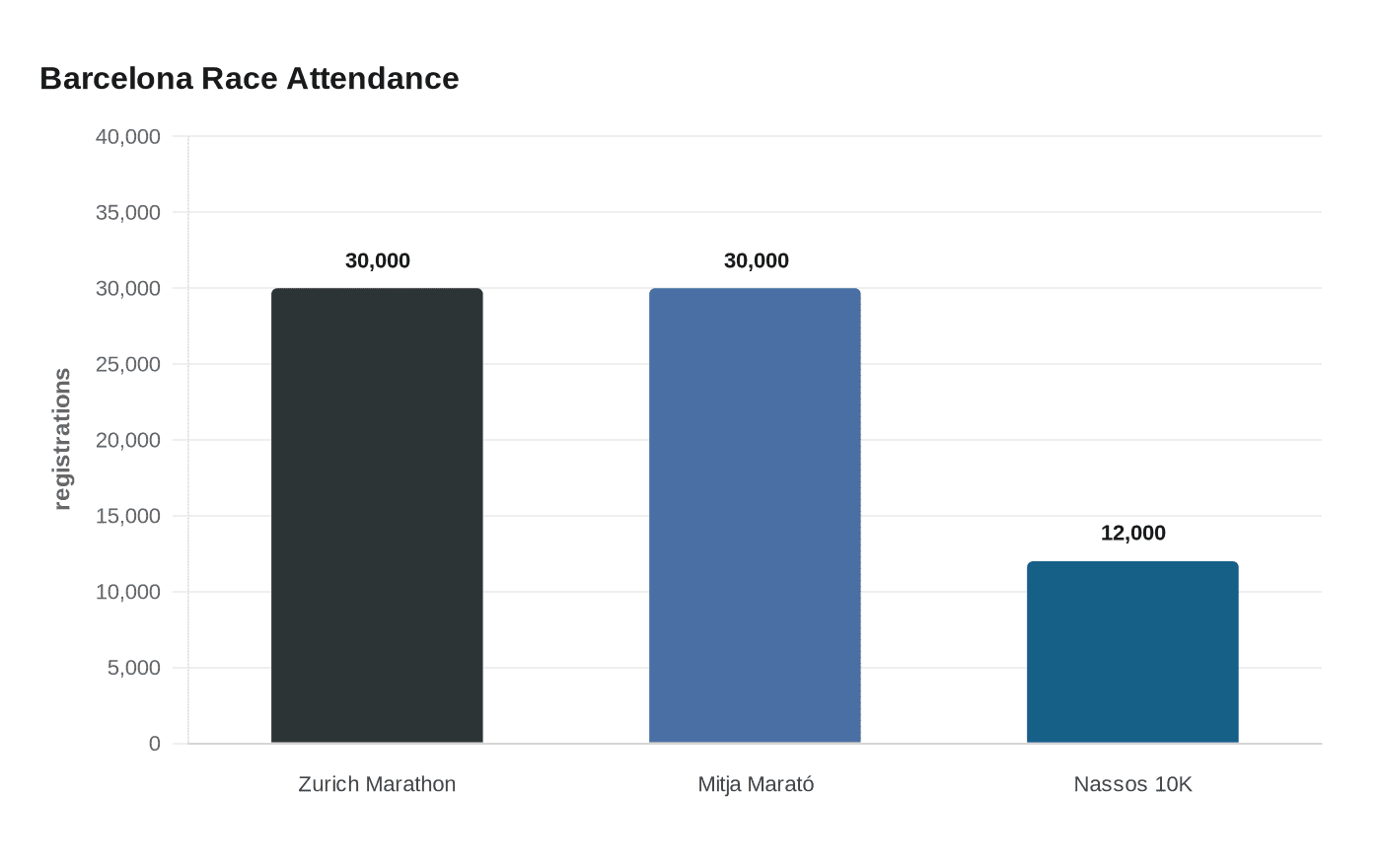
The city already has a deep appetite for organized challenge events, and the mainstream running numbers are large enough to make the fitness-race layer plausible. The Zurich Barcelona Marathon surpassed 30,000 registered runners for 2025, with organizers saying the field could reach its 32,000-bib cap. The eDreams Mitja Marató Barcelona by Brooks announced 30,000 participants for 2025, and 55 percent of runners were under 35, which points to a younger consumer base that is still buying into structured competition.
Barcelona’s late-year running culture is just as revealing. Cursa dels Nassos 2024 drew 12,000 registrations for the 10 km race, plus a separate 5 km elite event, while Carrera de la Mujer describes itself as the biggest women’s running event in Europe. Taken together, those figures show a city already comfortable paying for entry fees, bibs, timing chips and shared finish-line moments. Fitness races are not creating that behavior from scratch, they are selling a new version of it.
How the category gets packaged
HYROX as the template
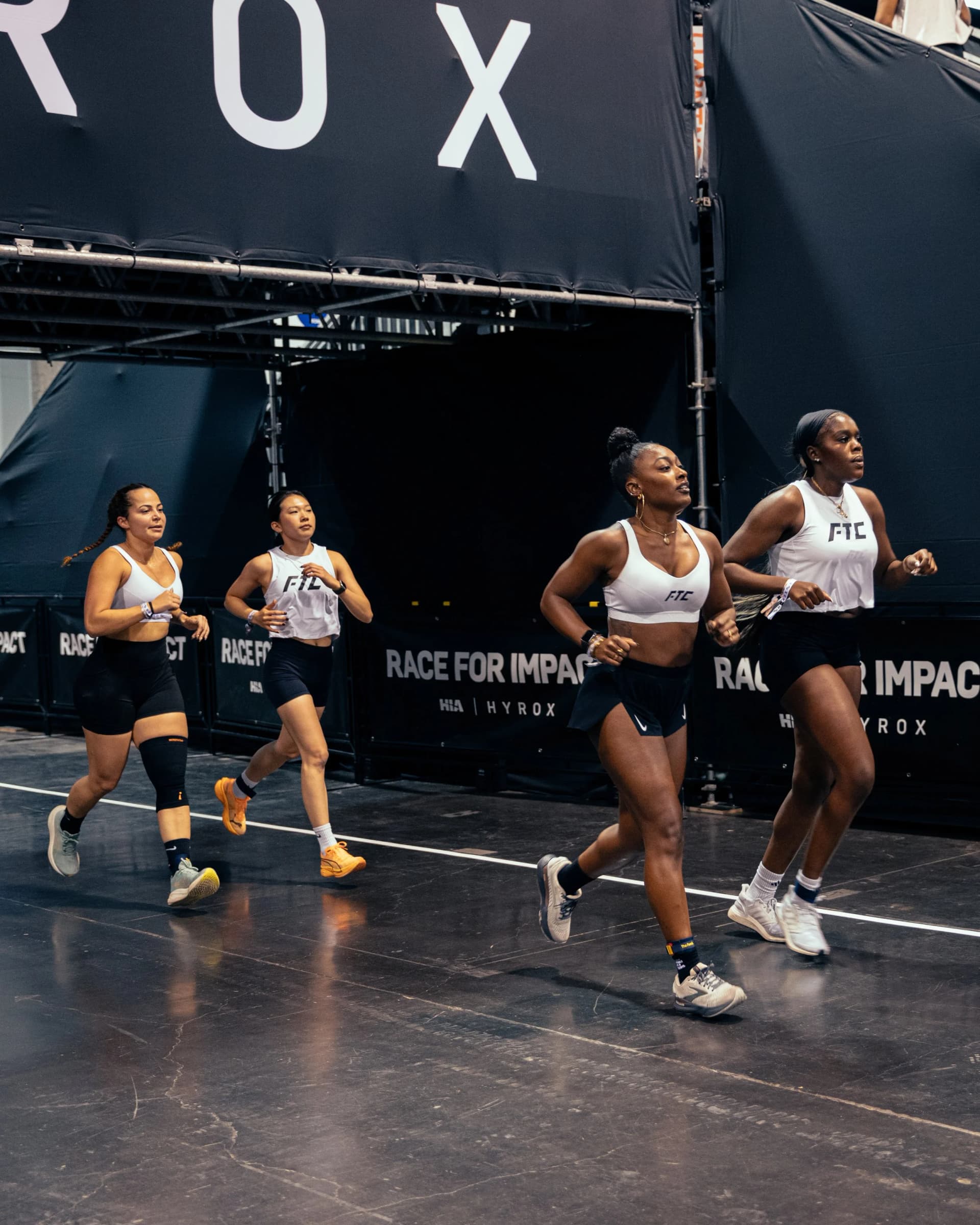
HYROX is the clearest example of how the market is being standardized. Its format is always the same worldwide: 1 km of running, followed by one functional workout station, repeated eight times, inside indoor exhibition halls. The brand says it launched in Hamburg in 2017 and has expanded to more than 11 countries and over 30 cities, with more than 90,000 athletes in the 22/23 season alone.
Barcelona is now fully inside that system. HYROX Barcelona is scheduled at Fira Barcelona Gran Via on May 14 to 17, 2026 and again on November 12 to 15, 2026. That kind of double hit on the calendar is important because it turns the city into a recurring destination rather than a single annual stop. For local athletes, it means training cycles can be planned against fixed race windows. For brands, it means a predictable audience capable of filling hotel rooms, gyms and pre-race prep sessions.
DEKA and Spartan widen the menu
DEKA gives Barcelona a slightly different pitch inside the same functional-fitness universe. Its format uses 10 workout stations interspersed with 500-meter runs for a total of 5 km, which makes it shorter than HYROX but still highly structured and measurable. Barcelona hosted DEKA at Mar Bella Municipal Sports Complex on September 27, 2025, showing that the city’s race inventory is not confined to one brand or one venue type.
Spartan adds the obstacle-racing side of the market. The Barcelona Sprint is a 5 km race with 20 obstacles, a format that appeals to people who want more than clean splits and lap times. Another source on the 2025 Barcelona Spartan Weekend says about 5,000 athletes from more than 40 countries took part across 5 km, 10 km and 21 km categories in Santa Susanna. That makes the regional market bigger than a single city block, and it shows that Barcelona’s gravity extends outward into destination-style obstacle racing.
Who profits when fitness becomes a calendar
The clearest winners are the businesses that can sell preparation, not just entry. Gyms can package race-specific training blocks, coaches can specialize in hybrid performance, and sports clubs can offer community-based progression instead of generic conditioning. Once races become predictable, the ecosystem around them gets easier to monetize: shoes, apparel, nutrition, recovery, physiotherapy, class passes and branded training plans all start to look like adjacent products in the same funnel.
Event operators also benefit from that consistency. A market with multiple competition brands can support repetition, category education and sponsor planning, which is much harder when a city only hosts occasional one-off events. The Race Fit page effectively reads like a miniature market map, signaling which brands are active, how many formats are in play and where the city’s demand is dense enough to keep the cycle moving.
Travel-linked businesses have a stake too. Barcelona Tourism Observatory says sports-motivated visitors stay 6.4 nights on average, compared with 5.1 nights for general visitors, a difference of 25.5 percent. That is a crucial number because it turns fitness races into tourism products, not just local leisure. Hotels, restaurants, transport services and nearby retail all benefit when runners build a trip around a bib number.
What the Barcelona model says about fitness now
Barcelona’s appeal is obvious once the pieces are lined up: weather that supports training, urban density that keeps the city lively, and a sports culture that already normalizes public competition. What is new is the packaging. Instead of a loose mix of events and gym classes, the city is starting to offer a structured sequence of challenge products that let people train, enter, repeat and improve.
That is the bigger story behind the race listings. Barcelona is not merely becoming a place where fitness events happen. It is becoming a city where amateur performance can be planned like a consumer category, with brands, venues, training services and travel spend all feeding the same growing market.
This article was produced by Prism’s automated news system from verified source data, official records, and press releases, then run through automated quality and moderation checks before publishing. The system is built and supervised by the people who set the standards it runs under. Read our full AI policy.
Know something we missed? Have a correction or additional information?
Submit a Tip