Barcelona Pilates market matures as studios target varied client needs
Barcelona’s Pilates scene now spans budget mat classes, premium reformers and specialist programming, with Eixample at the center of a crowded, comparison-driven market.

Barcelona’s Pilates market now looks built for comparison shopping, not casual drop-ins. SABDA Studio’s city guide frames the decision in practical terms, starting with mat versus reformer, then moving through Eixample studios, price bands, beginner-friendly options and classes for pregnant women. That mix is the clearest sign yet that Pilates has become a segmented fitness category in Barcelona, with different formats serving different client needs.
Eixample remains the reference point
The strongest concentration of premium Pilates activity still sits in Eixample, where walkability, affluent residents and steady lifestyle demand continue to support boutique wellness concepts. That is why so many discovery tools and studio lists put the district at the center of their Barcelona coverage. ClassPass describes SABDA as an immersive wellness studio in the heart of Eixample, while other studio guides repeatedly cluster reformer boutiques around Eixample, Gràcia and the Gothic Quarter.
The geography matters because it shows how the market is organizing itself. Central districts are not simply hosting more studios; they are shaping studio identity, pricing power and the kind of client each space is trying to attract. In a city where wellness businesses compete on both convenience and image, location has become part of the product.
Mat and reformer now serve different customers
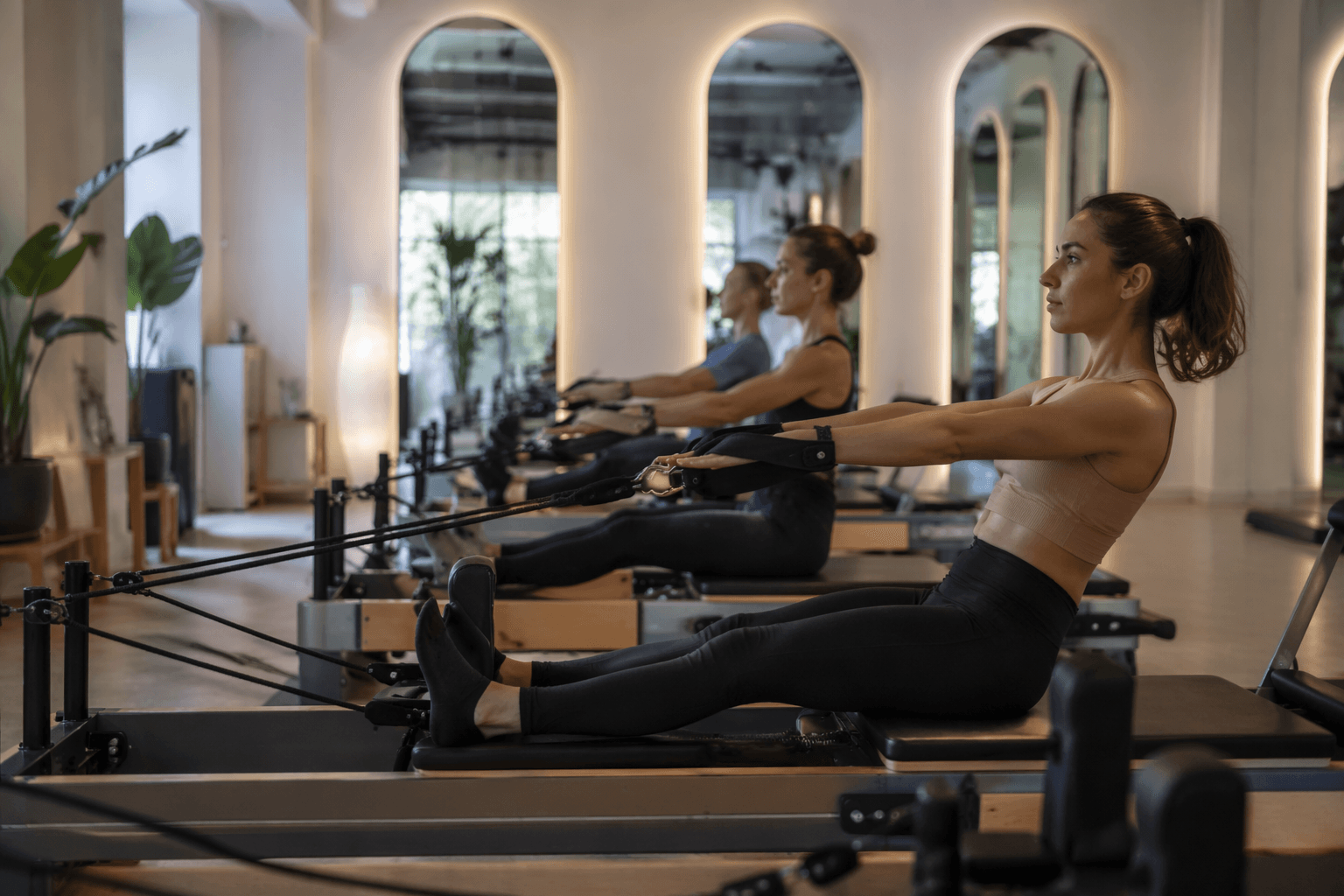
The clearest sign of market maturity is how sharply studios now separate mat and reformer Pilates. SABDA’s guide treats the two formats as distinct purchase decisions, not interchangeable class names, and that distinction reflects how clients are thinking about the category. Mat Pilates still works as a lower-cost entry point, while reformer classes signal more technical instruction, more equipment intensity and, often, a more premium service tier.
That split also helps explain why the city’s offer now includes more specialized programming. Beginners need a gentler on-ramp, pregnant clients need tailored work, and experienced users may want reformer-heavy sessions that feel closer to a training system than a wellness add-on. Studios that can clearly state who a class is for are better positioned in a market where the customer already understands the difference between formats.
Price is now part of the buying decision
Barcelona’s Pilates consumers are no longer choosing only by vibe. SABDA’s companion comparison page puts real prices into view, with immersive mat classes starting at €18 and private reformer sessions reaching €65. A separate Barcelona studio directory places the typical class range at roughly $35 to $90, depending on studio and format, which underlines how far the market has stratified across entry-level and premium options.
That spread tells operators something important: price transparency is now part of the competitive landscape. Clients can compare not just class style and neighborhood, but also how much they are paying for smaller groups, private instruction or studio ambience. For studios, that means positioning has to be sharper than ever. Strong instruction, clear specialization and a convincing client fit matter as much as design.
The density is real, and consumers can see it
The market no longer looks like a handful of isolated studios scattered across the city. ReformerFinder lists 20 Pilates studios in Barcelona, while curated guides place reformer boutiques across Eixample, Gràcia, Poblenou, the Gothic Quarter and Sant Joan. That spread matters because it confirms both density and reach: clients in multiple parts of the city now have meaningful choice, and operators are competing in a visible local field.
Consumer behavior is keeping pace. Club Pilates Eixample carries a public Google rating of 4.5 stars based on 332 reviews, a scale of feedback that would have been hard to imagine in a thinner market. Large review counts like that make it easier for clients to compare studios on consistency, teacher quality and class experience, and they also raise the bar for studios that want to stand out without relying on branding alone.
Specialization is becoming a selling point
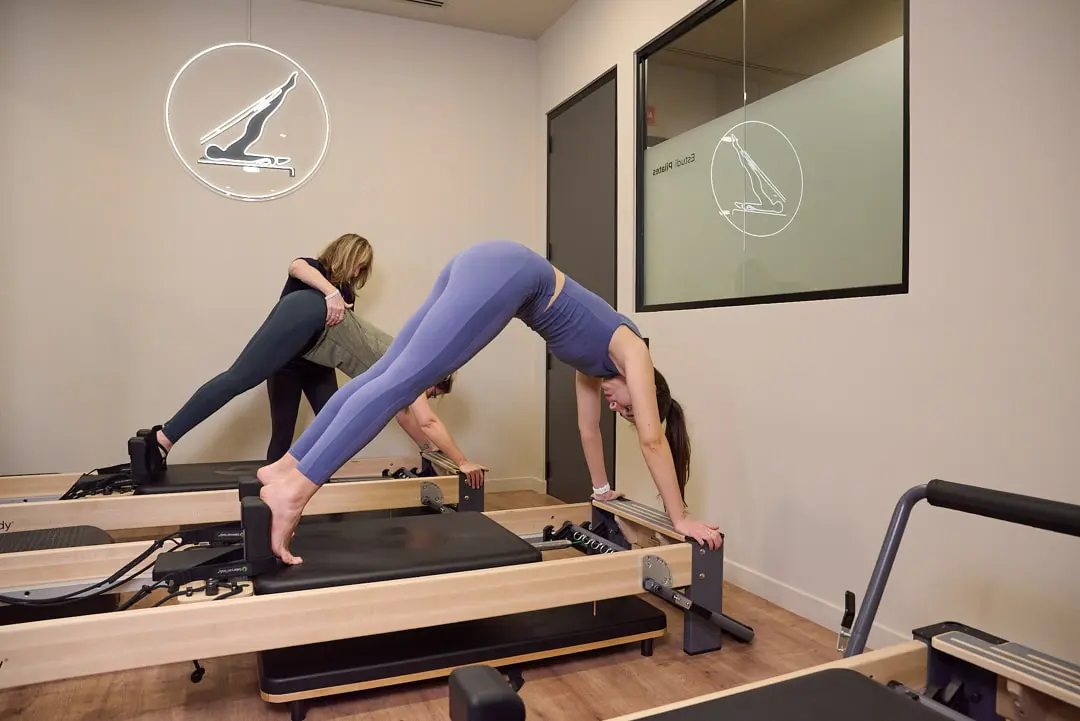
Some of the most revealing examples are the studios that lean into a very specific service model. Marina Pilates Barcelona in Eixample offers individual and duo reformer classes and says it is led by a qualified physiotherapist certified in Peak Pilates. That combination signals a different customer proposition from the immersive boutique model: more therapeutic framing, more attention to physical needs and a clearer path for clients looking for guided progression.
SABDA’s own positioning shows the other end of the spectrum. ClassPass describes the studio as a space where every class takes place inside a 360-degree projection-mapped room with Dolby Atmos spatial audio, which places Pilates inside a broader premium wellness experience. In Barcelona, the category is no longer defined only by whether a studio has reformers. It is also defined by whether it is selling therapy, performance, ambience or convenience.
How to navigate the Barcelona market
If you are choosing a studio in Barcelona, the most useful filters are the ones the city’s own guides now foreground:
- Format first: decide whether you want mat work, reformer work or a studio that does both.
- Client fit: look for explicit beginner, pregnancy or therapeutic programming if that is your priority.
- Neighborhood: Eixample remains the deepest cluster, but Gràcia, Poblenou, the Gothic Quarter and Sant Joan also matter.
- Price clarity: compare entry mat rates, private reformer sessions and any premium studio features.
- Proof of demand: review volume and star ratings can be useful signals in a crowded market.
That framework fits a city where Pilates has moved beyond novelty. Global market reports, including forecasts that put the reformer market at about USD 16.8 billion by 2035, suggest Barcelona is part of a much bigger international expansion in equipment-led fitness. Locally, the takeaway is simpler: the city’s Pilates offer is deep enough now that studios have to earn attention through specialization, location and pricing discipline, not just through being new.
This article was produced by Prism’s automated news system from verified source data, official records, and press releases, then run through automated quality and moderation checks before publishing. The system is built and supervised by the people who set the standards it runs under. Read our full AI policy.
Did this article answer your question?