Barcelona’s 2026 race calendar maps a booming running economy
Barcelona's race map shows a city where running never really stops, with more than fifty events turning streets into year-round fitness infrastructure.
A calendar that behaves like a city service
Barcelona’s 2026 race map reads less like an events page and more like a civic tool. Betevé says the city will host more than fifty races across the year, and the guide is updated continuously as dates, timetables, routes, and registration links appear. That makes it useful in the way transit information or neighborhood notices are useful: it lowers friction, shows the shape of the city, and turns running into something residents can plan around rather than stumble into.
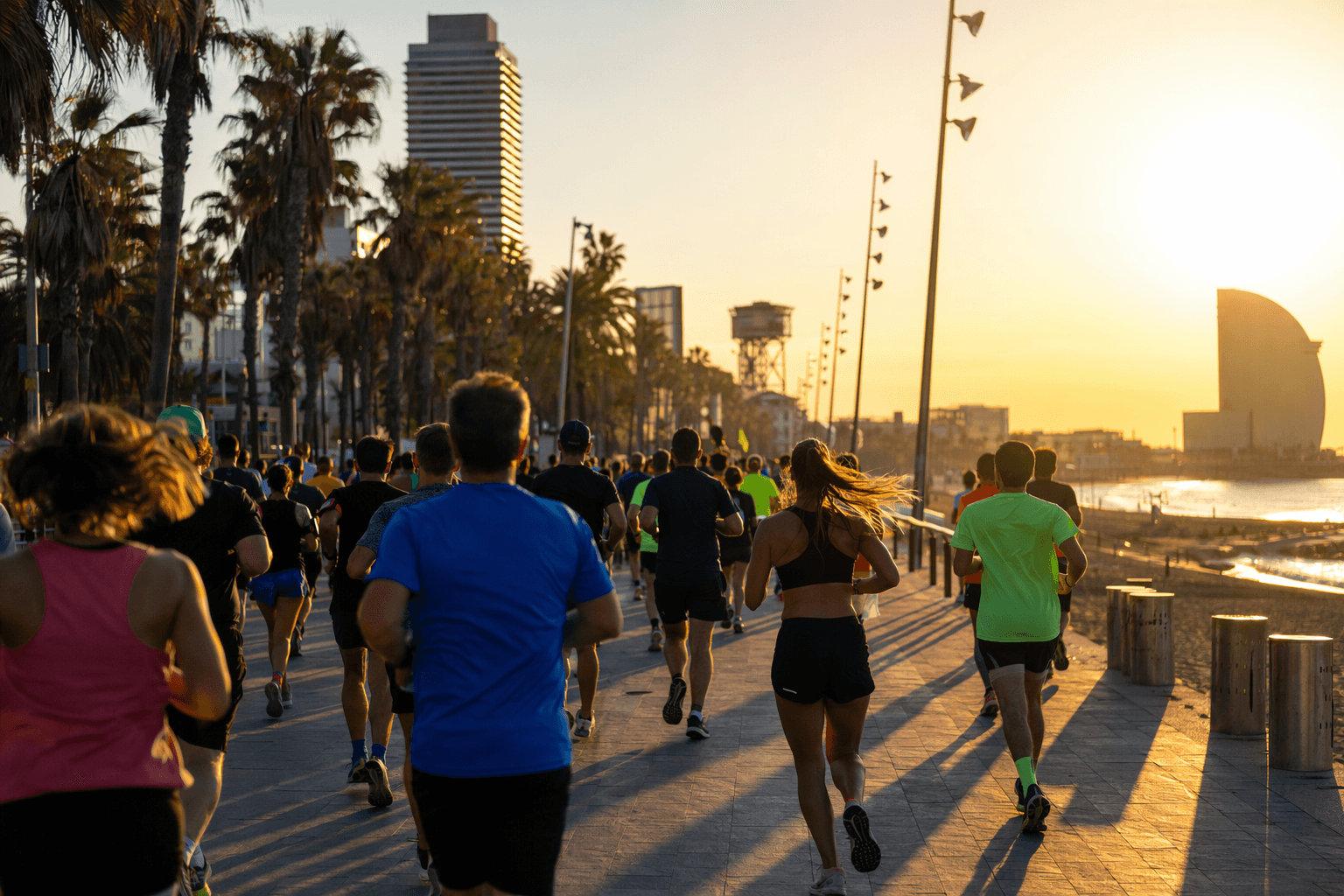
The practical effect is bigger than convenience. When a race calendar is that dense, it starts to function like fitness infrastructure. Runners can choose by distance, by neighborhood, by organizer, or by timing in the training cycle, which creates multiple entry points into the sport instead of a single gatekeeper event. In Barcelona, the map format also reinforces a simple idea: the city’s streets are not just a backdrop for running, they are the product itself.
Sant Antoni opens the season with real weight
The clearest proof of that structure is the Cursa Moritz Sant Antoni, which sits at the front edge of the calendar. Barcelona city sources say the 2026 edition was the race’s 47th, and it took place on Sunday, January 25, 2026. The race offered 5K and 10K distances, plus children’s races and the milla dels miops, so it was built to draw both competitive runners and families looking for a first start line.
That breadth matters because Sant Antoni does more than launch the year. The Ajuntament de Barcelona identified the 5K as the Catalonia road championship in 2026, which gives the event a competitive layer that reaches beyond neighborhood participation. The result is a race that works on two levels at once: as a mass-entry city event and as a meaningful fixture in the regional running calendar.
Its scale also tells you how Barcelona’s running economy is growing. Organizers said the 2026 edition would surpass 7,500 registered runners, and Betevé described it as the largest since the race began in 1978. That kind of participation does not happen in isolation. It supports shoe sales, race-day logistics, coaching plans, and the social running groups that build around a dependable annual anchor.
Why the map matters to runners, brands, and the city
Betevé’s decision to present the schedule as a living map is more than a design choice. It reflects how the running scene actually works in Barcelona, where events are distributed across the year and across the city in a way that keeps people training, signing up, and returning. For everyday runners, that means there is almost always a next race to aim for. For clubs and coaches, it means the season can be structured around a sequence of measurable goals. For event brands, it creates a clearer route from awareness to registration.
The city’s spatial identity also comes through in the format. Barcelona is shown as a runner-friendly urban grid, where races sit in the streetscape instead of being hidden away as isolated spectacles. The map helps readers browse by route length, date, and organizer, which turns an otherwise overwhelming list into something navigable. That matters in a market where more than fifty races can easily blur together unless the calendar is organized in a way that makes participation feel approachable.
A dense season with room for every kind of runner
The strength of Barcelona’s calendar is that it does not rely on one kind of event. Short races help beginners and recreational runners enter the scene without needing to commit to a long training block. Longer road races give experienced athletes room to target performance. Children’s events and novelty features such as the milla dels miops widen the doorway even further, making the city’s running culture feel inclusive without losing its competitive edge.
That variety also explains why the calendar has become so durable. A single flagship race can create excitement, but a year-round pattern builds habit. Barcelona’s schedule gives runners recurring touchpoints across seasons, neighborhoods, and fitness levels, which is exactly how a hobby becomes a routine and a routine becomes part of urban life. The city is not short on running events, it is oversupplied in a way that has become normal, and that abundance now feels like part of the local sporting identity.

The year closes with the same kind of ritual
If Sant Antoni gives the calendar its opening rhythm, the Cursa dels Nassos gives it its closing one. Betevé’s coverage of the 2025 edition confirms that the race was held on December 31 in the afternoon, keeping its place as one of the city’s most recognizable end-of-year fixtures. That timing matters because it gives Barcelona’s running season a narrative arc, from the first major race in January to the last traditional highlight on New Year’s Eve.
The event also shows that the close of the calendar can still matter at the elite level. Betevé reported record performances in the 10K popular race, which reinforces the idea that Barcelona’s running culture is not only broad, but serious about time, pace, and competition. The race functions as a city tradition and a performance stage, a combination that helps keep the calendar relevant even after the spring and autumn peaks have passed.
A race economy with civic momentum
Taken together, the map, the Sant Antoni surge, and the year-end strength of the Cursa dels Nassos show a running scene that has outgrown the idea of occasional mass participation. Barcelona’s calendar now operates like a year-round system with civic backing, competitive importance, and enough scale to shape daily behavior. More than fifty races do not merely fill the year, they organize it.
That is why this map matters to anyone watching urban fitness culture. It captures a city where running has become part of the public schedule, the local economy, and the physical rhythm of the streets. Barcelona is not just hosting races. It is building a running infrastructure that keeps renewing itself, one start line at a time.
This article was produced by Prism’s automated news system from verified source data, official records, and press releases, then run through automated quality and moderation checks before publishing. The system is built and supervised by the people who set the standards it runs under. Read our full AI policy.
Did this article answer your question?