Catalan gyms see stronger retention as seasonal sign-ups stick longer
Catalan gyms were keeping more of the January, Easter and summer sign-ups, turning a familiar spike-and-drop cycle into steadier memberships across Barcelona.
Catalan gyms were holding on to more of the people they signed up in January, at Easter and after the summer break, and that mattered more than any single burst of new members. August Tarragó, president of the Asociación Catalana de Clubes de Fitness and head of Grupo Sintagmia, said the old pattern of a fast sign-up wave followed by a quick disappearance was weakening as more members kept coming back regularly instead of paying once and vanishing.
Those seasonal peaks still counted. Each one could make up roughly 20% to 25% of annual new sign-ups. The difference was that a larger share of those customers now stayed in the habit, which changed the economics for Barcelona operators in a market where retention is worth more than acquisition. For clubs built on recurring memberships, that meant steadier revenue, better forecasting and a less lopsided year than the old January rush suggested.

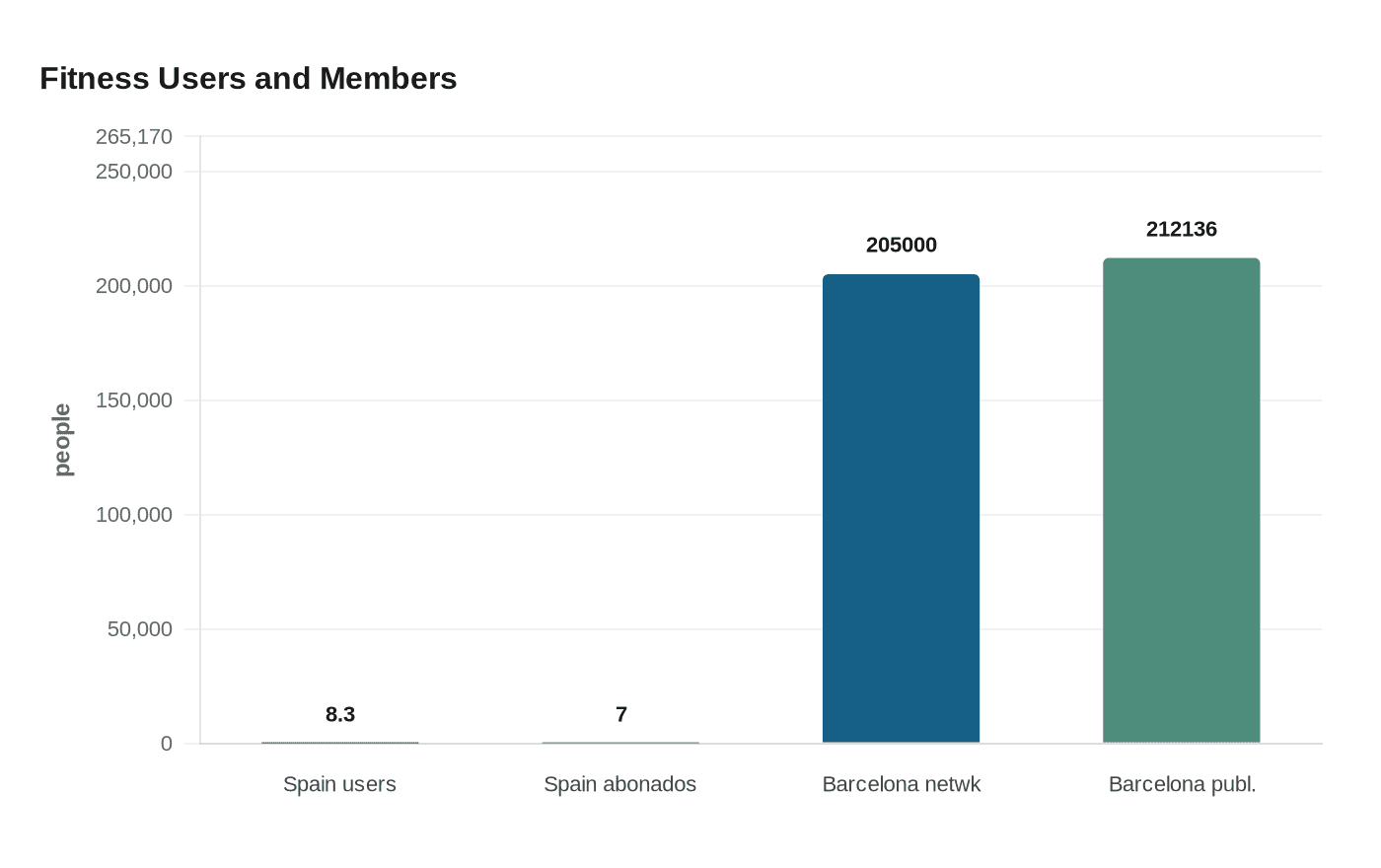
The shift landed in a larger industry that was still growing, but already mature enough to care about churn. Spain’s fitness sector generated about 3.235 billion euros in 2025, served 8.3 million users and had 7 million abonados, with a penetration rate of 16.5% among people over 15, according to Fundación España Activa, Deloitte and FNEID. In Barcelona, the municipal sports-center network reached 205,000 abonados in 2025, after another report put the city’s public sports facilities at 212,136 abonados in September 2025. The Barcelona network also generated 112 million euros in revenue in 2024 and ended that year just 0.3% below its pre-pandemic 2019 subscriber level.
ADECAFF has become one of the clearest voices behind that message. The group says it represents fitness and sports-center owners across Catalonia, and its board includes Tarragó alongside operators linked to DiR, VivaGym, Triops, Viding and Accura. After DiR joined as a full member in March 2024, ADECAFF said it was close to 260 affiliated entities, underscoring how much of the regional market it speaks for.
Even outside consumer behavior, the sector has been adapting to pressure. During drought emergency conditions, Catalan gyms and clubs were allowed to fill pools if they compensated with water savings elsewhere, a reminder that clubs in Barcelona are being shaped by regulation as much as by demand. The clubs that will keep growing are the ones that turn a seasonal signup into a year-round routine.
This article was produced by Prism’s automated news system from verified source data, official records, and press releases, then run through automated quality and moderation checks before publishing. The system is built and supervised by the people who set the standards it runs under. Read our full AI policy.
Did this article answer your question?