Ambu expands recycling program to bioplastic laryngoscopy blades
Ambu added bioplastic SureSight blades to its Recircle Program, widening a take-back system that already covers its single-use endoscopes.

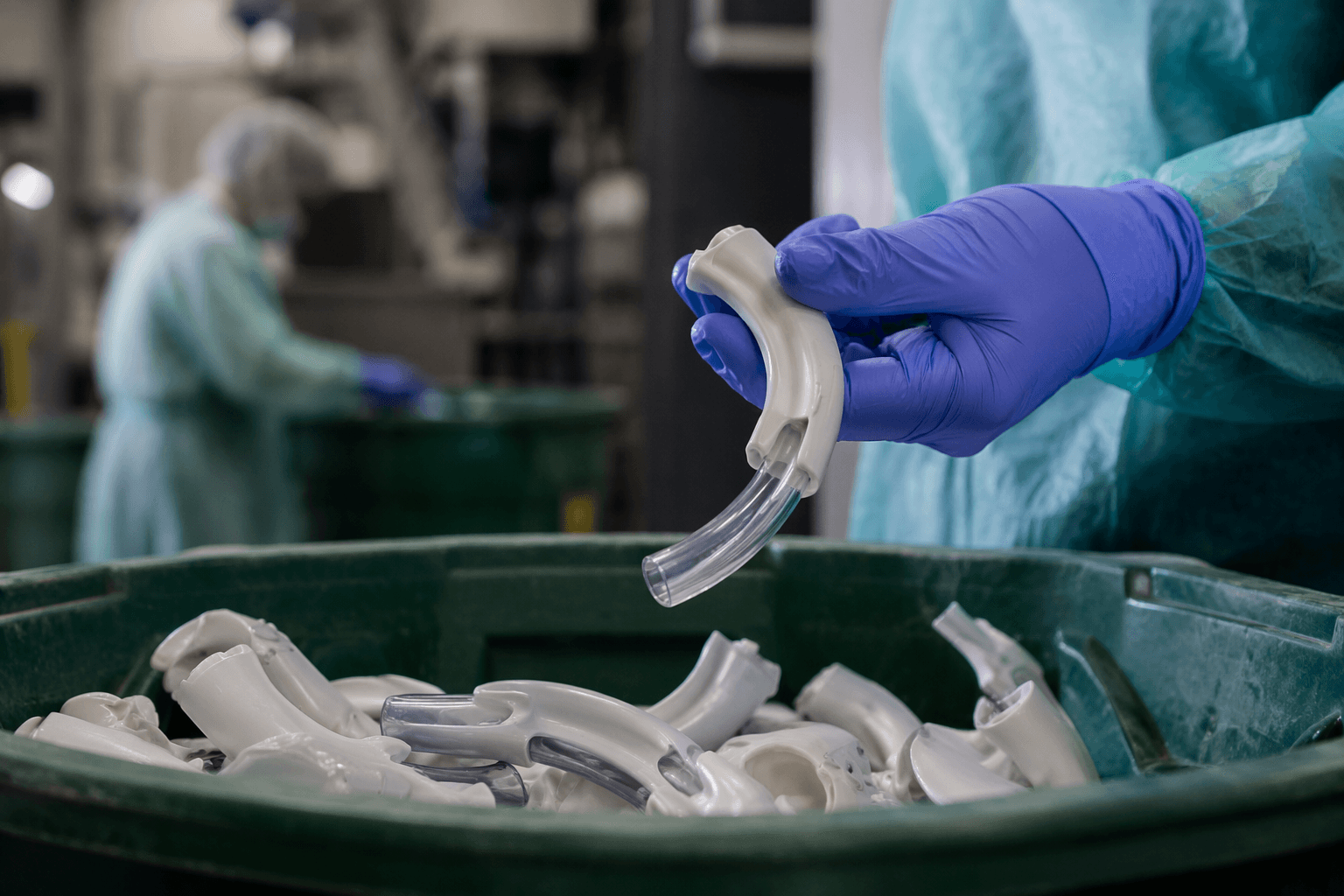
Ambu on June 8 expanded its Recircle Program to include single-use blades from its SureSight video laryngoscopy line, extending a hospital take-back system that already collects, recycles and repurposes plastics from used Ambu endoscopes into new non-medical products. The blades are now produced using bioplastic materials, adding another medical application to a portfolio Ambu says is built around renewable raw inputs.
The move matters beyond the operating room because Ambu has tied the program to its broader circularity strategy and to its greenhouse-gas profile. The company says raw materials are its largest single contributor to emissions, which is why it has focused on renewable feedstocks. Ambu said its handle plastic is made from 50% second-generation bio-based feedstock and 50% fossil-based feedstock, and that the ABS material used in those handles emits 70% less CO2 than purely fossil-based ABS, based on a cradle-to-gate life-cycle assessment by the manufacturer. Ambu says it was the first company to use bioplastic material in the handles of its single-use endoscopes.
Ambu introduced bioplastics in the handles of its single-use endoscopes in 2024 and launched the Ambu Recircle Program in 2025. In its Q1 2025/26 report, the company said it had introduced SureSight Mobile, its portable video laryngoscope, and extended Recircle to cover blades from SureSight Connect in 2026. Ambu also says its SureSight blades use PC bioplastic material, underscoring how the company is pushing biobased content across respiratory and endoscopy hardware.
For biofuels and other biomass processors, the shift points to the same feedstock competition now playing out in healthcare. Second-generation bio-based inputs that can go into medical plastics also compete with fuel pathways for renewable carbon, whether the end product is a laryngoscopy blade, an endoscope handle or a lower-carbon fuel blend. Ambu’s expansion does not change the feedstock math, but it does show that hospitals, device makers and recyclers are all bidding on the same limited pool of renewable inputs.
This article was produced by Prism’s automated news system from verified source data, official records, and press releases, then run through automated quality and moderation checks before publishing. The system is built and supervised by the people who set the standards it runs under. Read our full AI policy.
Know something we missed? Have a correction or additional information?
Submit a Tip