Biodiesel board urges EU ministers to lock in post-2030 transport rules
EU biodiesel producers pressed ministers for a post-2030 transport roadmap as Brussels weighs a 2040 emissions cut and a 2026 renewable-energy framework.
The European Biodiesel Board on June 5 urged EU transport ministers to lock in post-2030 road transport rules as they met in Luxembourg, arguing that the bloc’s 2040 climate target, a 90% net emissions cut versus 1990, still lacks the policy certainty producers need. The association said biodiesel, HVO and bioSAF makers cannot plan refinery upgrades, feedstock contracts or new capacity if the decade after 2030 remains undefined.
The Council of the European Union said ministers were due to exchange views on decarbonisation efforts in transport beyond 2030 and on the legal framework needed after the recent amendment of the European Climate Law. The agenda also included a progress report on greening corporate fleets. That discussion lands as the European Commission prepares the next post-2030 renewable energy framework, with adoption scheduled by the end of 2026 and a public consultation running from March 20 to June 12.
EBB said the next phase of the Renewable Energy Directive should keep an escalating decarbonisation pathway while clearing up market-entry and compliance rules. The group wants a framework stable enough to support investment, but broad enough for all available solutions, including traditional biodiesel pathways, hydrotreated fuels and bio-based aviation fuels, to contribute. In the association’s view, renewable fuels are a near-term emissions tool, not a bridge fuel to be parked after 2030, and domestic supply should be used to strengthen industrial leadership and strategic autonomy rather than deepen reliance on imported fossil resources.
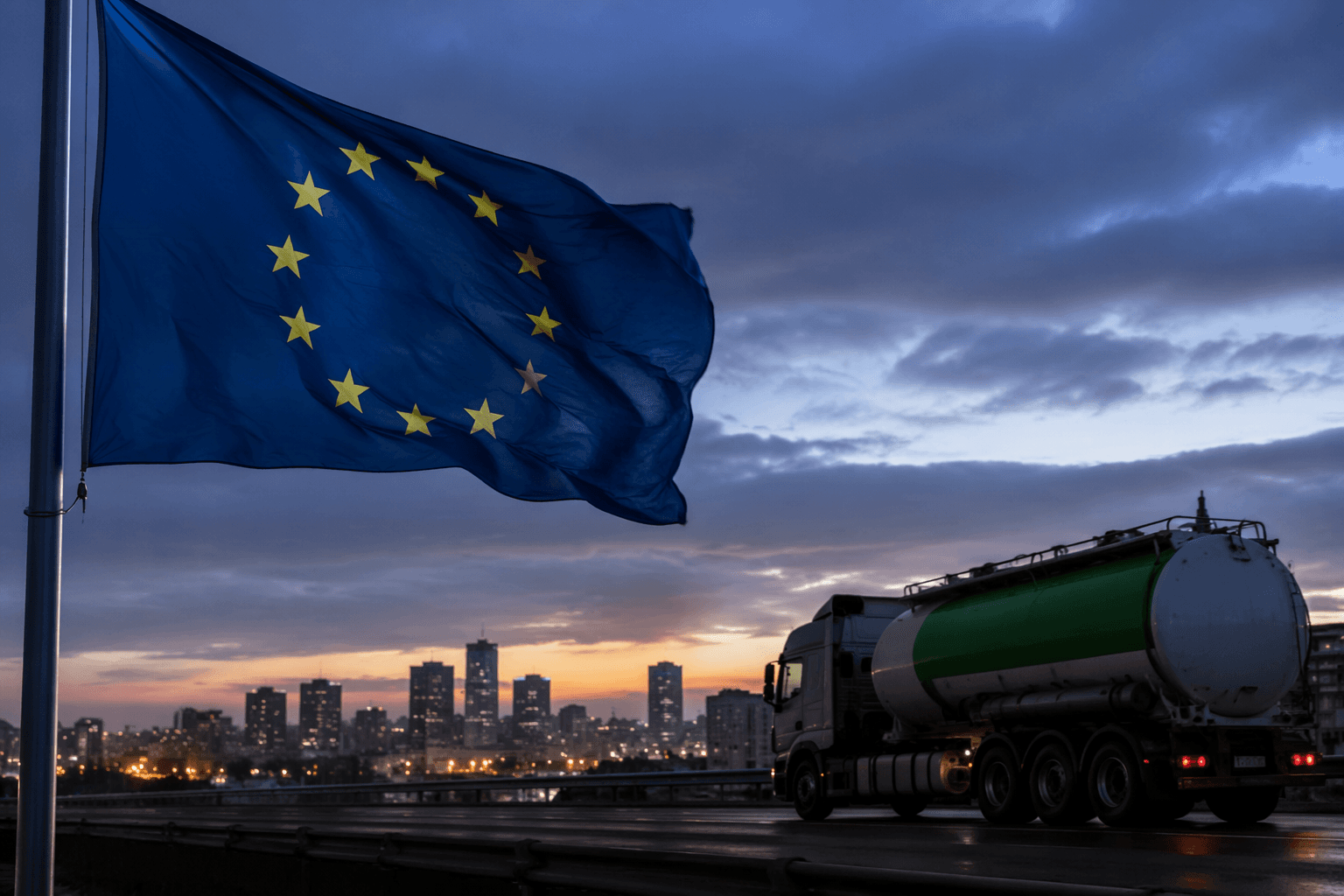
The broader policy backdrop is already set through 2030. The revised Renewable Energy Directive, adopted in 2023, raised the EU’s binding renewable-energy share to at least 42.5% by 2030, with an aspiration to reach 45%. The European Climate Law sets intermediate targets of at least 55% net emissions reduction by 2030 and 90% by 2040. EBB’s argument is that those milestones only matter to investors if Brussels signals what comes next.
The stakes are high because transport remains the EU’s biggest energy user and a stubborn emissions source. The European Environment Agency says transport is the bloc’s largest source of greenhouse-gas emissions, and its estimates show transport emissions rose 0.7% in 2024 from 2023. Eurostat data show transport accounted for 31% of EU final energy consumption in 2022, with road transport responsible for 74% of transport energy use. Transport & Environment pushed back on June 5, warning that global biofuel consumption could rise 30% in 2026 and nearly 70% by 2030 under a high-blending scenario, a warning that underscores how the post-2030 debate is now as much about feedstock competition and policy whiplash as it is about decarbonisation targets.
This article was produced by Prism’s automated news system from verified source data, official records, and press releases, then run through automated quality and moderation checks before publishing. The system is built and supervised by the people who set the standards it runs under. Read our full AI policy.
Know something we missed? Have a correction or additional information?
Submit a Tip