China becomes the center of global nuclear reactor construction
China now has 37 reactors under construction and nuclear’s share of power has climbed to 4.47%, putting a new clean-power benchmark in front of liquid fuels.
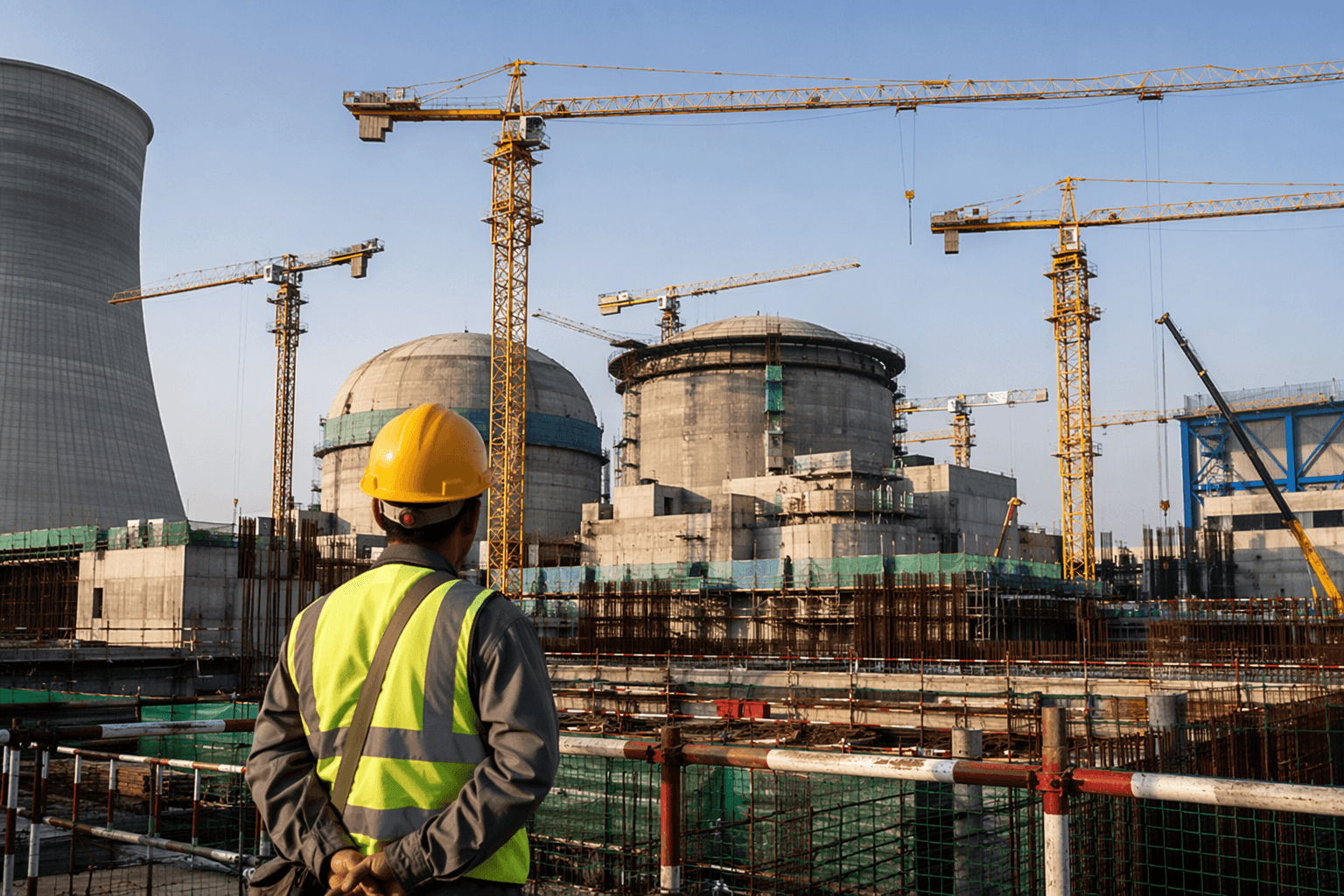
The International Atomic Energy Agency on June 5 showed China at the center of global nuclear buildout, with 58 reactors in commercial operation and 37 under construction, or more than 49% of total world nuclear construction. The country’s nuclear fleet has expanded from 1.82% of electricity generation in 2010 to 4.47% in 2024, a steady climb that underscores how quickly China is scaling a low-carbon baseload system.
The agency’s Power Reactor Information System lists 35,686 MW(e) of nuclear capacity under construction in China, alongside 58 operating reactors with 721 MW(e) of net capacity. The IAEA’s 2025 Nuclear Power Reactors in the World reference series uses reactor data as of Dec. 31, 2024, and its country profile for China puts the country at 58 units in commercial operation and 27 under construction at year-end 2024, with nuclear power supplying 4.47% of total generation. China added another 1.1 GW of nuclear capacity in 2025 and 2.2 GW through May 2026, according to PRIS.
For biofuels producers, the significance is less about electrons than about competition for decarbonization capital. Nuclear can directly displace coal and gas on power grids, where China’s energy strategy increasingly emphasizes reliability, energy security and stable supply. The International Energy Agency said China’s coal-fired power output fell 2.6% year on year in the first half of 2025, while low-emissions generation reached record growth in 2024, sharpening the policy case for more firm clean power.
The IEA expects global nuclear generation to hit a new record in 2025 and rise again in 2026, helped by reactor commissioning in China. That matters for liquid fuels because it raises the bar for any molecule-based fuel that claims a decarbonization premium in sectors where electrification is already advancing. In electricity, nuclear is a direct substitute for fossil generation. In aviation, shipping and heavy transport, liquid biofuels still retain a structural edge, since those markets need high-energy-density fuels that can move through existing engines, tanks and distribution systems. China’s nuclear surge does not erase that role, but it makes the industry justify it more tightly.
This article was produced by Prism’s automated news system from verified source data, official records, and press releases, then run through automated quality and moderation checks before publishing. The system is built and supervised by the people who set the standards it runs under. Read our full AI policy.
Know something we missed? Have a correction or additional information?
Submit a Tip