DAB.bio targets biotech scale-up costs with continuous fermentation platform
DAB.bio says FAST can cut biomanufacturing unit costs by 30% to 50% as it scales from a 500-liter pilot to about 100 m3.
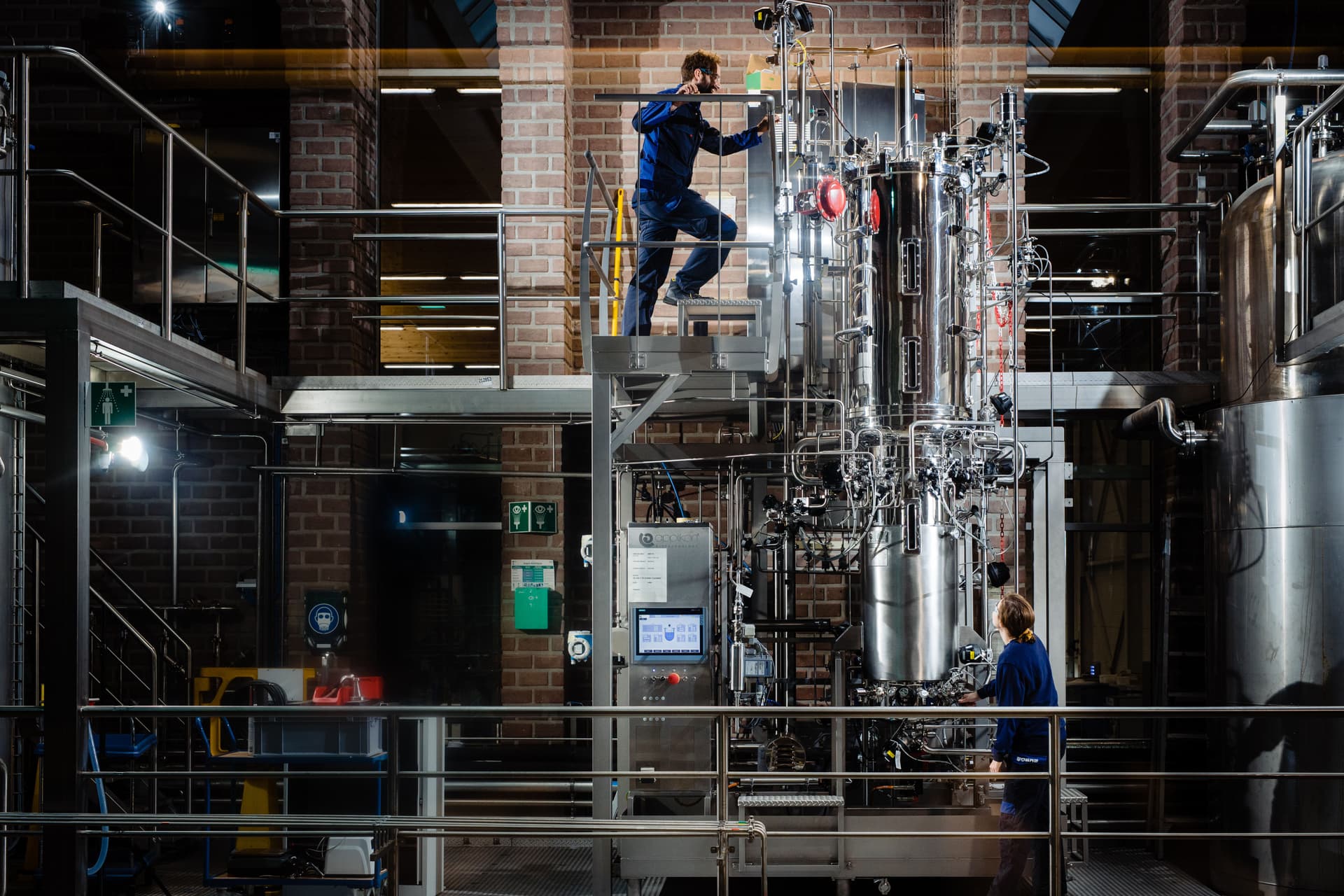
DAB.bio is pitching FAST as a way to cut biomanufacturing costs by 30% to 50% while moving continuous fermentation from a 500-liter pilot plant toward about 100 m3 at a contract manufacturer. The platform keeps biomass inside the reactor while selectively stripping out target compounds, a design meant to avoid the downstream and scale-up penalties that have stalled many industrial biotech projects. For developers chasing biofuel precursors and other high-value molecules, the promise is not just higher productivity, but a process that is easier to run, easier to separate and less capital-intensive to finance.
Why scale-up is the real bottleneck
The case for FAST starts with a blunt industry problem: too many biotech processes look strong at bench scale and then falter once downtime, contamination risk, low throughput and separation costs are fully counted. A 2024 NSF-hosted review said batch and fed-batch operations have been the standard since the 1950s, but those formats bring suboptimal production rates that push up both capital and operating costs.
That same review argues continuous biomanufacturing should become the direction of travel because it can minimize contamination risk, improve long-term genetic stability and decouple cell growth from product formation. In practical terms, that means process engineers can try to optimize titer, rate and yield at the same time instead of sacrificing one to protect another. For fuels and chemicals, that is the difference between a promising organism and a process that can survive a plant economics review.
How FAST changes the process
DAB.bio says FAST stands for Fermentation Accelerated by Separation Technology, and the concept is straightforward even if the engineering is not. The system combines continuous fermentation with continuous, gravity-based product separation, while keeping microbial biomass inside the reactor so the cells keep working as product is removed.
The company describes the reactor as process intensified, because it continuously and selectively removes target compounds while fermentation continues. That matters in systems where the product, or an inhibitor, starts to drag performance down if it is allowed to build up. DAB.bio says the platform is built to support optimization and upscaling in its 500-liter pilot plant, with an opportunity to scale to about 100 m3 at a CMO in development.
Bio Base Europe Pilot Plant houses the FAST500 demonstration unit, which DAB.bio says can operate as a stand-alone reactor or alongside a 15 m3 fermenter for commercial sample production. DAB.bio has also launched a first lab tool for continuous in-situ liquid-liquid extraction, which shows the company is building a wider continuous-processing toolkit rather than betting on a single unit operation.
Why this matters for fuels and chemicals
The strongest commercial case for FAST is in molecules where separation is expensive and scale-up is fragile. TU Delft said the integrated bioreactor work with DAB is aimed at biofuel precursors and other oily, water-immiscible building blocks, with a particular focus on hydrocarbon products that can be used as sustainable aviation biofuels.
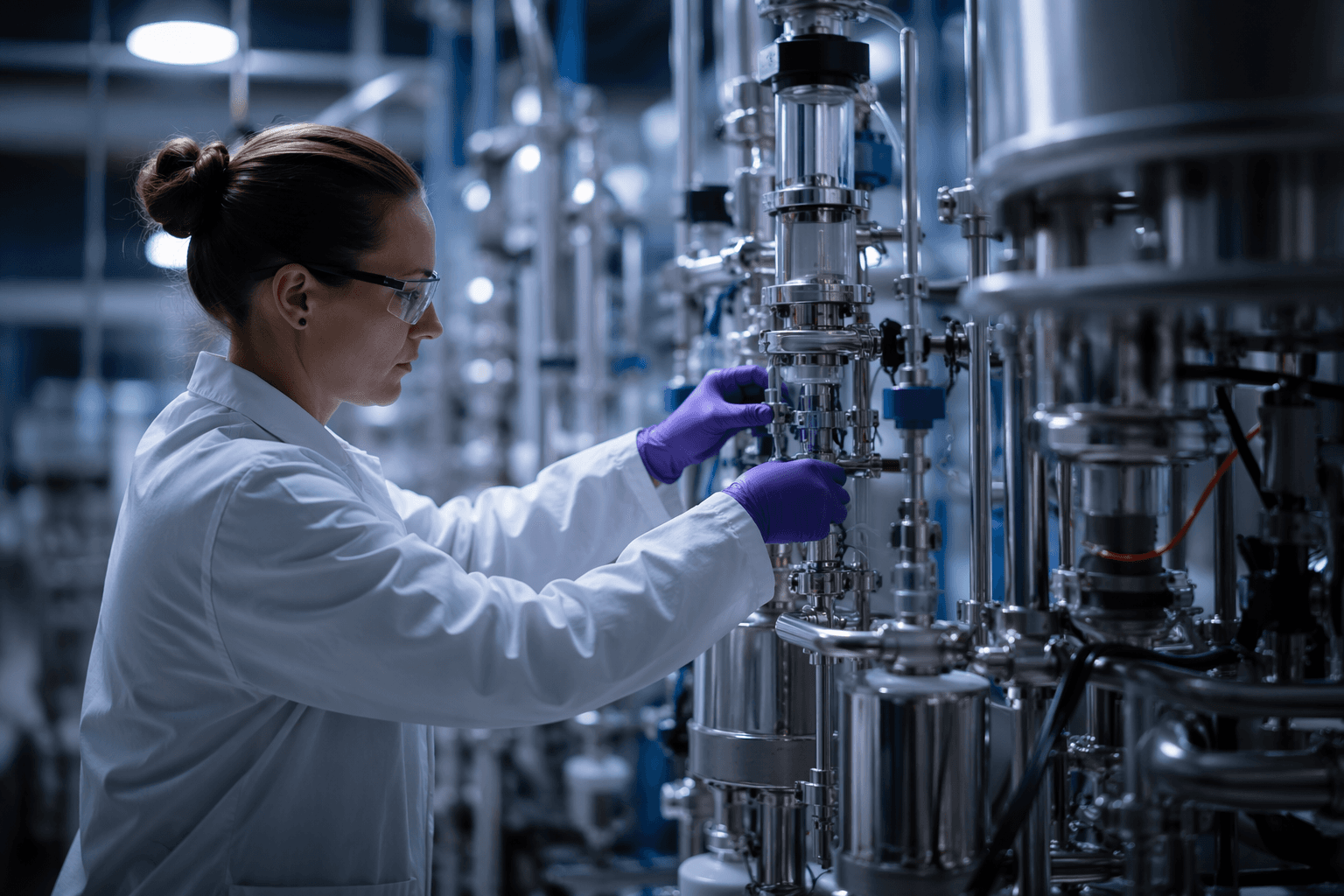
That focus is important because these products often behave badly in conventional reactors. TU Delft noted that biomass and cellular components can stabilize fine droplets, which makes the oil hard to isolate once it is formed. Continuous phase separation is meant to solve that problem by removing product as it is made, instead of waiting for a batch to finish and then paying a heavy downstream separation bill.
The same logic extends beyond fuels. DAB.bio and TU Delft’s work is also relevant to cosmetics, pharmaceuticals, flavors and fragrances, where high-purity recovery and stable operation can decide whether a process reaches market. For those sectors, the appeal of continuous processing is less about novelty than about whether it can produce a more predictable output stream and a more bankable cost curve.
The economics DAB.bio is selling
DAB.bio has been explicit that its pitch is economic, not just technical. Its Biotech Campus Delft profile says FAST can deliver unit cost reductions of 30% or more, largely by continuously removing product or inhibitors, extending run time and increasing unit production. In an earlier company announcement, DAB.bio said the platform had reduced biomanufacturing costs by 50%, after nearly 10 years of R&D and three patent families on its core technology.
That progression matters because investors and partners are not underwriting scientific elegance, they are underwriting a path to lower cost of goods. DAB.bio says it is a technology company specialized in cost-advantaged fermentation technology, and that it licenses the platform, which suggests the company is trying to monetize process IP as well as hardware.
The investor base has started to reflect that strategy. DAB.bio said it closed a funding round led by Navus Ventures with participation from Capricorn Partners, FORWARD.one, Innovation Quarter and Invest-NL. It also joined the Ginkgo Technology Network, widening the route to market through Ginkgo Bioworks’ ecosystem. Those moves do not prove commercial success, but they do signal that the company has pushed the discussion from feasibility toward deployment.
What to watch next
The real test for FAST is whether the cost claims hold as the system moves from pilot to larger-scale operations. A 500-liter platform is useful for proving process control and downstream behavior, but the commercial question is whether those gains survive the jump toward roughly 100 m3 and the operating realities of a CMO environment.
If DAB.bio can keep continuous fermentation stable, preserve biomass, and strip product without losing the economics it is advertising, the platform could strengthen the case for continuous biomanufacturing in fuels and chemicals. If it cannot, the industry will be left with another well-argued process that never fully escapes the capital and operating burden of batch biotech.
This article was produced by Prism’s automated news system from verified source data, official records, and press releases, then run through automated quality and moderation checks before publishing. The system is built and supervised by the people who set the standards it runs under. Read our full AI policy.
Know something we missed? Have a correction or additional information?
Submit a Tip