Emirates flies first A380 demo with 100% sustainable aviation fuel
Emirates flew the first A380 demo on 100% SAF in one engine, a proof-of-concept that spotlights the supply gap to commercial scale.

Emirates became the first airline to operate an Airbus A380 demonstration flight using 100% sustainable aviation fuel, the company said on Nov. 22, 2023. The flight departed Dubai International Airport, with one of the superjumbo’s four engines running on 100% SAF while the other three burned conventional jet fuel.
The test was designed to check performance and show that SAF could work with the A380’s existing systems. Emirates said the milestone was completed with Airbus, Engine Alliance, Pratt & Whitney, ENOC, Neste and Virent, underscoring how much of the SAF value chain still has to line up before fuel can move from a headline flight to routine operations. GE Aerospace said all GE Aerospace and Engine Alliance engines can operate on approved SAF blends today.
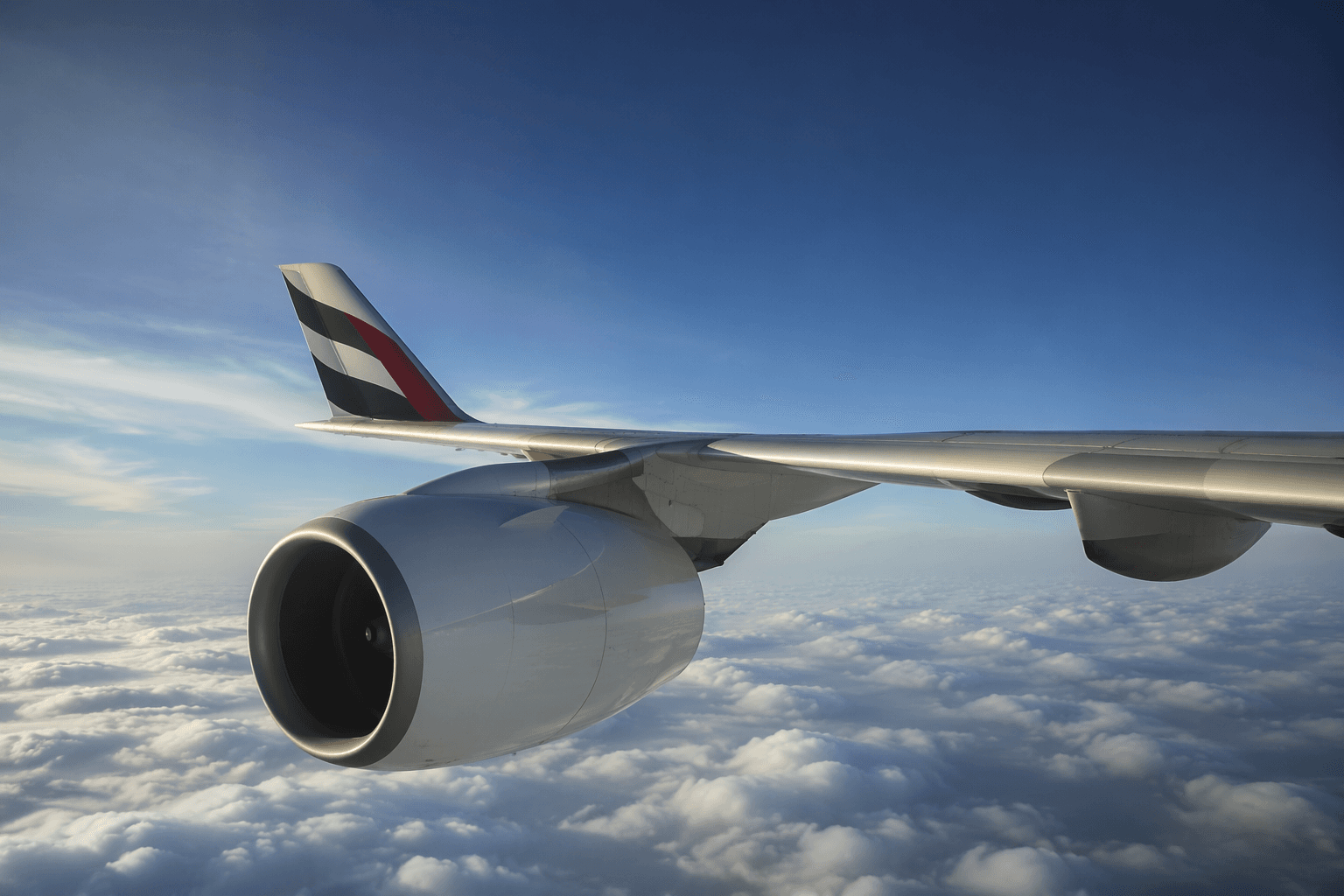
The demonstration built on an earlier Emirates milestone on Jan. 30, 2023, when the carrier flew a Boeing 777-300ER with one engine powered by 100% SAF. Emirates described that flight as the first 100% SAF demonstration in the Middle East and North Africa. Taken together, the two tests show that airline, airframer and engine-maker coordination can validate the fuel on specific equipment, but they do not prove that the fuel is available in the volumes needed for day-to-day network flying.
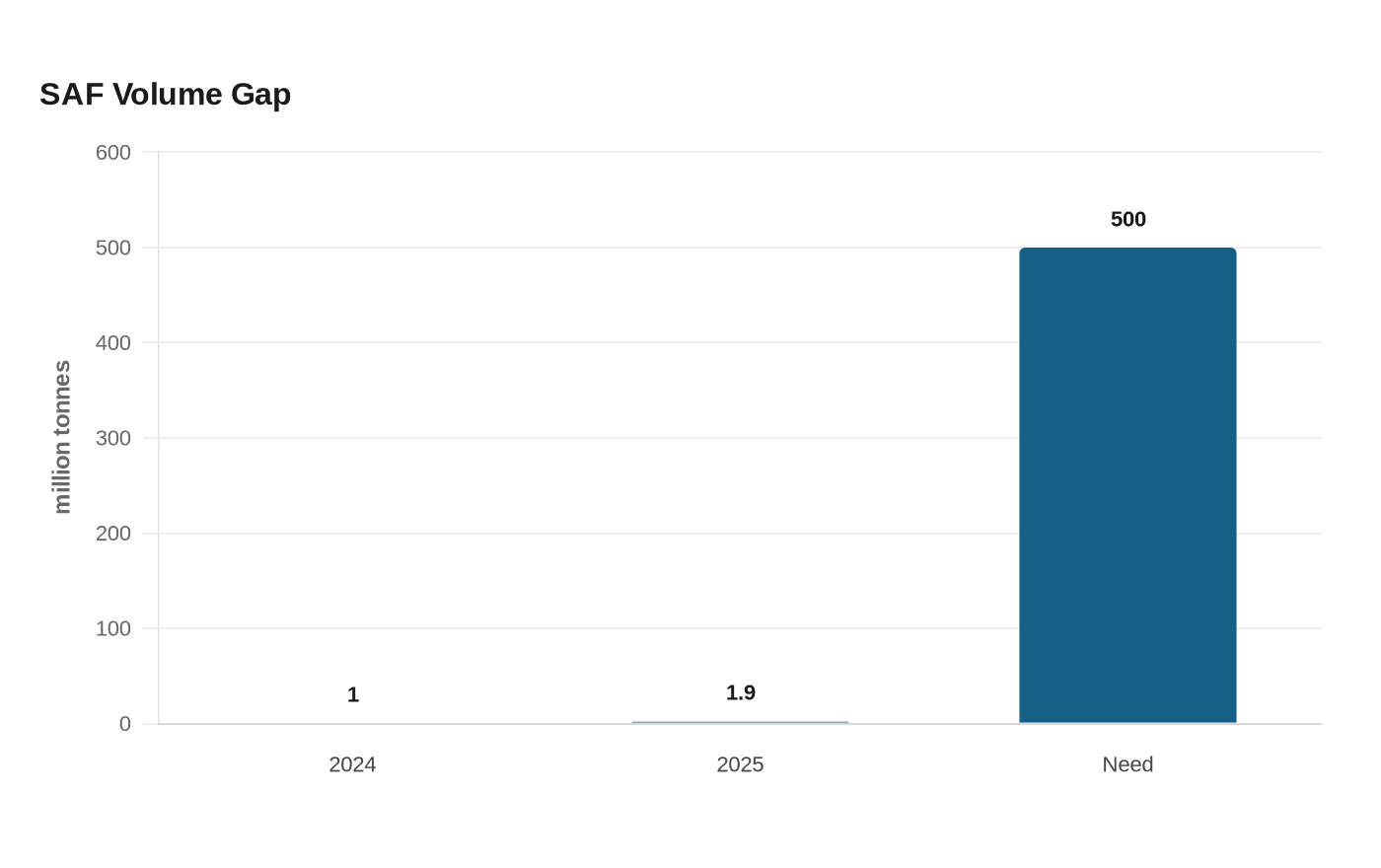
That scale problem remains the central constraint. IATA said SAF could deliver up to 65% of the emissions reductions aviation needs to reach net zero CO2 emissions by 2050, while ICAO has said SAF has the greatest potential to cut CO2 from international aviation. Yet IATA also said global SAF production rose from 1 million tonnes in 2024 to 1.9 million tonnes in 2025, still far short of the roughly 500 million tonnes a year the sector would need over coming decades to stay on a net zero path.
The UAE has tried to turn that gap into industrial policy. Its SAF roadmap targets local production capacity of 700 million litres annually by 2030 and includes a voluntary goal to supply 1% of aviation fuel demand with SAF. For Emirates, the A380 flight was a technical proof point. For the market, it was another reminder that certification, feedstock, refining capacity and economics still have to catch up with the demo circuit.
This article was produced by Prism’s automated news system from verified source data, official records, and press releases, then run through automated quality and moderation checks before publishing. The system is built and supervised by the people who set the standards it runs under. Read our full AI policy.
Know something we missed? Have a correction or additional information?
Submit a Tip