Ethanol gains momentum as shipping looks for cleaner marine fuels
Shipping’s decarbonization push is putting ethanol on the shortlist, but policy, engines and bunkering still have to line up.
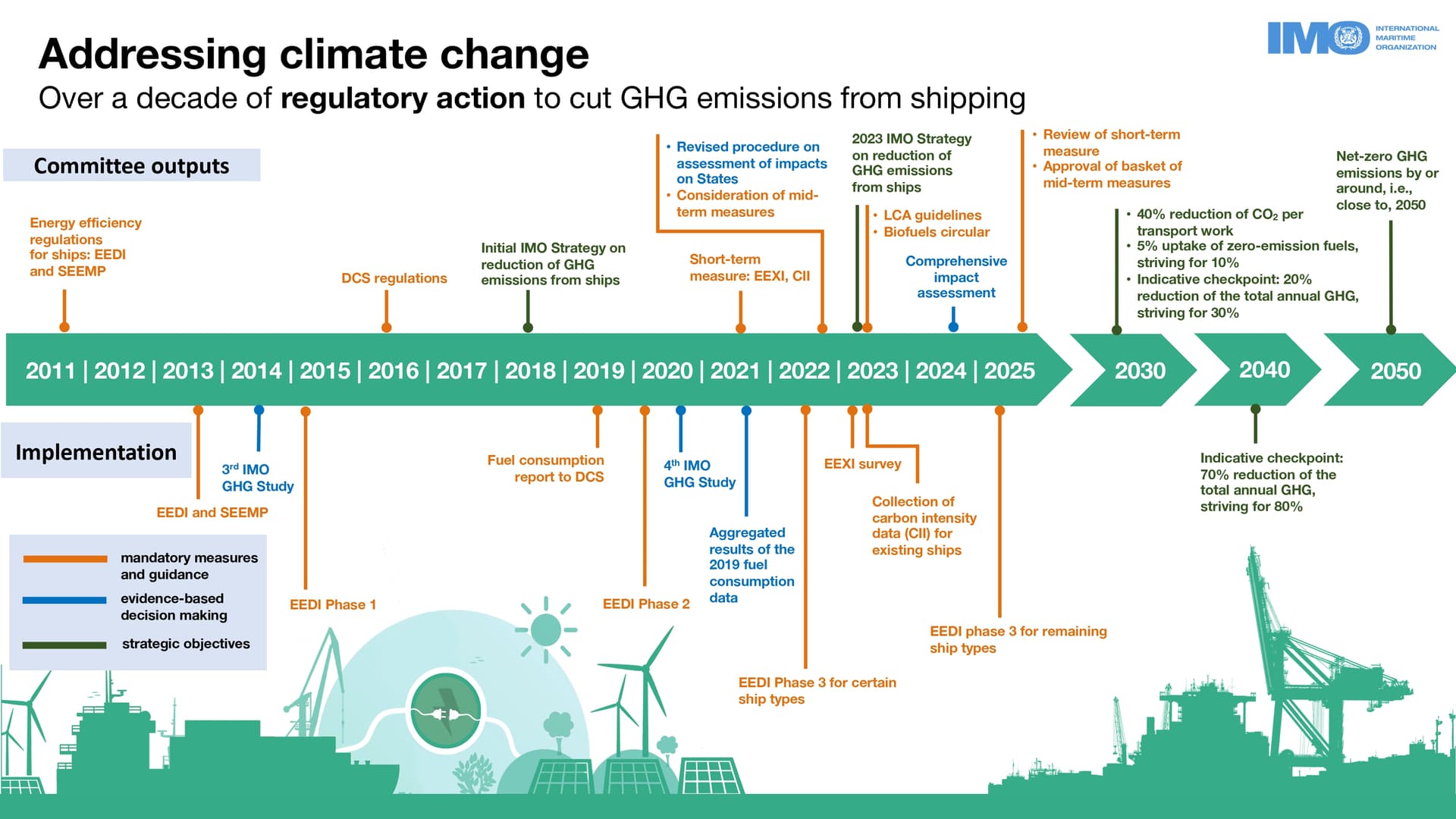
Ethanol is moving from a niche biofuel to a serious marine-fuel candidate as the International Maritime Organization’s Net-Zero Framework pushes ocean shipping toward mandatory emissions limits and a global pricing mechanism. The framework applies to large vessels above 5,000 gross tonnage, a fleet segment the IMO says produces 85% of international shipping CO2 emissions.
The timing matters. The IMO approved the framework at MEPC 83 in April 2025, originally aimed for formal adoption in October 2025 before entry into force in 2027. Those adoption talks were later adjourned into 2026, but the direction of travel is clear: shipping is preparing for a lower-carbon fuel market, and ethanol is now part of that conversation.
Why ethanol is showing up in marine fuel plans
Ethanol fits several of the technical and commercial boxes that shipowners and fuel suppliers are now trying to check. It is liquid at ambient conditions, already handled at scale across existing fuel and chemical logistics systems, and it can be blended into alternative marine-fuel strategies rather than requiring an entirely new fuel chain from scratch.
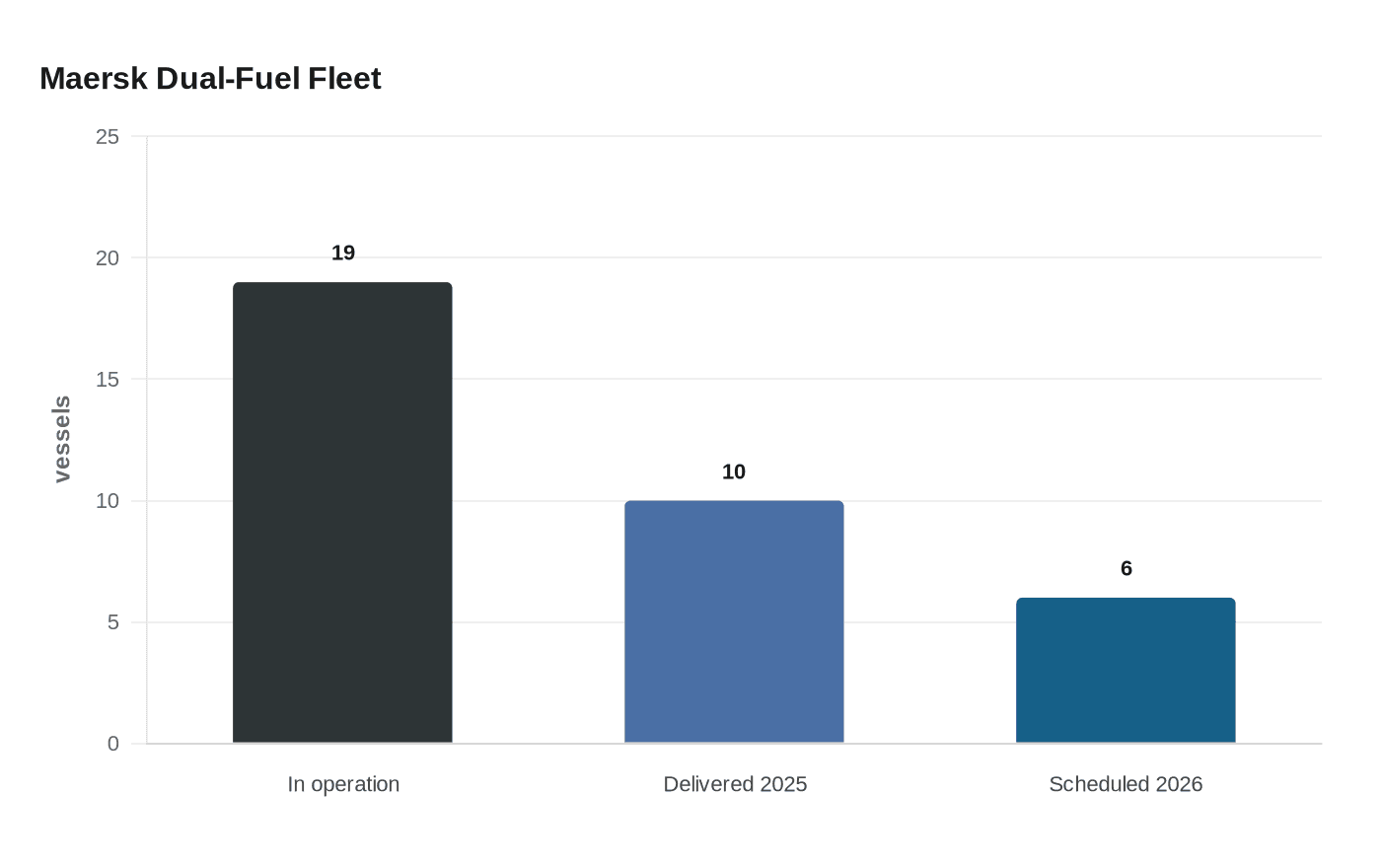
Maersk sharpened that case in February 2026, saying it wanted to work with ethanol producers around the world to build maritime fuel supply chains. The company noted that a single vessel can burn 80,000 to 200,000 gallons of fuel per day, which turns even modest fuel-switching gains into large-volume demand. Maersk also had 19 dual-fuel vessels in operation in early 2026, with 10 additional dual-fuel methanol vessels delivered during 2025 and six more scheduled for 2026.
That fleet signal matters because shipping does not adopt a new bunker fuel on theory alone. It needs engines that can use it, operators that are willing to trial it and a supply network that can deliver it at ports where voyages actually start and end.
The technical gatekeepers are starting to move
The regulatory and safety side is catching up with the commercial interest. The IMO’s interim safety guidelines for ships using methyl and ethyl alcohol as fuel say the provisions were written primarily for methanol, but may also be applied to ethanol with changes as applicable. That language does not hand ethanol a ready-made market, but it gives engineers and regulators a recognized path to start working from.
The next hurdle is standardization. In 2026, the Global Centre for Green Fuels said it joined the International Bunker Industry Association in November 2024 and, with support from GCGF, IBIA and the Flag State of Brazil, made a joint submission at the IMO to ensure ethanol is included in lifecycle accounting work and to request an ISO standard for ethanol as a marine fuel.
That is the kind of plumbing that decides whether ethanol becomes a real bunker option or remains a pilot project. Lifecycle accounting determines whether ethanol can qualify under emerging carbon rules, while an ISO standard would give ports, suppliers and shipowners a common specification for handling, quality and custody transfer.
What the market could mean for agriculture and ethanol plants
The commercial upside is large enough to matter far beyond shipping. In October 2025, The Western Producer reported that the IMO Net-Zero Framework could create a major new outlet for corn, soybeans, canola and other crops. Renewable Fuels Association president Geoff Cooper said that if U.S. ethanol captured just 5% of the global maritime fuel market, it could translate into 4 billion to 5 billion gallons of demand and more than 1.5 billion bushels of extra corn demand.
The scale of the prize is easy to see when set against the total market. The same report put global maritime fuel demand at 70 billion to 80 billion gallons a year, while biofuels and other low-carbon alternatives account for less than 1% of maritime fuel use today. That leaves a very large incumbent market to displace, but it also means even a small foothold for ethanol would be material for producers.
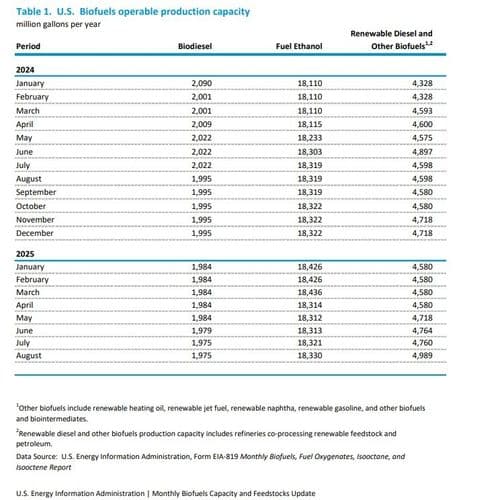
For U.S. suppliers, the export angle is especially relevant. The U.S. Grains & BioProducts Council said in September 2025 that the U.S. has about 18 billion gallons of ethanol nameplate capacity and nearly 2 billion gallons of exports in the prior year. Those numbers suggest the industry already has the storage, blending and shipping experience needed to support a marine-fuel market, if the policy and technical pieces can be aligned.
Why U.S. policy is helping the pitch
The domestic policy backdrop is also working in ethanol’s favor. In April 2026, the American Biofuels Maritime Initiative wrote to Secretary of State Marco Rubio saying the U.S. is the world’s largest producer of biofuels and pointing to the Environmental Protection Agency’s March 2026 Renewable Fuel Standard rule, which set 26.81 billion ethanol-equivalent gallons for 2026.
That rule matters because it reinforces the idea that the U.S. has a large, durable ethanol base from which to build export markets. The ABMI letter framed maritime fuels as a way to strengthen rural economies while opening foreign demand for American-made biofuels, which is exactly the kind of market diversification ethanol producers have been seeking as gasoline blending demand matures.
What has to happen next
Ethanol does not become a marine bunker fuel just because shipping needs cleaner molecules. The industry still has to solve three practical problems at once: regulatory acceptance, engine compatibility and port-side infrastructure.
- finalize a global accounting framework that recognizes ethanol’s lifecycle emissions profile,
- turn interim safety guidance into workable shipboard and bunkering standards,
- give suppliers an ISO-grade product specification, and
- prove in the field that engines, storage systems and bunker operations can handle the fuel at commercial scale.
The near-term checklist is straightforward:
Maersk’s interest, the IMO’s interim safety language and the Brazil-backed push for lifecycle treatment all point in the same direction. Shipping is no longer asking whether it needs new fuels, only which ones can clear the policy and engineering barriers first. Ethanol now has a seat at that table, and the next phase will decide whether it becomes a standard bunker option or just another decarbonization trial.
This article was produced by Prism’s automated news system from verified source data, official records, and press releases, then run through automated quality and moderation checks before publishing. The system is built and supervised by the people who set the standards it runs under. Read our full AI policy.
Know something we missed? Have a correction or additional information?
Submit a Tip