EU renewable ethanol cuts greenhouse-gas emissions by record 81.6%
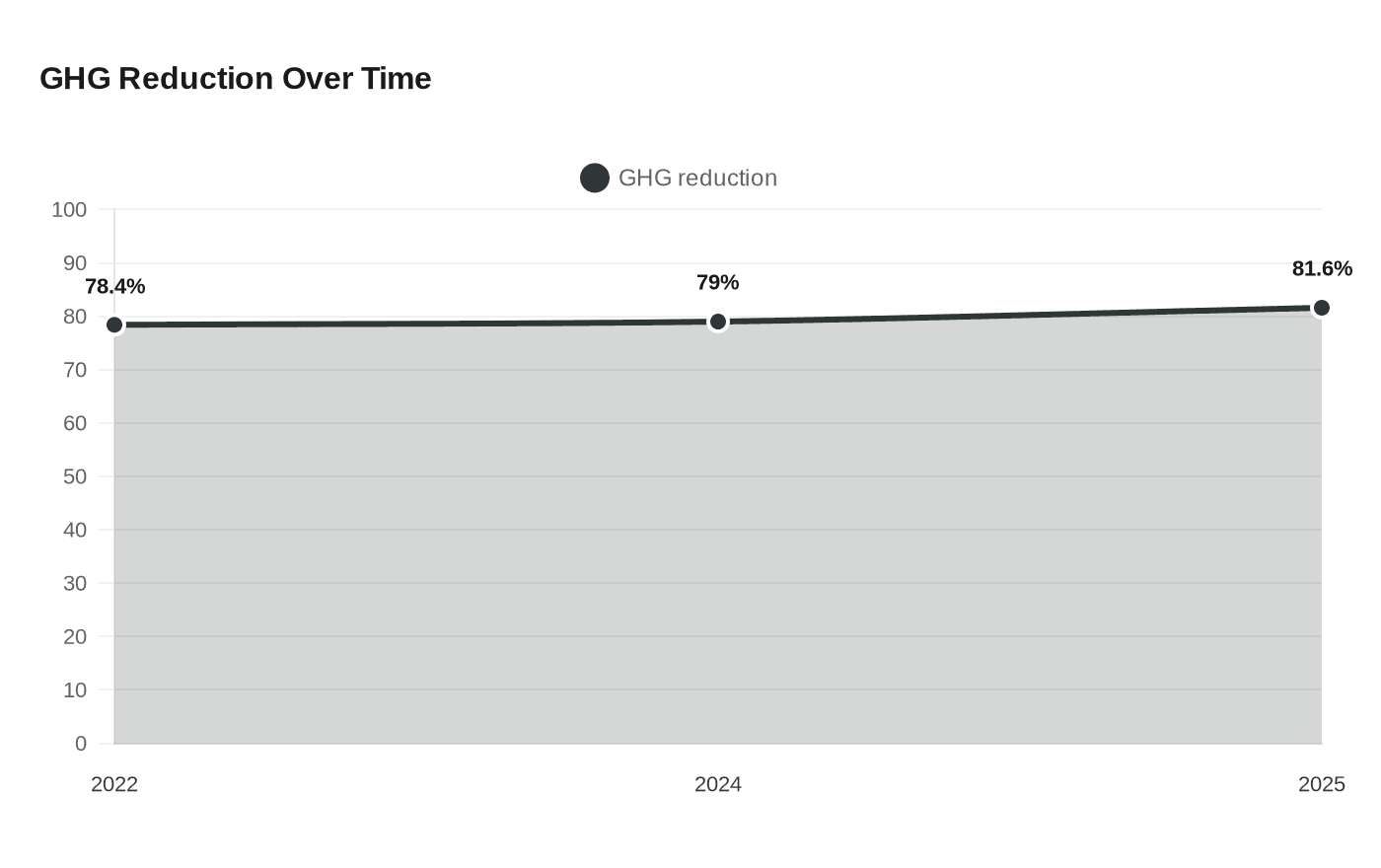
EU renewable ethanol cut greenhouse-gas emissions 81.6% in 2025, up from 79% a year earlier, while also yielding 6.6 million tonnes of co-products.
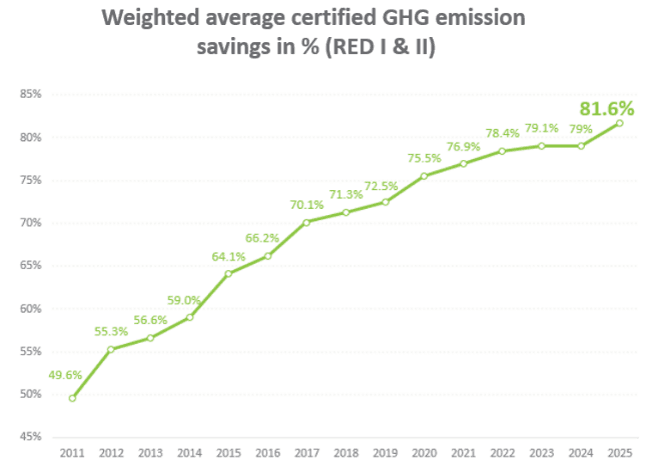
Renewable ethanol from ePURE members and other EU producers cut greenhouse-gas emissions by 81.6% in 2025, up from 79% in 2024, according to newly certified data from Copartner. The latest result marked the strongest reduction yet in a 16-year run of improving performance and sharpened the case for ethanol as Brussels weighs higher blending in petrol.
ePURE said the 2025 audit covered 20 producing companies with around 50 refineries across the European Union and United Kingdom, accounting for about 85% of EU renewable ethanol production. Alongside the GHG savings, the plants produced 6.6 million tonnes of food and feed co-products and captured 1.2 million tonnes of biogenic CO2, underscoring how much of the sector’s output still flows into animal nutrition and industrial use rather than fuel alone.
The numbers matter because the debate in Europe is no longer just about volume, but about carbon intensity. The European Commission says transport accounts for more than a quarter of EU greenhouse-gas emissions, and road transport decarbonisation remains central to the bloc’s goal of climate neutrality by 2050. In April 2026, Ursula von der Leyen said the Commission would consider authorizing E20 petrol blends, a signal that higher ethanol content could get a formal policy look as engine suitability and incentives for advanced biofuels are reviewed.
For ePURE, the latest audit is political ammunition as well as an emissions milestone. The group has argued that renewable ethanol cuts dependence on imported oil while supporting energy independence, food security, agricultural competitiveness and industrial autonomy. The progression from 78.4% GHG reduction in 2022 to 79% in 2024 and now 81.6% in 2025 gives that argument a firmer technical basis, even as the sector still has to prove that the gains come from cleaner feedstocks, better plant performance and credible lifecycle accounting rather than statistics alone.
The broader takeaway is that European bioethanol is moving closer to the carbon profile policymakers want from road fuels. With petrol and hybrid cars still dominant in many EU markets, the latest certified data strengthens ethanol’s standing in a transport decarbonisation fight that is now shifting from abstract climate goals to the practical question of what can be blended, burned and measured at scale.
This article was produced by Prism’s automated news system from verified source data, official records, and press releases, then run through automated quality and moderation checks before publishing. The system is built and supervised by the people who set the standards it runs under. Read our full AI policy.
Know something we missed? Have a correction or additional information?
Submit a Tip