Food waste becomes jet fuel in circular hydrothermal refinery
Food waste is being turned into 100% drop-in jet fuel through hydrothermal liquefaction and cobalt molybdenum upgrading, but certification and scale still define the race.
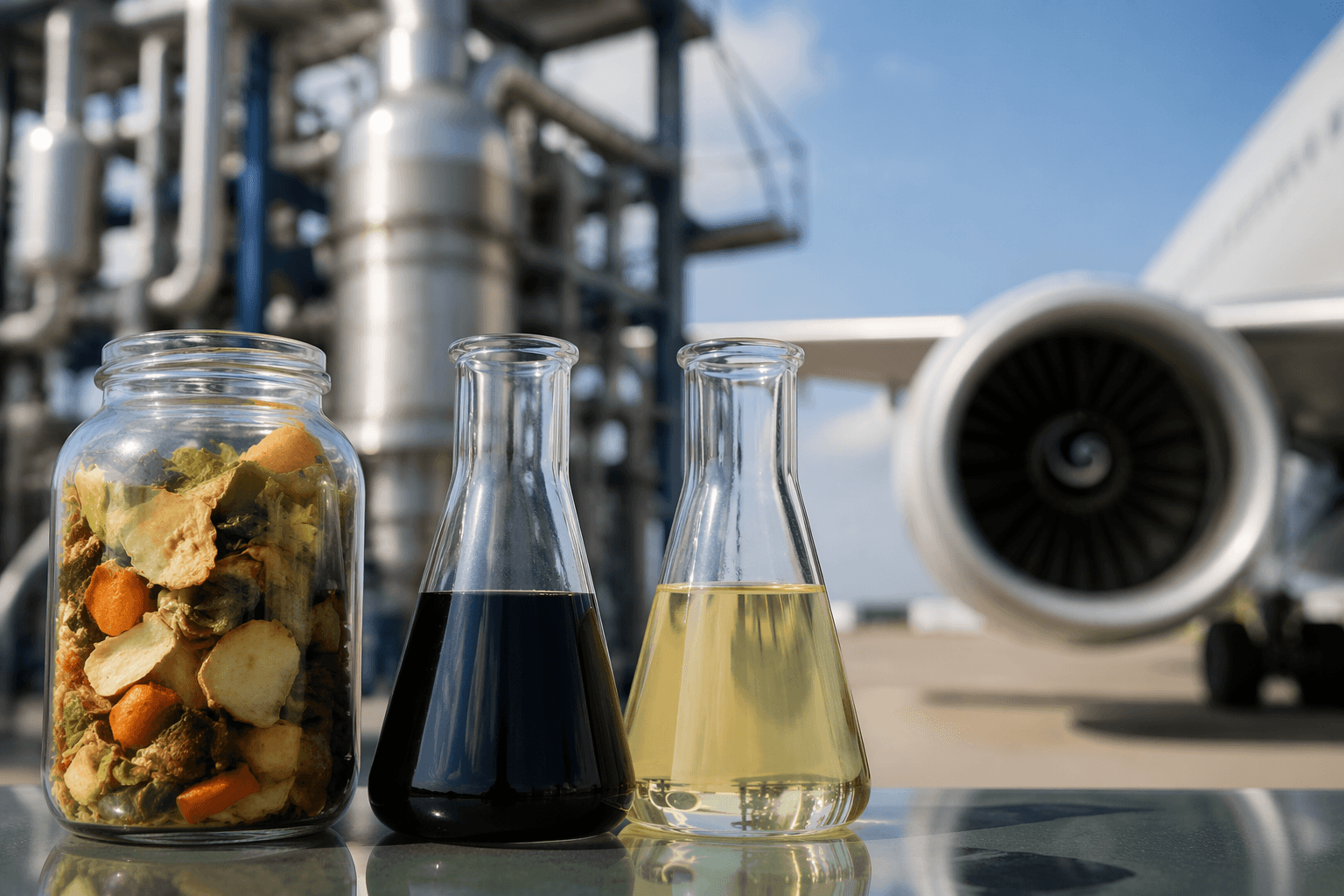
Food waste is moving from disposal problem to jet-fuel feedstock, and the work from the University of Illinois Urbana-Champaign shows why the industry is paying attention. Researchers there converted wet food waste into biocrude through hydrothermal liquefaction, then upgraded it with catalytic hydrotreating to produce sustainable aviation fuel that meets industry standards without fossil blending.
The commercial stakes are large. The International Air Transport Association says SAF could deliver about 65% of the emissions reduction needed for aviation to reach net zero CO2 emissions by 2050, and its updated roadmaps put SAF in the largest role in aviation decarbonization. In the United States, the Sustainable Aviation Fuel Grand Challenge targets 3 billion gallons of SAF by 2030 and 35 billion gallons by 2050, which means any viable pathway has to move beyond lab-scale novelty and into reliable, certifiable supply.
How the circular hydrothermal refinery works
The Illinois concept starts with food waste, a wet feedstock that is difficult to handle with conventional conversion routes but well suited to hydrothermal liquefaction. HTL uses heat and pressure to mimic the natural formation of crude oil, but does it in minutes instead of geological time, according to lead author Sabrina Summers. That matters because the process can take in wet biomass without first drying it, a major energy and cost advantage when the feedstock is kitchen waste, processing residues, or other high-moisture biowaste.
HTL produces a biocrude oil that is not yet jet fuel, so the second step is catalytic hydrotreating. In the Illinois work, researchers tested dozens of catalysts and identified cobalt molybdenum as the most effective commercially available option. The result is a refinery concept built around circularity, with renewable and recovered resources embedded in the process rather than treated as discard streams.
A related Nature Communications paper on the same broad topic reported that food-waste-derived biocrude upgraded with cobalt-molybdenum catalysis could meet ASTM jet fuel property standards without blending. That paper also said the pathway improved energy circularity by 31.1% and carbon circularity by 17.0% versus conventional jet fuel, which puts hard numbers behind the circular-refinery framing.
What the Illinois team showed
The University of Illinois team used waste from a nearby food processing facility, a detail that underscores how local collection and logistics shape the economics of the route. Yuanhui Zhang said agriculture will be critical because aviation needs many different renewable feedstocks, which is an important clue about scale. No single waste stream is likely to carry the full market, so a commercial model will have to aggregate material from food processors, agricultural residues, and other wet biowastes.
The academic lineage matters as well. An earlier Illinois effort using food-waste-derived biocrude from salad dressing described SAF production with non-noble metal carbide catalysts. That work argued the U.S. consumes about 40 million tons of jet fuel annually, SAF makes up only about 1% of that market, and biowaste alone could potentially supply 10% to 20% of jet fuel demand. Those figures place food waste in context: it is not a complete replacement, but it could become a meaningful share of the supply stack if collection, upgrading, and certification line up.
Another Illinois-related paper noted that, at the time of publication, there was no certified ASTM conversion process for food waste into SAF. That gap is the central market hurdle. Even if the chemistry works and the fuel properties clear specification thresholds, airlines, refiners, and offtakers still need a pathway that can be certified, banked, and replicated at scale.
Where the lab-to-market gap sits
The biggest commercial question is not whether the conversion is scientifically elegant. It is whether food waste can compete once contamination, collection logistics, yield losses, energy intensity, and capital cost are fully counted. Wet feedstocks can be advantageous because they avoid drying, but they can also arrive with highly variable composition, which complicates preprocessing and can destabilize reactor performance.
Catalyst choice also matters for plant economics. Cobalt molybdenum is important because it is commercially available, not just because it works in the lab. That lowers the barrier to near-term scale-up compared with exotic materials, but it does not eliminate the need for long run times, catalyst regeneration strategy, and product upgrading reliability across changing feedstock slates.
Certification remains the final gate. The fact that Illinois researchers framed the route alongside ASTM property compliance is significant because SAF buyers do not purchase promising chemistry, they purchase fuel that clears the specification and can enter existing aircraft and fuel systems as a drop-in product. A 100% drop-in fuel has obvious appeal, but the path from property data to ASTM approval and then to commercial production is where most alternative fuels stall.
What it means for the SAF buildout
This research strengthens the case for a broader, feedstock-diverse SAF market. Aviation will not decarbonize on a single pathway, and the Illinois work fits the industry view that multiple routes will be needed to reach the 2050 target. HEFA remains the dominant near-term route, but waste-based HTL can potentially broaden the pool of qualifying inputs beyond traditional oils, fats, and greases.
The circular refinery concept is especially relevant for refiners and project developers looking beyond first-generation SAF. It offers a route built around wet biowaste, commercial catalysts, and a product slate that can meet jet-fuel standards without fossil blending. That combination is what makes the work more than a lab curiosity.
For the market, the signal is clear: food waste can be more than a disposal stream if the collection system, catalyst economics, and certification pathway all mature together. If those pieces align, hydrothermal liquefaction and cobalt-molybdenum upgrading could give aviation another credible route to scalable, drop-in SAF.
This article was produced by Prism’s automated news system from verified source data, official records, and press releases, then run through automated quality and moderation checks before publishing. The system is built and supervised by the people who set the standards it runs under. Read our full AI policy.
Know something we missed? Have a correction or additional information?
Submit a Tip